


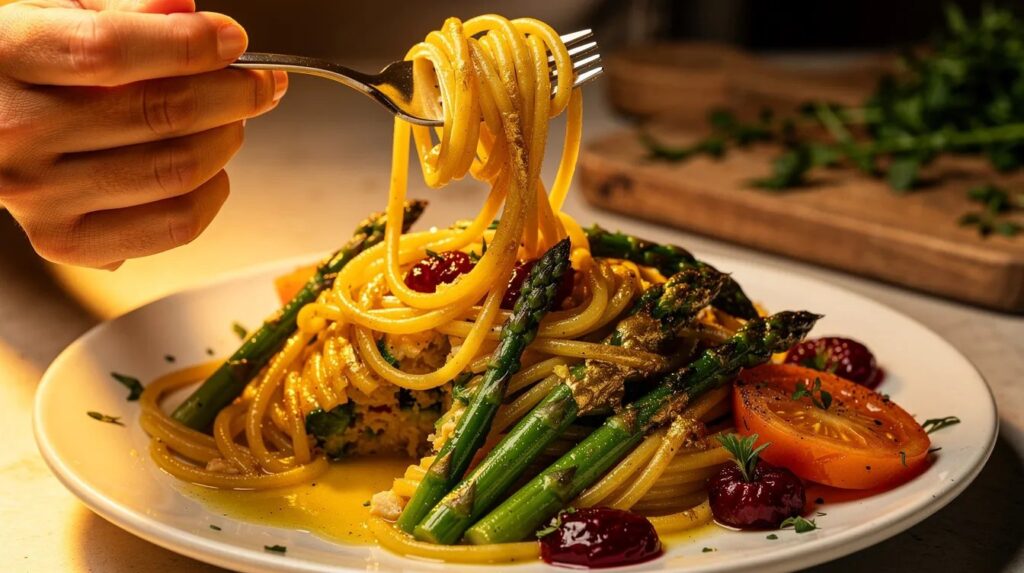
Spring's arrival at the farmers' market is subtly announced: tightly packed purple-tipped bundles, vibrant green spears still glistening from the morning's harvest, and the occasional white variety, wrapped like a small indulgence. Asparagus, perhaps more than any other vegetable, marks the shift in seasons – appearing around mid-March and disappearing by early June, urging us to enjoy it while it lasts. The following ten recipes were selected by readers who have prepared them, returned to them, and shared them with loved ones at their tables.
From a quick weeknight sheet-pan dish to a patiently crafted risotto, each recipe celebrates asparagus's best qualities: its grassy, slightly mineral flavor that complements richness, acidity, and smokiness equally well. Thin spears cook rapidly, while thicker ones are ideal for grilling or peeling. Both have their distinct uses. So, get out your cutting board and let the season inspire your cooking.
Sheet-pan roasted asparagus with lemon and Parmesan
| Prep | 10 min |
| Cook | 15 min |
| Servings | 4 |
| Difficulty | Easy |
| Cost | $ |
| Season | Spring asparagus, lemon |
Suitable for: Vegetarian · Gluten-free
Ingredients
- 1 lb medium asparagus spears, woody ends snapped off
- 2 tbsp extra-virgin olive oil
- ½ tsp fine sea salt
- ¼ tsp freshly ground black pepper
- 1 oz Parmesan, finely grated
- 1 lemon, zested and cut into wedges
- 1 tsp red pepper flakes (optional)
Preparation
1. Set up the pan and oven
Preheat your oven to 425°F. Line a rimmed baking sheet with parchment paper or leave it bare — both work, but a bare pan gives slightly more color on the underside. Spread the asparagus in a single layer without crowding; overlapping spears steam rather than roast, which dulls their color and softens their texture past the point of interest. Drizzle with olive oil and toss with your hands until every spear glistens. Season with salt and pepper.
2. Roast until tender-crisp
Slide the pan into the upper third of the oven and roast for 12 to 15 minutes, depending on thickness. Thin spears are ready closer to 12; thick ones may need a full 15 or even 18 minutes. Look for tips that have crisped and turned deep green, almost brown at the very point — that slight char is where flavor concentrates. The base of each spear should yield easily when pressed with a fingertip but not collapse.
3. Finish and serve
Pull the pan from the oven and immediately shower the spears with grated Parmesan. The residual heat melts the cheese into a lacy, salty crust. Add lemon zest, a squeeze of juice from one of the wedges, and red pepper flakes if using. Serve directly from the pan while everything is still hot and fragrant.
Snap, don't cut. The point where an asparagus spear naturally snaps when bent is exactly where the woody, fibrous section ends. No measuring, no guesswork — the vegetable tells you where to break it.
Wine Pairing
Asparagus with lemon and Parmesan has a grassy, bright profile that can challenge many wines — the key is matching acidity and freshness rather than fighting them.
A Sauvignon Blanc from the Loire Valley (Sancerre or Pouilly-Fumé) echoes the vegetable's herbal notes and cuts through the richness of the cheese. A dry Grüner Veltliner from Austria works equally well. For a non-alcoholic option, sparkling water with a squeeze of lemon and a few drops of white wine vinegar mimics that tart, mineral quality surprisingly well.
Nutritional Information (per serving, approximate values)
| Nutrient | Amount |
|---|---|
| Calories | ~130 kcal |
| Protein | ~6 g |
| Carbohydrates | ~7 g |
| of which sugars | ~3 g |
| Fat | ~9 g |
| Fiber | ~3 g |
Asparagus and prosciutto flatbread
| Prep | 15 min |
| Cook | 18 min |
| Servings | 4 |
| Difficulty | Easy |
| Cost | $$ |
| Season | Spring asparagus |
Ingredients
- 1 store-bought or homemade flatbread (12-inch)
- ½ cup ricotta cheese
- 2 tbsp olive oil, divided
- 1 garlic clove, minced
- 12 thin asparagus spears, trimmed
- 3 oz prosciutto, torn into pieces
- 1 oz Parmesan, shaved
- 1 tsp honey
- Fresh black pepper to taste
- Fresh arugula, a small handful to finish
Preparation
1. Season the ricotta base
Preheat your oven to 400°F. In a small bowl, stir together the ricotta, 1 tablespoon of olive oil, minced garlic, a pinch of salt, and a generous grind of black pepper. This base should taste well-seasoned on its own — it carries the whole flatbread once baked, and underseasoned ricotta disappears into blandness under the heat. Spread it across the flatbread in a thin, even layer, leaving a half-inch border around the edge.
2. Arrange the toppings
Toss the asparagus spears with the remaining tablespoon of olive oil and lay them across the ricotta, fanning them slightly. Scatter torn pieces of prosciutto around and between the spears — some will crisp in the oven, others will stay silky where they're tucked under asparagus. Add the shaved Parmesan.
3. Bake and finish
Bake for 15 to 18 minutes until the edges of the flatbread are golden and the prosciutto pieces exposed to direct heat have crisped and darkened slightly at their edges. Remove from the oven, drizzle lightly with honey, and scatter fresh arugula across the top. The warmth from the flatbread will gently wilt the arugula without cooking it. Slice and serve immediately.
The honey is not decorative. Asparagus has a natural bitterness that honey counterbalances without making the flatbread taste sweet — use it sparingly, about a teaspoon for the whole surface, applied in a thin zigzag from a spoon.
Wine Pairing
The salt of prosciutto and Parmesan alongside the grassy asparagus calls for something with good acidity and light body.
A Pinot Grigio from Friuli or a dry Prosecco served as an aperitivo wine both work well. The slight effervescence of Prosecco cuts through the richness of the ricotta and refreshes between bites.
Nutritional Information (per serving, approximate values)
| Nutrient | Amount |
|---|---|
| Calories | ~310 kcal |
| Protein | ~14 g |
| Carbohydrates | ~28 g |
| of which sugars | ~4 g |
| Fat | ~15 g |
| Fiber | ~2 g |
Creamy asparagus soup
| Prep | 15 min |
| Cook | 25 min |
| Servings | 4 |
| Difficulty | Easy |
| Cost | $ |
| Season | Spring asparagus, leeks |
Suitable for: Vegetarian · Gluten-free
Ingredients
- 2 lbs asparagus, woody ends removed, tips reserved separately
- 1 medium leek, white and light green parts only, sliced
- 2 garlic cloves, smashed
- 2 tbsp unsalted butter
- 4 cups vegetable broth, warm
- ½ cup heavy cream
- 1 tsp fine sea salt
- Juice of ½ lemon
- Fresh chives, to finish
- Crème fraîche, to serve (optional)
Preparation
1. Sweat the aromatics
Melt the butter in a large, heavy-bottomed pot over medium heat. Add the sliced leek and smashed garlic and cook, stirring occasionally, for 6 to 8 minutes until the leek is completely soft and translucent but not browned. This stage is called sweating — the vegetables release moisture and soften in their own steam, building a mild, sweet foundation. Browning would add bitterness that would compete with the asparagus.
2. Cook the asparagus
Add the chopped asparagus stalks (hold the tips aside for now) and pour in the warm vegetable broth. Bring to a gentle boil, then reduce heat and simmer for 12 to 15 minutes, until the asparagus is completely tender and has lost its bright raw green in favor of a deeper, slightly olive hue. While it simmers, blanch the reserved tips in salted boiling water for 2 minutes, then transfer them to ice water to stop cooking. They will stay vivid green and firm for the garnish.
3. Blend, season, and serve
Use an immersion blender directly in the pot, or carefully transfer to a standing blender in batches, covering the lid with a folded towel to prevent hot liquid from expanding and spraying. Blend until completely smooth. Return to the pot, stir in the heavy cream and lemon juice, taste for salt, and adjust. Serve in warm bowls topped with the blanched tips, a few snipped chives, and a spoonful of crème fraîche if using.
Peel the bottom third of each spear before chopping for the soup — the skin on thicker asparagus can be fibrous even after blending, leaving threads in an otherwise smooth bowl. A standard vegetable peeler handles this in seconds.
Wine Pairing
A creamy asparagus soup needs a wine that matches its richness without overwhelming the vegetable's delicate flavor.
An unoaked or lightly oaked Chardonnay from Burgundy (a Mâcon-Villages or Saint-Véran) complements the creaminess without adding competing butter or vanilla notes. A crisp Vermentino from Sardinia is a lighter alternative with herbal undertones that echo the asparagus.
Nutritional Information (per serving, approximate values)
| Nutrient | Amount |
|---|---|
| Calories | ~195 kcal |
| Protein | ~6 g |
| Carbohydrates | ~14 g |
| of which sugars | ~6 g |
| Fat | ~13 g |
| Fiber | ~4 g |
Asparagus risotto with mascarpone
| Prep | 15 min |
| Cook | 35 min |
| Servings | 4 |
| Difficulty | Medium |
| Cost | $$ |
| Season | Spring asparagus |
Suitable for: Vegetarian · Gluten-free
Ingredients
- 1½ cups Arborio or Carnaroli rice
- 1 lb asparagus, tips separated, stalks cut into ½-inch pieces
- 5 cups vegetable broth, kept warm in a separate pot
- 1 small onion, finely diced
- 2 garlic cloves, minced
- ½ cup dry white wine
- 2 tbsp unsalted butter, divided
- 2 tbsp olive oil
- 3 tbsp mascarpone
- 1 oz Parmesan, finely grated
- Salt and black pepper to taste
- Zest of 1 lemon
Preparation
1. Build the soffritto and toast the rice
In a wide, heavy saucepan, warm the olive oil and 1 tablespoon of butter over medium heat. Add the diced onion and cook for 5 minutes until soft and translucent. Add the garlic and cook 1 minute more. Add the rice and stir continuously for 2 minutes — this step is called tostatura, and it coats each grain in fat, which slows the absorption of liquid and helps the risotto build its characteristic creamy consistency without becoming a paste.
2. Add wine and begin adding broth
Pour in the white wine and stir until it has been fully absorbed — you'll hear a hiss as the alcohol meets the hot pan, and the sharp vinous smell will soften within 60 seconds. Begin adding the warm broth one ladleful at a time, stirring after each addition and waiting until the liquid is nearly absorbed before adding the next. Keep the heat at a steady medium so the risotto bubbles gently but never aggressively. After 10 minutes, add the asparagus stalk pieces and continue adding broth.
3. Finish with the asparagus tips and mantecatura
After a total of 18 to 20 minutes of cooking, the rice should be al dente — tender through but with a faint resistance at the center when bitten. Add the asparagus tips in the final 3 minutes. Remove from heat. Add the mascarpone, remaining tablespoon of butter, and Parmesan, then stir vigorously — this is mantecatura, the beating of fat into the starch to create a fluid, glossy texture. The risotto should move in slow waves when the pan is shaken. Adjust salt, add lemon zest, and serve immediately in warm bowls.
Do not let the risotto wait. Risotto continues to absorb liquid even off heat, stiffening in minutes. If dinner is delayed, pull it from the heat 2 minutes early and finish the mantecatura only when ready to serve, adding an extra splash of warm broth to loosen.
Wine Pairing
The richness of mascarpone and Parmesan calls for a wine with enough body and acidity to cut through without overpowering the asparagus.
A white Burgundy — specifically a village-level Meursault or a Pouilly-Fuissé — brings a buttery depth that mirrors the mantecatura while fresh acidity lifts the whole bowl. A well-made Soave Classico from the Veneto, where risotto has deep roots, is a more affordable and regionally appropriate pairing.
Nutritional Information (per serving, approximate values)
| Nutrient | Amount |
|---|---|
| Calories | ~420 kcal |
| Protein | ~11 g |
| Carbohydrates | ~58 g |
| of which sugars | ~4 g |
| Fat | ~15 g |
| Fiber | ~4 g |
Grilled asparagus with romesco sauce
| Prep | 20 min |
| Cook | 15 min |
| Servings | 4 |
| Difficulty | Easy |
| Cost | $$ |
| Season | Spring asparagus |
Suitable for: Vegan · Gluten-free
Ingredients
For the asparagus
- 1½ lbs thick asparagus spears, trimmed
- 2 tbsp olive oil
- ½ tsp sea salt
- ½ tsp smoked paprika
For the romesco sauce
- 1 cup roasted red peppers (jarred is fine), drained
- ⅓ cup toasted almonds
- 2 tbsp tomato paste
- 2 tbsp sherry vinegar
- 1 garlic clove
- ¼ tsp cayenne
- 3 tbsp extra-virgin olive oil
- Salt to taste
Preparation
1. Make the romesco
Combine the roasted red peppers, toasted almonds, tomato paste, sherry vinegar, garlic, and cayenne in a food processor. Pulse until the mixture is coarsely broken down — you want texture here, not a smooth purée. With the machine running, drizzle in the olive oil until the sauce comes together into a thick, rust-colored paste with visible almond pieces. Season with salt. Romesco improves as it sits, so make it up to an hour ahead and let the flavors meld.
2. Grill the asparagus
Heat a grill or grill pan over high heat until it's smoking. Toss the asparagus with olive oil, salt, and smoked paprika until coated. Lay the spears perpendicular to the grill grates and cook without moving for 3 to 4 minutes until char marks appear and the underside is visibly blistered. Turn and cook another 2 to 3 minutes. Thick spears should be tender at the base when pressed but still hold their shape — not limp.
3. Plate and serve
Spread a generous pool of romesco onto a serving platter and lay the grilled asparagus across it. Drizzle with a thin thread of olive oil and scatter a few flakes of sea salt across the tips. Serve warm or at room temperature — the romesco holds up well either way and the asparagus flavor deepens slightly as it cools.
Romesco is one of the most versatile sauces in a spring kitchen. Make a double batch: it keeps for 5 days refrigerated and works with grilled fish, roasted potatoes, poached eggs, or spread thickly onto toasted bread.
Wine Pairing
Romesco has depth — roasted pepper, smoke, almond, and vinegar — so the wine needs enough character to hold its ground.
A Garnacha from Priorat or a Grenache-based rosé from Provence both work from different angles: the Garnacha matches the sauce's smokiness, while the rosé rides the acidity of the sherry vinegar. Both are correct choices depending on the temperature outside and the mood at the table.
Nutritional Information (per serving, approximate values)
| Nutrient | Amount |
|---|---|
| Calories | ~230 kcal |
| Protein | ~7 g |
| Carbohydrates | ~14 g |
| of which sugars | ~7 g |
| Fat | ~17 g |
| Fiber | ~5 g |
Asparagus and egg frittata
| Prep | 10 min |
| Cook | 20 min |
| Servings | 4 |
| Difficulty | Easy |
| Cost | $ |
| Season | Spring asparagus |
Suitable for: Vegetarian · Gluten-free
Ingredients
- 8 large eggs
- ½ cup whole milk
- ¾ lb asparagus, cut into 1-inch pieces
- 1 small shallot, thinly sliced
- 2 oz goat cheese, crumbled
- 2 tbsp olive oil
- 1 tsp fresh thyme leaves
- Salt and black pepper to taste
Preparation
1. Par-cook the vegetables
Preheat your oven broiler to high with the rack positioned in the upper third. In a 10-inch oven-safe skillet — cast iron is ideal here for its even heat retention and the ease with which it transfers from stovetop to oven — warm the olive oil over medium heat. Add the shallot and cook for 3 minutes until soft. Add the asparagus pieces and cook, stirring occasionally, for 4 to 5 minutes until they have lost their raw crunch but still hold their shape. Season with salt, pepper, and thyme.
2. Add the egg mixture
Whisk together the eggs and milk with a generous pinch of salt until fully combined and slightly foamy — the air beaten in gives the frittata a lighter texture than simply stirring. Pour the egg mixture directly over the vegetables in the skillet. Cook on the stovetop over medium-low heat for 5 to 6 minutes, until the edges are set and pulling away from the sides but the center remains visibly wet and jiggly. Dot the surface with crumbled goat cheese.
3. Finish under the broiler
Slide the skillet under the broiler and cook for 2 to 3 minutes, watching closely, until the surface is set, lightly golden in patches, and puffed at the edges. The center should no longer wobble when the pan is moved. Let the frittata rest in the pan for 5 minutes before slicing — this allows the egg proteins to firm and makes clean slices possible. Serve warm or at room temperature.
A frittata is one of the most forgiving spring dinners in the repertoire. Almost any vegetable that fits the season — peas, spring onions, ramps, or a handful of herbs from the windowsill — can replace or supplement the asparagus here without changing the technique.
Wine Pairing
Eggs and goat cheese have a tangy, rich quality that pairs well with wines on the brighter, more acidic end of the spectrum.
A Sancerre or Menetou-Salon from the Loire does particularly well here, its grassy notes picking up on the asparagus while its acidity cuts the richness of the egg. A light, chilled Beaujolais served slightly cool is a relaxed alternative if the evening calls for something red.
Nutritional Information (per serving, approximate values)
| Nutrient | Amount |
|---|---|
| Calories | ~280 kcal |
| Protein | ~19 g |
| Carbohydrates | ~6 g |
| of which sugars | ~3 g |
| Fat | ~20 g |
| Fiber | ~2 g |
Asparagus pasta with brown butter and walnuts
| Prep | 10 min |
| Cook | 20 min |
| Servings | 4 |
| Difficulty | Easy |
| Cost | $ |
| Season | Spring asparagus |
Suitable for: Vegetarian
Ingredients
- 12 oz pasta (spaghetti or linguine)
- 1 lb asparagus, cut into 2-inch pieces, tips kept whole
- 4 tbsp unsalted butter
- ½ cup walnuts, roughly chopped
- 2 garlic cloves, thinly sliced
- 2 oz Pecorino Romano, finely grated
- Zest and juice of 1 lemon
- Salt and black pepper to taste
- ½ cup reserved pasta water
Preparation
1. Cook the pasta
Bring a large pot of generously salted water to a rolling boil — it should taste distinctly of the sea. Cook the pasta until 2 minutes short of the package's recommended time, as it will finish cooking in the pan. Before draining, scoop out at least 1 cup of pasta water using a ladle or a liquid measuring cup. This starchy water is what binds and silkens the sauce at the end.
2. Brown the butter
While the pasta cooks, melt the butter in a wide skillet over medium heat. Continue cooking, swirling the pan occasionally, until the butter foams, subsides, and turns a deep amber color with brown specks visible at the bottom — this is beurre noisette, or brown butter, and it smells distinctly of hazelnuts and caramel. Add the walnuts and garlic immediately and cook for 90 seconds, then add the asparagus pieces and toss to coat. The asparagus will cook quickly in this hot, nutty fat.
3. Finish the pasta
Add the drained pasta directly to the skillet. Pour in ½ cup of pasta water and toss everything together over medium heat for 2 minutes until the starchy water has reduced into a light glaze coating every strand. Remove from heat. Add the Pecorino, lemon zest, and a squeeze of lemon juice, tossing quickly so the cheese melts into the sauce rather than clumping. Season generously with black pepper and serve immediately.
The pasta water is the sauce. Do not skip collecting it — once the pasta is drained, it's gone. The starch it contains emulsifies with the brown butter to create a coating that no amount of added cream or oil can replicate.
Wine Pairing
Brown butter and walnuts add a toasty, nutty richness that shifts this dish toward white Burgundy territory.
A Puligny-Montrachet or a Chassagne-Montrachet brings the oakiness and texture to meet the brown butter without drowning the asparagus. A more accessible option is a lightly oaked Chardonnay from California's Central Coast, which offers similar weight and a touch of stone fruit alongside the nutty notes.
Nutritional Information (per serving, approximate values)
| Nutrient | Amount |
|---|---|
| Calories | ~510 kcal |
| Protein | ~17 g |
| Carbohydrates | ~62 g |
| of which sugars | ~4 g |
| Fat | ~22 g |
| Fiber | ~5 g |
Asparagus and salmon en papillote
| Prep | 15 min |
| Cook | 18 min |
| Servings | 4 |
| Difficulty | Easy |
| Cost | $$ |
| Season | Spring asparagus |
Suitable for: Gluten-free · High protein
Ingredients
- 4 salmon fillets (about 6 oz each), skin on
- 1 lb thin asparagus spears, trimmed
- 1 lemon, thinly sliced
- 4 tbsp unsalted butter, cut into small pieces
- 4 garlic cloves, thinly sliced
- 2 tbsp fresh dill, roughly torn
- 2 tbsp capers, drained
- Salt and white pepper to taste
Preparation
1. Build the packets
Preheat the oven to 400°F. Cut four large sheets of parchment paper or aluminum foil, each about 15 inches long. Fold each sheet in half to crease, then open flat. In the center of one half of each sheet, layer a small pile of asparagus spears, then lay a salmon fillet on top, skin-side down. The skin protects the flesh from direct heat and can be slipped off after cooking. Season the fish generously with salt and white pepper. Top each fillet with butter pieces, sliced garlic, lemon rounds, capers, and dill.
2. Seal and bake
Fold the empty half of parchment over the filling and crimp the edges tightly by folding small overlapping folds all the way around, creating an airtight seal. This technique is called en papillote — "in parchment" — and the trapped steam inside the packet cooks the fish gently and evenly while infusing every element with the aromas of butter, dill, and lemon. Place the packets on a baking sheet and bake for 15 to 18 minutes. The packets will puff dramatically in the oven.
3. Open and serve
Carry the puffed packets to the table and open them carefully — the escaping steam is extremely hot. Serve directly in the parchment or slide the contents onto a warm plate. The asparagus will be tender and perfumed, the salmon will flake cleanly with a fork and show no translucency at its center, and the buttery, lemony liquid at the base of the packet makes an immediate sauce.
The packets can be fully assembled, crimped, and held in the refrigerator for up to 4 hours before baking. This makes the technique well-suited to dinner parties: assemble ahead, slide into the oven when guests arrive, and serve 18 minutes later with zero intervention.
Wine Pairing
Salmon with dill, capers, and lemon is a Scandinavian-inflected flavor profile that connects naturally with wines from cooler climates.
An Alsatian Riesling — dry, mineral, with a note of white peach — complements both the fish and the asparagus. A Chablis premier cru, with its oyster-shell minerality, is another natural fit. For something domestic, a Willamette Valley Pinot Gris from Oregon brings similar precision.
Nutritional Information (per serving, approximate values)
| Nutrient | Amount |
|---|---|
| Calories | ~390 kcal |
| Protein | ~38 g |
| Carbohydrates | ~6 g |
| of which sugars | ~3 g |
| Fat | ~24 g |
| Fiber | ~3 g |
White asparagus with hollandaise
| Prep | 20 min |
| Cook | 25 min |
| Servings | 4 |
| Difficulty | Medium |
| Cost | $$$ |
| Season | White asparagus (spring), eggs |
Suitable for: Gluten-free
Ingredients
For the asparagus
- 2 lbs white asparagus, peeled from tip to base
- 1 tbsp sugar
- 1 tbsp unsalted butter
- 1 tsp salt
- Juice of ½ lemon
For the hollandaise
- 3 large egg yolks
- 1 tbsp cold water
- 1 tbsp lemon juice
- ½ cup (1 stick) unsalted butter, clarified or whole, melted and warm
- Pinch of cayenne
- Salt to taste
Preparation
1. Peel and poach the white asparagus
White asparagus — grown underground to prevent chlorophyll development — has a tougher, more bitter skin than its green counterpart. Peel every spear thoroughly from just below the tip all the way to the base, removing at least two thin layers. Place the peeled spears in a wide pot of simmering water seasoned with salt, sugar, butter, and lemon juice. The sugar and lemon balance the natural bitterness of white asparagus. Simmer gently for 12 to 18 minutes, depending on thickness, until a knife slides into the base with no resistance.
2. Make the hollandaise
In a heatproof bowl set over a pot of barely simmering water — the bowl should not touch the water — whisk together the egg yolks, cold water, and lemon juice. Whisk continuously and vigorously, scraping the sides of the bowl, for 4 to 5 minutes until the mixture has tripled in volume and leaves a ribbon when the whisk is lifted. This stage is called a sabayon. Remove the bowl from the heat and begin adding the warm clarified butter in a thin, steady stream, whisking constantly, until the sauce is thick and glossy. Season with salt and cayenne.
3. Plate immediately
Lift the white asparagus from the poaching liquid using tongs and drain briefly on a clean towel. Arrange on warm plates and spoon hollandaise generously across the center of the spears. Serve at once — hollandaise does not hold well and white asparagus cools quickly. Sliced ham, new potatoes, or a soft-boiled egg are traditional accompaniments in the German and French traditions where white asparagus is celebrated as the peak of spring.
If the hollandaise breaks — separates into butter and curds — whisk a fresh egg yolk with 1 teaspoon of cold water in a clean bowl, then slowly whisk the broken sauce into it. This almost always recovers the emulsion. Heat is the enemy: never let the bowl get too hot during the sabayon stage.
Wine Pairing
White asparagus with hollandaise is one of the most celebrated spring pairings in German and French culinary tradition, and the wine conversation that accompanies it is well-established.
A dry German Spätlese Riesling from the Mosel or Rheingau — with its precise acidity, mineral slate character, and restrained stone fruit — is the classic partner. In France, a white Burgundy from Meursault matches the butteriness of the hollandaise. Closer to home, an Oregon Pinot Blanc is a quietly excellent choice.
Nutritional Information (per serving, approximate values)
| Nutrient | Amount |
|---|---|
| Calories | ~340 kcal |
| Protein | ~8 g |
| Carbohydrates | ~12 g |
| of which sugars | ~6 g |
| Fat | ~29 g |
| Fiber | ~4 g |
Asparagus, pea, and mint salad with lemon vinaigrette
| Prep | 15 min |
| Cook | 5 min |
| Servings | 4 |
| Difficulty | Easy |
| Cost | $ |
| Season | Spring asparagus, peas, mint |
Suitable for: Vegan · Gluten-free