

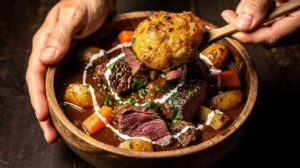
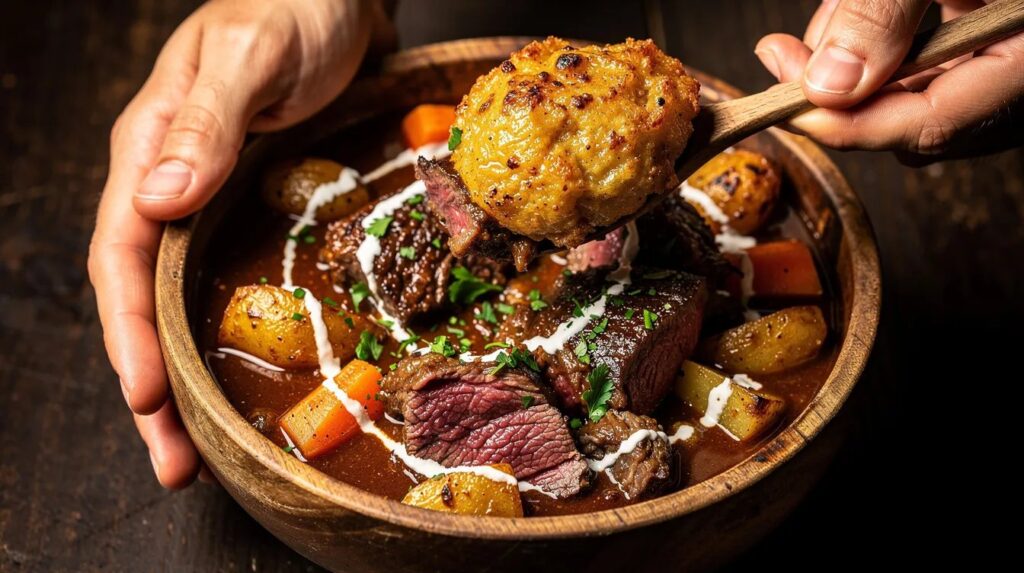
Long before protein bars and meal-prep containers, the men who cleared America's forests survived on food that had to be dense, hot, and plentiful. Lumberjacks of the 19th and early 20th centuries burned thousands of calories a day felling old-growth timber, dragging logs through snow and mud, and working from before dawn until after dusk. The camps that fed them operated like small industrial kitchens, ruled by a cook — called the cookie or shanty boss — whose reputation could make or break a crew's morale. A bad meal meant a bad crew. A great cook kept men swinging axes in brutal cold without complaint.
What those men ate tells a sharper story about American food history than almost any restaurant menu ever could. These were not refined dishes. They were solutions to a physical problem: how do you fuel a 200-pound man through ten hours of heavy labor in a Wisconsin winter? The answer involved vast quantities of pork fat, dried beans, sourdough bread, molasses, and whatever the surrounding wilderness could provide. This is a look at the 13 meals — dishes, preparations, and staple combinations — that defined life at the logging camp table.
Salt pork and beans
If logging camp food had a foundation, this was it. Salt pork — thick slabs of fatty, heavily brined pork belly — was preserved without refrigeration and traveled well across remote terrain. Combined with dried navy or kidney beans, it formed a slow-cooked pot that the cook would start the night before, letting it simmer in a cast-iron kettle over coals until morning. The fat from the pork rendered into the beans, creating a thick, protein-heavy mass that clung to the ribs for hours. Salt content was deliberately high: men sweating through physical labor needed to replace what they lost. This dish appeared at breakfast, dinner, and sometimes supper — sometimes all three.
Sourdough bread and biscuits
The camp cook maintained a sourdough starter the way a rancher tends livestock — with daily attention and genuine anxiety about losing it. Fresh yeast was unreliable in remote camps, so a live starter was carried from season to season, sometimes for years. The resulting bread was dense, slightly sour, and sturdy enough to be used as a vessel for gravy, beans, or molasses. Biscuits made from the same dough were baked in Dutch ovens half-buried in coals. They emerged with a hard, crackling crust and a steaming interior, and they disappeared from the table within minutes of being set down.
Pork fat gravy
Nothing in a logging camp was wasted, least of all the fat rendered from cooking salt pork. That drippings went into a cast-iron pan, got thickened with flour — a roux, cooked until just barely golden — and stretched with water or the liquid from boiled beans. The result was a thick, savory gravy poured over everything: biscuits, boiled potatoes, bread, and sometimes directly into a bowl eaten with a spoon. It had no official name in most camps; it was simply "gravy," and its absence would have caused a minor riot.
Boiled potatoes
Potatoes were the logging camp's most reliable carbohydrate. They stored well through harsh winters, cost relatively little, and required almost no skill to prepare in large quantities. Camp cooks boiled them by the bushel — plain, in salted water — and set them out in communal bowls. A lumberjack might eat six or eight at a sitting, smashing them with a fork and covering them in pork gravy. Fried potatoes appeared at breakfast, sliced thin and cooked in the same cast-iron pan used for salt pork, picking up the residual fat and caramelizing at the edges until the kitchen smelled of something remarkably close to contentment.
Molasses on everything
Refined sugar was expensive and impractical. Molasses — the thick, dark byproduct of sugarcane processing — was cheap, calorie-dense, and traveled in barrels without spoiling. Lumberjacks used it as a sweetener for coffee, a spread for bread, a sauce for baked beans, and occasionally a direct energy source consumed by the spoonful. Its deep, slightly bitter sweetness cut through the salt and fat that dominated every other item on the table. Camps went through extraordinary quantities of it each season, and a barrel running low before resupply was a genuine emergency.
Dried salt fish
In camps too remote for fresh meat deliveries, salt cod and dried whitefish provided another source of protein that required no refrigeration. Rehydrated overnight in cold water, then boiled or pan-fried in pork fat, salt fish had a powerful, briny flavor that the lumberjacks either loved or tolerated. It was a particularly common feature in camps across the Upper Midwest and the Great Lakes region, where proximity to commercial fisheries made it an economical choice. Some cooks prepared it as a hash — flaked and mixed with boiled potatoes and onion, then pressed flat in a pan until a crust formed on the bottom.
Bean soup
When the bean pot needed extending or the temperature outside dropped below what felt survivable, the camp cook added more water to the pot and declared it soup. This was not a compromise — it was strategic. A thin bean broth with chunks of salt pork floating through it was hot liquid that warmed a man from the inside out before he headed back into the cold. Thickened with a handful of cornmeal or a torn piece of yesterday's bread, it became something closer to a stew. The line between bean soup and baked beans in a logging camp was largely a matter of water ratio and how far the cook wanted to stretch the rations.
Cornmeal mush
Cornmeal was another camp staple that kept well, cost little, and could be prepared in large quantities with minimal equipment. Cooked into a thick porridge with water and salt — a preparation called mush in American vernacular — it was served hot at breakfast, sometimes sweetened with molasses or topped with the ever-present pork gravy. Leftover mush was poured into a loaf pan, allowed to set overnight, then sliced and fried in fat the next morning. The fried version developed a crisp exterior and a dense, starchy interior: filling fuel for a man who had hours of work ahead of him.
Boiled salt beef
Where salt pork was the everyday meat, salt beef appeared when the cook wanted to vary the protein or when pork supplies ran short. Cured in heavy brine for weeks before reaching the camp, it required long boiling — often two to three hours — to become tender and to drive out enough salt to make it palatable. The resulting meat was stringy but substantial, pulled apart with a fork and eaten alongside potatoes and bread. The cooking liquid, now a rich savory broth, was never discarded: it became the base for the next day's soup.
Dried apple pie
A logging camp cook who could produce pie earned himself a reputation that traveled between camps for years. Fresh fruit was out of the question for most of the season, but dried apples — light, shelf-stable, and capable of rehydrating into something resembling the real thing — made pie possible in even the most remote camp. Soaked overnight, simmered with a pinch of cinnamon and plenty of molasses or sugar when available, they went into a simple lard-based crust and baked in a reflector oven or Dutch oven. The result was dense and sweet and nothing like a fine dining establishment's version, which was entirely beside the point.
Venison and wild game
In camps where hunting was possible — and it often was, since logging operations ran directly through forests full of deer, rabbit, and game birds — the cook supplemented rations with whatever could be shot or trapped. Venison was roasted over an open fire or braised slowly in the bean pot. Rabbits were stewed. Grouse were pan-fried in pork fat. Wild game provided a break from the monotony of preserved food and a nutritional variety that the standard ration lacked. Some camps employed a dedicated hunter whose sole job was to keep fresh meat on the table.
Prune and dried fruit stew
Constipation was a genuine occupational hazard of the logging camp diet — a ration built almost entirely on meat, fat, bread, and dried legumes moved slowly through the human digestive system. Dried prunes, stewed in water with dried apricots or raisins when available, served as both a dessert and a practical corrective. Lumberjacks ate them without irony or complaint. A bowl of warm, sweet stewed prunes at the end of a meal was considered a treat, not a medical intervention, and the camp cook who kept a pot going on the back of the stove was looked upon with quiet gratitude.
Coffee — strong, black, and constant
Coffee was not a meal in the strictest sense, but in the logging camp it functioned as one. Brewed in enormous pots — sometimes using boiled grounds thrown directly into water, a method called cowboy coffee or camp coffee — it was served at every meal and kept warm throughout the day. Lumberjacks drank it black. Milk was impractical and sugar was rationed, but the coffee itself was always strong enough that the spoon could nearly stand upright. On mornings when temperatures dropped below zero and the men dressed in the dark to begin work, it was the first hot thing they touched, and it mattered more than almost anything else on the table.
A table built for survival
The logging camp kitchen was not interested in elegance. It was interested in keeping men alive and functional through conditions that would break most modern workers within a week. The food was monotonous by any contemporary standard, and the cooks who prepared it worked under pressure and with limited resources. But there was a rough ingenuity to these meals — the use of every scrap, the preservation techniques, the caloric density packed into simple combinations of fat, starch, and protein — that deserves more than a footnote in American food history. These were meals built with genuine purpose, and they fueled the clearing of a continent.
Frequently asked questions
How many calories did lumberjacks actually consume per day?
Historical accounts and nutritional estimates suggest that lumberjacks engaged in active logging consumed somewhere between 5,000 and 7,000 calories per day — figures that reflect the extraordinary physical demands of felling trees, hauling logs, and working through extreme cold for ten or more hours at a stretch. Camp cooks were expected to provide food in sufficient quantity that no man left the table hungry, and portions were sized accordingly.
Were women ever employed as logging camp cooks?
In most 19th-century logging camps, the cook was male — the work was physically demanding, the environment rough, and social norms of the era excluded women from most camp roles. However, historical records do document women serving as cooks in some smaller or family-operated camps, particularly in the Pacific Northwest and parts of Canada. The role of camp cook, regardless of gender, carried significant status and was among the highest-paid positions in the camp.
What happened to food supplies when camps were snowed in?
Remote camps planned their provisions carefully before winter set in, stockpiling enough salt pork, dried beans, cornmeal, molasses, and dried fruit to last several months without resupply. When unexpected storms extended the isolation, rations were stretched — soups made thinner, portions reduced, hunting intensified. The most experienced camp cooks were skilled at making limited supplies last without the crew noticing how dire the situation had become until it resolved itself.
Did lumberjacks ever drink alcohol in camp?
Most professional logging operations — particularly those run by large timber companies from the mid-19th century onward — enforced strict no-alcohol rules in camp. The combination of sharp tools, heavy machinery, falling timber, and intoxication was obviously catastrophic, and operators knew it. Men who wanted to drink did so in town during their off weeks. The camp itself was typically dry, and a cook found supplying or tolerating alcohol risked immediate dismissal alongside the offending workers.
How does logging camp food compare to what outdoor workers eat today?
Modern forestry workers and outdoor laborers have access to nutritionally engineered rations, calorie-dense commercial foods, and food safety infrastructure that 19th-century lumberjacks could not have imagined. The core logic, however, has not changed: people doing extreme physical labor in cold environments need high-calorie, high-fat, high-protein food delivered hot and in large quantities. The beans, the pork, the bread, and the coffee are not so far from what you'd find in a modern backcountry work camp today.