

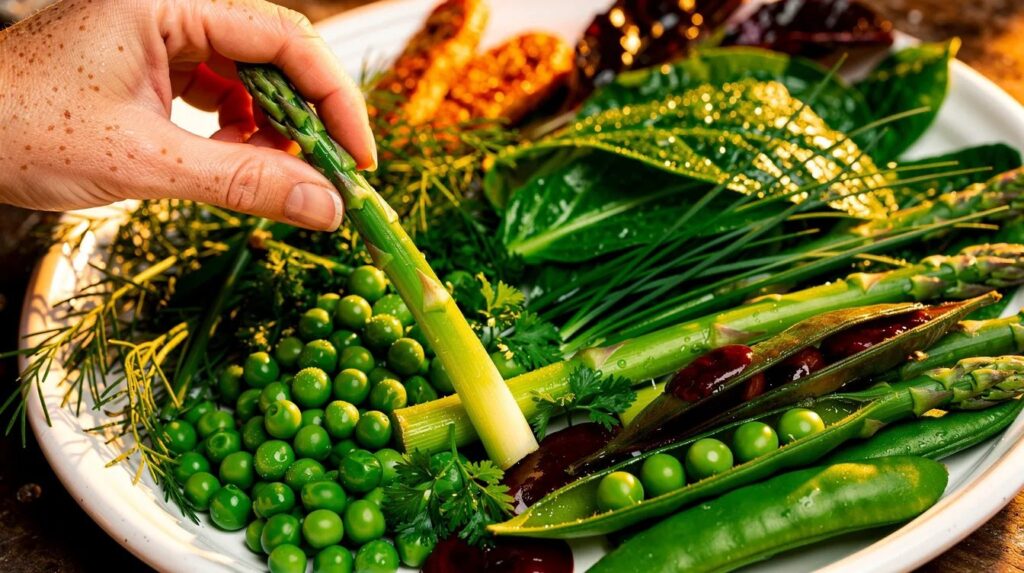
Spring arrives at the market with a kind of quiet insistence — the first slim stalks of asparagus bundled tight, pods of sweet peas that snap between your fingers, and bunches of herbs so fragrant they scent your shopping bag the whole walk home. This is the season when cooking requires the least intervention: a hot pan, good olive oil, and restraint. These five recipes were chosen by the people who spend their days developing, testing, and arguing passionately about food — and they all circle back to the same ingredients because, right now, nothing else comes close.
Each dish here treats asparagus, peas, and fresh herbs not as garnish but as the main event. Some are weeknight fast, others call for a slower Sunday rhythm. All of them capture that particular early-spring feeling — bright, green, alive — before the heat of May turns everything sweeter and softer. Sharpen your knife, bring a large pot of salted water to boil, and let the season do most of the work.
Shaved asparagus salad with lemon ricotta and mint
| Prep time | 15 min |
| Cook time | 0 min |
| Servings | 4 |
| Difficulty | Easy |
| Cost | $$ |
| Season | Asparagus, fresh mint, lemon |
Suitable for: Vegetarian · Gluten-free
Ingredients
- 1 lb thick asparagus spears, woody ends snapped off
- ¾ cup whole-milk ricotta
- 1 lemon, zest and juice
- 3 tbsp extra-virgin olive oil, plus more to finish
- ¼ cup fresh mint leaves, torn
- ¼ cup fresh flat-leaf parsley, roughly chopped
- 2 tbsp toasted pine nuts
- Flaky sea salt and freshly cracked black pepper
- Parmigiano-Reggiano, shaved, to finish
Preparation
1. Shave the asparagus
Hold each asparagus spear flat against your cutting board and use a Y-shaped vegetable peeler to draw long, thin ribbons from tip to base. Work in one firm, confident stroke — hesitation tears the flesh. The first ribbon from each spear will be slightly rounded; lay it aside and continue until you reach the fibrous core, which you can discard or save for stock. The resulting pile of pale green curls will loosen and soften slightly as they sit, which is exactly what you want. Transfer to a large bowl and season immediately with a generous pinch of flaky salt to begin drawing out their moisture and sweetness.
2. Build the lemon ricotta
In a small bowl, combine the ricotta with the lemon zest, 2 tablespoons of lemon juice, and 1 tablespoon of olive oil. Stir firmly with a fork until the mixture loosens slightly — it should hold its shape but spread easily. Season with salt and a few grinds of black pepper. Taste: it should be bright, creamy, and forward with citrus. Spread it across the base of a wide serving platter in an uneven, organic layer using the back of a spoon.
3. Dress and assemble
Toss the shaved asparagus with the remaining 2 tablespoons of olive oil, a squeeze more of lemon juice, the mint, and the parsley. Pile the dressed asparagus over the ricotta — height is your friend here. Scatter the pine nuts, then use a vegetable peeler to shave Parmigiano-Reggiano directly over the top. Finish with a drizzle of your best olive oil and a few turns of black pepper. Bring to the table immediately.
Chef's note
Thick asparagus sheaths better than thin ones — the spears hold their shape and give you longer, more elegant ribbons. If all you can find are pencil-thin stalks, slice them on a sharp diagonal instead, about ⅛-inch thick. The lemon ricotta base can be made up to a day ahead and kept covered in the refrigerator; just bring it to room temperature before spreading.
Wine pairing
The combination of raw asparagus, lemon, and fresh mint calls for a wine with enough acidity to match without competing.
A Sauvignon Blanc from New Zealand's Marlborough region — its signature notes of cut grass, grapefruit zest, and white herbs echo everything in the bowl — works beautifully. California Fumé Blanc is a slightly rounder alternative. For a non-alcoholic option, sparkling water with a slice of lemon and a sprig of mint mirrors the dish's brightness without distraction.
Nutritional values (per serving, approximate values)
| Nutrient | Amount |
|---|---|
| Calories | ~290 kcal |
| Protein | ~11 g |
| Carbohydrates | ~9 g |
| of which sugars | ~4 g |
| Fat | ~23 g |
| Fiber | ~3 g |
Spring pea soup with chive oil and crème fraîche
| Prep time | 10 min |
| Cook time | 15 min |
| Servings | 4 |
| Difficulty | Easy |
| Cost | $$ |
| Season | Fresh or frozen peas, chives, leeks |
Suitable for: Vegetarian · Gluten-free
Ingredients
- 2 tbsp unsalted butter
- 1 leek, white and light green parts only, thinly sliced and well washed
- 2 garlic cloves, thinly sliced
- 4 cups fresh or frozen peas (about 1½ lbs fresh pods, shelled)
- 3 cups vegetable stock, warm
- ½ cup crème fraîche, plus more to serve
- Kosher salt and white pepper
- For the chive oil: ½ cup chives + ½ cup neutral oil, blended and strained
Preparation
1. Soften the aromatics
Melt the butter in a medium saucepan over medium-low heat until it foams and subsides. Add the sliced leek with a pinch of salt and cook, stirring occasionally, for 6 to 8 minutes — the leek should become completely soft and translucent, almost melting, without taking on any color whatsoever. This is called sweating: coaxing out sweetness and moisture without browning, which would muddy the soup's clean green color. Add the garlic and cook for another 90 seconds, stirring constantly, until fragrant but still pale.
2. Cook the peas
Add the peas and pour in the warm stock. Raise the heat to medium-high and bring to a rapid boil, then immediately reduce to a simmer. Cook for exactly 3 minutes if using fresh peas, or 2 minutes for frozen — no longer. Overcooking is the enemy of the vivid jade color you're after; the peas should be just tender, not mushy. Remove from heat and stir in the crème fraîche.
3. Blend and finish
Working in batches and filling the blender no more than halfway each time, blend the soup at high speed for a full 2 minutes per batch — patience here pays off in a silk-smooth result. Pass through a fine-mesh strainer if you want an ultra-refined texture, pressing gently with a ladle. Return to a clean pot, adjust seasoning with salt and white pepper, and serve immediately in warm bowls. Swirl in a spoonful of crème fraîche and drizzle the chive oil across the surface.
Chef's note
The chive oil is the detail that elevates this from simple to memorable. Blend a large bunch of chives with a neutral oil — grapeseed works well — at high speed for 2 full minutes until the oil turns intensely green, then strain through a fine cloth. It keeps refrigerated for up to 5 days and works on eggs, grilled fish, and roasted vegetables all spring long.
Wine pairing
A soup this delicate needs a wine that doesn't overpower its vegetal sweetness.
Look to a crisp Muscadet Sèvre-et-Maine — its mineral edge and low alcohol make it an ideal partner. An unoaked Chardonnay from California's Central Coast offers a richer but equally agreeable match. For a non-alcoholic option, a cold cucumber-mint infused water carries the same cooling, green quality as the soup itself.
Nutritional values (per serving, approximate values)
| Nutrient | Amount |
|---|---|
| Calories | ~260 kcal |
| Protein | ~9 g |
| Carbohydrates | ~22 g |
| of which sugars | ~9 g |
| Fat | ~15 g |
| Fiber | ~6 g |
Asparagus and pea risotto with tarragon
| Prep time | 15 min |
| Cook time | 30 min |
| Servings | 4 |
| Difficulty | Medium |
| Cost | $$ |
| Season | Asparagus, fresh peas, tarragon |
Suitable for: Vegetarian
Ingredients
- 1½ cups Arborio or Carnaroli rice
- 1 bunch asparagus (~1 lb), cut into 1-inch pieces, tips reserved
- 1 cup fresh or frozen peas
- 1 shallot, finely minced
- 2 garlic cloves, minced
- ½ cup dry white wine
- 5–6 cups warm vegetable stock
- 3 tbsp unsalted butter, cold and cubed
- ½ cup Parmigiano-Reggiano, freshly grated
- 2 tbsp fresh tarragon leaves, roughly torn
- 2 tbsp extra-virgin olive oil
- Kosher salt and black pepper
Preparation
1. Toast the rice
Warm the olive oil in a wide, heavy-bottomed saucepan — a straight-sided skillet or a Dutch oven both work — over medium heat. Add the shallot and a pinch of salt, cooking for 3 to 4 minutes until soft and translucent. Add the garlic and stir for 30 seconds. Add the rice and stir to coat every grain with the fat. Cook, stirring constantly, for 2 minutes, until the outer layer of each grain turns translucent while the center remains opaque — this toasting step creates a structural barrier that lets the rice absorb stock gradually without turning to porridge.
2. Add the wine and begin ladling
Pour in the white wine and stir until it is completely absorbed — you'll hear a sharp sizzle and smell the alcohol cooking off, leaving behind a clean acidity. Begin adding the warm stock one ladleful at a time, stirring almost continuously and waiting until each addition is absorbed before adding the next. This patient ladling is the foundation of a properly mantecato risotto: the friction of stirring coaxes starch from the rice, which will later bind with the butter into a cohesive, creamy whole. After 12 minutes of ladling, add the asparagus pieces (not the tips) and continue.
3. Finish with greens and butter
After 8 more minutes, the rice should be al dente — tender throughout but with a faint resistance at the very center when you bite through a grain. Add the asparagus tips and peas and stir in one final ladle of stock. Remove from heat. Add the cold butter cubes and the Parmigiano-Reggiano, then stir vigorously in a figure-eight motion for a full 90 seconds — this is the mantecatura, the emulsification that gives risotto its signature wave-like consistency (all'onda in Italian). Fold in the tarragon, adjust seasoning, and serve at once in warmed, shallow bowls.
Chef's note
Cold butter is non-negotiable for the mantecatura — warm butter separates rather than emulsifies. Keep it in the refrigerator until the moment you need it. Tarragon is assertive, so add it off the heat: cooking it even briefly turns its anise notes harsh. If you can't find fresh tarragon, fresh chervil is the closest substitute, or use a smaller amount of fresh basil.
Wine pairing
Risotto's richness and tarragon's anise quality need a wine with good acidity and aromatic complexity.
A White Burgundy — specifically a Mâcon-Villages or a Pouilly-Fuissé — brings the buttery weight and mineral freshness to match without overshadowing the herbs. An Oregon Pinot Gris, with its pear and spice notes, is a rounder, more approachable American alternative.
Nutritional values (per serving, approximate values)
| Nutrient | Amount |
|---|---|
| Calories | ~480 kcal |
| Protein | ~14 g |
| Carbohydrates | ~62 g |
| of which sugars | ~5 g |
| Fat | ~18 g |
| Fiber | ~5 g |
Soft-boiled eggs with asparagus soldiers and herb butter
| Prep time | 10 min |
| Cook time | 10 min |
| Servings | 2 |
| Difficulty | Easy |
| Cost | $ |
| Season | Asparagus, chives, tarragon |
Suitable for: Vegetarian · Gluten-free
Ingredients
- 4 large eggs, at room temperature
- 12 thick asparagus spears, woody ends snapped
- 3 tbsp unsalted butter, softened
- 1 tbsp fresh chives, finely minced
- 1 tsp fresh tarragon, finely minced
- ½ tsp lemon zest
- Flaky sea salt and black pepper
Preparation
1. Make the herb butter
In a small bowl, mash the softened butter with a fork until completely smooth. Work in the chives, tarragon, and lemon zest until evenly distributed — the butter will turn pale green and smell unmistakably of spring. Season with a small pinch of flaky salt and a little pepper. Set aside at room temperature; it should be soft enough to melt on contact with a hot asparagus spear.
2. Cook the asparagus and eggs simultaneously
Bring a medium saucepan of well-salted water to a rolling boil. Lower the eggs in gently on a spoon to prevent cracking. Set a timer for exactly 6 minutes and 30 seconds for a fully set white and a yolk that is just set at the edges but still deeply golden and custardy at the center. Meanwhile, blanch the asparagus spears in a separate pan of boiling salted water for 2 to 3 minutes, depending on thickness — they should bend slightly under their own weight when lifted with tongs but still hold a firm snap. Transfer immediately to an ice bath to stop the cooking and preserve their vivid green color.
3. Assemble and serve
Transfer the eggs to egg cups. Pat the asparagus dry and arrange alongside each egg. Spread the herb butter generously over the warm asparagus spears — it will melt and run along the ridges of each stalk. Slice the top off each egg to reveal the jammy interior, season with flaky salt, and dip the asparagus directly into the yolk. The contrast between the cool herb butter, the warm egg, and the barely firm asparagus is the entire point of this dish.
Chef's note
Room-temperature eggs are not optional — cold eggs from the refrigerator will need an additional 30 to 45 seconds and the timing becomes less predictable. The herb butter can be rolled into a log in plastic wrap and frozen for up to a month; slice off coins as needed for grilled fish, roasted vegetables, or simply melted over steamed new potatoes.
Nutritional values (per serving, approximate values)
| Nutrient | Amount |
|---|---|
| Calories | ~320 kcal |
| Protein | ~18 g |
| Carbohydrates | ~6 g |
| of which sugars | ~3 g |
| Fat | ~26 g |
| Fiber | ~3 g |
Pasta with peas, pancetta, and fresh herbs
| Prep time | 10 min |
| Cook time | 20 min |
| Servings | 4 |
| Difficulty | Easy |
| Cost | $$ |
| Season | Fresh peas, mint, basil |
Ingredients
- 12 oz rigatoni or spaghetti
- 4 oz pancetta, diced into ¼-inch cubes
- 2 cups fresh or frozen peas
- 3 garlic cloves, thinly sliced
- ½ cup dry white wine
- 3 tbsp extra-virgin olive oil
- ½ cup Pecorino Romano, finely grated, plus more to serve
- ¼ cup fresh mint, roughly torn
- ¼ cup fresh basil, roughly torn
- Kosher salt, black pepper, red pepper flakes to taste
Preparation
1. Render the pancetta
Set a large, wide skillet over medium heat and add the pancetta with no oil — the fat will render naturally. Cook, stirring occasionally, for 6 to 8 minutes until the cubes are golden and crisp on the outside while remaining slightly soft at the center. The fat in the pan is flavor: do not drain it. Reduce the heat to medium-low, add the olive oil and garlic slices, and cook for 2 minutes until the garlic turns pale gold and fragrant. Scatter in a pinch of red pepper flakes.
2. Build the sauce
Pour in the white wine and raise the heat briefly — it will bubble aggressively and deglaze the pan, lifting the brown, caramelized bits from the bottom, which carry concentrated savory depth. Reduce by half, about 2 minutes. Add 1 cup of the peas to the pan and cook for 3 minutes. Using the back of a wooden spoon or a potato masher, crush roughly half of them against the side of the skillet — this creates a textured, slightly thick sauce that will cling to the pasta.
3. Bring the pasta together
Cook the pasta in heavily salted boiling water until 2 minutes before the package's suggested time — you will finish it in the pan. Reserve a generous cup of pasta water before draining. Transfer the pasta directly to the skillet with a ladle of pasta water and toss over medium heat, adding more water as needed until the sauce coats every piece in a glossy, cohesive layer. Off the heat, add the remaining whole peas, the Pecorino Romano, mint, and basil. Toss once more, taste for seasoning, and plate immediately with more cheese at the table.
Chef's note
The pasta water is not a backup plan — it is an ingredient. Its starch content is what binds the rendered fat, wine, and crushed peas into a sauce rather than a greasy liquid. Add it incrementally and watch the texture transform with each addition. If fresh peas are at the market, shelling them at the table with a glass of wine before cooking is one of the small pleasures this season quietly offers.
Wine pairing
The salt of the pancetta and Pecorino, the sweetness of the peas, and the herbal finish pull in different directions — the wine needs to hold them together.
A Vermentino from Sardinia, with its saline minerality and stone fruit, navigates all three beautifully. A domestic Pinot Grigio from Oregon's Willamette Valley is cleaner and more restrained. For a red option, a light-bodied Barbera d'Asti — served slightly cool — handles the fat without overwhelming the herbs.
Nutritional values (per serving, approximate values)
| Nutrient | Amount |
|---|---|
| Calories | ~560 kcal |
| Protein | ~22 g |
| Carbohydrates | ~68 g |
| of which sugars | ~7 g |
| Fat | ~20 g |
| Fiber | ~7 g |
Buying and storing spring produce
All five recipes live or die by the quality of what comes through the door. Asparagus should feel firm and snap cleanly — spears that bend without resistance have been sitting too long and will taste bitter and fibrous rather than sweet and grassy. The cut ends should look moist, not dried or cracked. Stand them upright in an inch of cold water in the refrigerator, covered loosely with a plastic bag, and cook within two days. Fresh peas in their pods are the spring luxury worth seeking out at a farmers' market: look for pods that are plump, tightly closed, and feel heavy. Shell them just before cooking. Frozen peas, provided they are a quality brand and cooked briefly, are a fully honorable substitute and in some cases outperform fresh peas that have spent days in transit.
Herbs want cool and humidity: wrap them in a slightly damp paper towel, place them in a sealed bag, and refrigerate. Mint holds for up to a week this way; basil, more fragile, prefers to sit stem-down in a glass of water at room temperature, away from direct sunlight. Tarragon and chives are the most forgiving of the group and will keep several days well-wrapped. Buy them in quantities you can use within a week — at this time of year, that's rarely a challenge.
Questions frequently asked
Can I use frozen asparagus in these recipes?
Frozen asparagus thaws soft and watery, which makes it unsuitable for the shaved salad or the soft-boiled egg dish — both rely on the vegetable's raw or barely-cooked structure. For the risotto and the pasta, where the asparagus is cut into pieces and cooked further, frozen can work at a pinch, though the color and texture will be noticeably duller. Fresh asparagus is available and affordable from late March through May across most of the United States; it's worth seeking out during this window.
How far in advance can these dishes be prepared?
The herb butter (recipe 4) and the chive oil (recipe 2) can both be made up to 5 days ahead. The lemon ricotta base for the salad holds well for 24 hours refrigerated. The pea soup is best served fresh but reheats reasonably well over low heat — do not boil it, as the color will turn from jade to olive. Risotto does not hold or reheat well; it should be served the moment it reaches the right consistency. The pasta is best finished and plated immediately.
Are there vegetarian substitutions for the pancetta in recipe 5?
Smoked paprika and a tablespoon of capers cooked in olive oil until slightly crisp provide a reasonably close approximation of the pancetta's smoky, salty role. Alternatively, diced smoked tofu rendered until golden adds body and chew. The white wine, garlic, and crushed pea base are flavorful enough to carry the dish without cured meat, especially if you use a well-seasoned vegetable stock in place of pasta water for finishing.
What other herbs work well with asparagus and peas?
Chervil — delicate, faintly anise-scented, and underused — pairs with both vegetables with particular elegance and is worth seeking out in spring. Dill brings a Scandinavian brightness and works especially well alongside eggs and soft cheeses. Flat-leaf parsley is the most neutral and can substitute in any of these recipes without altering the flavor profile significantly. Avoid woody herbs like rosemary and thyme here: their intensity overwhelms the lightness that defines spring cooking.
Can children eat these recipes?
Recipes 1, 2, and 3 are entirely family-friendly as written. Recipe 4 involves soft-boiled eggs with a runny yolk, which is generally not recommended for young children, pregnant women, or immunocompromised individuals — extending the cooking time to 8 minutes produces a fully set yolk. Recipe 5 contains pancetta and wine reduced in the pan; the alcohol cooks off, but if serving to children, simply omit the pancetta and replace the wine with a small splash of apple cider vinegar for acidity.