


Every spring, Washington D.C. transforms into a pale pink dreamscape as the cherry trees along the Tidal Basin burst into bloom. This brief two-week period—typically occurring between mid-March and early April—draws people outdoors, encouraging them to slow down and enjoy light, floral, and chilled refreshments. This sakura lemonade originated from this very desire: to encapsulate the delicate, subtly sweet, and lightly almond-like flavor of cherry blossoms in a homemade beverage.
Requiring just three ingredients—cherry blossom syrup, fresh lemon juice, and sparkling water—this recipe simplifies the concept to its core. It contains no artificial coloring, requires no complicated techniques, and doesn't need any special bartending skills. The syrup naturally produces the light blush color, and the flavor resembles a cross between classic lemonade and Japanese sakura tea. With a pitcher, a citrus press, and ten minutes, you're ready to make it.
| Prep time | 10 min |
| Cook time | 15 min (for the syrup) |
| Rest time | 20 min (syrup cooling) |
| Servings | 4 glasses |
| Difficulty | Easy |
| Cost | $ |
| Season | Cherry blossoms, lemons |
Suitable for: Vegan · Gluten-free · Dairy-free
Ingredients
- 1 cup cherry blossom syrup (store-bought or homemade — see method below)
- ¾ cup freshly squeezed lemon juice (~5 to 6 medium lemons)
- 3 cups sparkling water, chilled
For the homemade cherry blossom syrup (makes ~1 cup):
- 1 cup granulated white sugar
- 1 cup water
- ½ oz dried salted sakura blossoms (sold in Japanese grocery stores, rinsed to remove excess salt) — or 2 tbsp sakura extract if dried blossoms are unavailable
Equipment
- Small saucepan
- Fine mesh strainer
- Citrus press or juicer
- Large pitcher (at least 1.5 qt)
- Long spoon or bar stirrer
- 4 tall glasses
- Ice cube tray (optional but recommended)
Method
1. Make the cherry blossom syrup
If using store-bought sakura syrup, proceed to step 2. To create your own, begin by rinsing the dried salted sakura blossoms under cold running water for about 30 seconds. This eliminates the preserving brine, which could otherwise overwhelm the floral flavors and render your lemonade unpleasantly salty. Place the rinsed blossoms in a small saucepan along with the sugar and water. Bring the mixture to a gentle simmer over medium heat, stirring occasionally until all sugar crystals have dissolved—this should take around 3 to 4 minutes. Avoid a full boil; a gentle shimmer on the surface is sufficient. Once the sugar is completely dissolved, reduce the heat to low and allow the blossoms to steep for another 10 minutes. The liquid will gradually adopt a delicate, dusty rose hue and acquire a distinctive sakura scent: subtle, slightly floral, with a delicate almond-like note typical of Prunus serrulata blossoms. Remove from heat and strain through a fine mesh strainer into a heatproof jar or measuring cup, pressing lightly on the blossoms to extract every last bit. Allow the syrup to cool to room temperature for at least 20 minutes before using—pouring hot syrup over sparkling water will cause it to lose its fizz.
2. Juice the lemons
While the syrup cools, juice the lemons. Before cutting, firmly roll each one on the countertop with your palm for a few seconds—this action breaks down internal membranes and significantly increases the juice yield. Cut each lemon in half crosswise (not lengthwise) and press firmly on the juicer or citrus press. Aim for ¾ cup of juice, which should come from 5 to 6 medium lemons, depending on their size and ripeness. Taste as you go; the juice should be sharply tart. Lemons in the U.S. are often at their best in the spring, with thin skins and plenty of juice. Strain the juice through a fine-mesh strainer to eliminate seeds and any extra pulp, though a little pulp is acceptable and adds body to the drink.
3. Combine and assemble
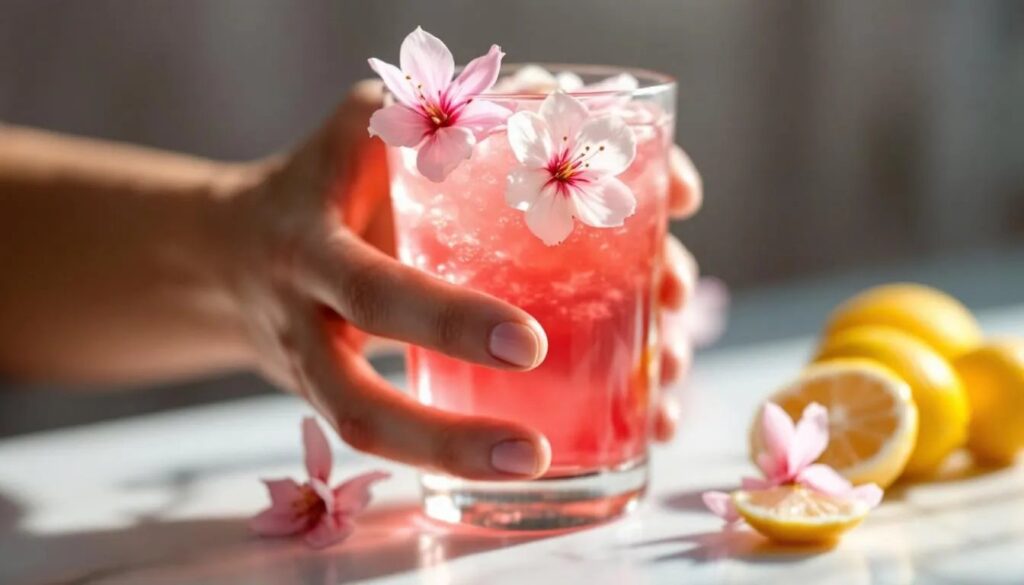
In the pitcher, combine the cooled cherry blossom syrup with the fresh lemon juice. Mix with a long spoon until the ingredients are fully combined—you'll notice that the color of the mixture deepens slightly, as the pink of the syrup and the yellow of the lemon blend together. Before adding the sparkling water, taste the concentrate; it should taste intensely sweet and tart, which is how it should be, as the carbonated water will balance it out. When serving, add the chilled sparkling water directly to the pitcher and stir lightly once or twice. Over-stirring after adding carbonation risks losing the bubbles. Fill each glass with ice, pour the lemonade over it, and serve immediately. The drink will be a soft blush pink—more pale rose than bright red—topped with a delicate ring of bubbles.
4. Adjust to taste
Every batch of cherry blossom syrup will vary slightly, and lemon acidity depends on the season and type. Before serving, taste with a spoon. If the drink is too tart, add an extra tablespoon of syrup. If it feels too sweet, a small squeeze of additional lemon juice will restore balance. The optimal ratio resembles a balance between classic American lemonade and Japanese sakura-cha (cherry blossom tea), combining floral and refreshing notes without being overly sugary.
Chef's tip
If you can find fresh or lightly pickled sakura blossoms from a Japanese specialty store, add one to each glass before pouring—it will unfurl beautifully in the liquid and enhance the drink's visual appeal. For a more sophisticated spin, swap half the sparkling water for chilled hojicha (roasted green tea) in a sparkling mocktail. The tea's toasty, subtly smoky undertones contrast the floral sweetness of the sakura unexpectedly well. This variation is especially well-suited for gatherings, where a beverage more refined than standard soft drinks is appreciated.
Drinks pairing
This lemonade is light enough to complement food while also being aromatic enough to stand alone. Its floral acidity complements delicate, neutral flavors best, rather than anything strong or spicy.
It pairs wonderfully with light cucumber sandwiches, avocado toast, or soft ricotta with honey; the kinds of spring brunch foods eaten when the weather first turns warm. For adults, adding a small measure of elderflower liqueur (St-Germain is the most widely available) just before serving introduces a layered botanical sweetness without overpowering the sakura. Another option is adding a splash of dry sparkling sake for a more authentic Japanese profile, bringing a dry and faintly yeasty note to blend with the sweet floral base.
The story behind sakura season
Washington, D.C.'s cherry blossoms originated in 1912, when Tokyo Mayor Yukio Ozaki presented the city with 3,000 Yoshino cherry trees (Prunus × yedoensis) as a symbol of friendship between Japan and the United States. These original trees, planted along the Tidal Basin and in East Potomac Park, continue to bloom today—some of them are over a century old. The National Cherry Blossom Festival, now held for several weeks in late March and early April, has become one of the largest spring celebrations in the country, attracting nearly 1.5 million visitors during peak years.
In Japan, the tradition of hanami—literally "flower viewing"—dates back over a thousand years. Families and friends gather under blossoming cherry trees to eat, drink, and welcome the arrival of spring. Foods and drinks linked to this season are culturally significant: sakura-flavored sweets, teas, and beverages appear across Japan each March and disappear as quickly as the petals fall. This lemonade embraces that seasonal attentiveness—the idea that specific flavors are tied to a precise, unrepeatable moment and are worth savoring.
Nutritional values (per serving, approximate values)
| Nutrient | Amount |
|---|---|
| Calories | ~110 kcal |
| Protein | ~0 g |
| Carbohydrates | ~28 g |
| of which sugars | ~26 g |
| Fat | ~0 g |
| Fiber | ~0.2 g |
| Vitamin C | ~20 mg |
Frequently asked questions
Can I make this drink ahead of time?
You can prepare the cherry blossom syrup and the lemon juice up to 3 days in advance, keeping them separately in sealed containers in the refrigerator. To maintain carbonation, add the syrup, juice, and sparkling water just before serving. Combining the syrup and lemon juice concentrate together (without sparkling water) the night before acts as a convenient shortcut, preserving well and making last-minute assembly effortless.
Where can I find dried salted sakura blossoms in the U.S.?
Japanese grocery stores, such as Mitsuwa, H Mart, and Marukai—the most widely available chains—typically stock dried salted sakura blossoms from late February through April to coincide with the blooming season. They are sold in small sealed bags, usually labeled shio-zuke sakura (salt-pickled cherry blossoms). Online retailers, including Amazon and Japan Centre, also carry them year-round. If sourcing them is difficult, use sakura extract or a high-quality cherry blossom syrup (Monin and Torani both offer versions) as possible substitutes, though the homemade version delivers a noticeably more delicate, natural flavor.
Can I reduce the sugar in the syrup?
Yes, but with a few considerations. Utilizing a standard 1:1 sugar-to-water ratio for simple syrups produces a stable product that stores well in the refrigerator for up to two weeks. Cutting the sugar to ¾ cup per cup of water will create a lighter syrup, so adjust the lemon accordingly. Less juice will be needed to prevent the beverage from becoming too tart. Reducing sugar below ½ cup is not advised, as it can affect preservation and flavor transfer.
Is there an alcohol-free version suitable for children?
The existing recipe is already alcohol-free. For a more appealing presentation for kids, add a whole sakura blossom, rinsed of salt, to each glass, and slightly increase the syrup for a sweeter taste. Consider serving over crushed ice and adding a thin lemon wheel to the rim to create a festive effect without modifying the recipe.
Can still water replace sparkling water?
Using still water will create a milder beverage resembling a Japanese floral cordial rather than lemonade. The texture will differ considerably—still water makes the drink feel slightly heavier and less refreshing on a warm day. If sparkling water isn't available, lightly chilled green tea (mild sencha or cold-brewed gyokuro) offers a more interesting substitute than plain still water, imparting a gentle vegetal note that enhances the sakura.