

Spring arrives just as the craving hits: something cool, creamy, and crisp alongside a sandwich or a pile of grilled chicken. For a generation of fast-food fans, that craving has a very specific answer — the coleslaw that Chick-fil-A quietly removed from its menu in January 2016, replacing it with a kale salad that, however nutritious, never quite filled the void. The original recipe had been on the menu since the chain's earliest days, and its disappearance sparked genuine grief, dedicated Reddit threads, and years of home-kitchen experiments.
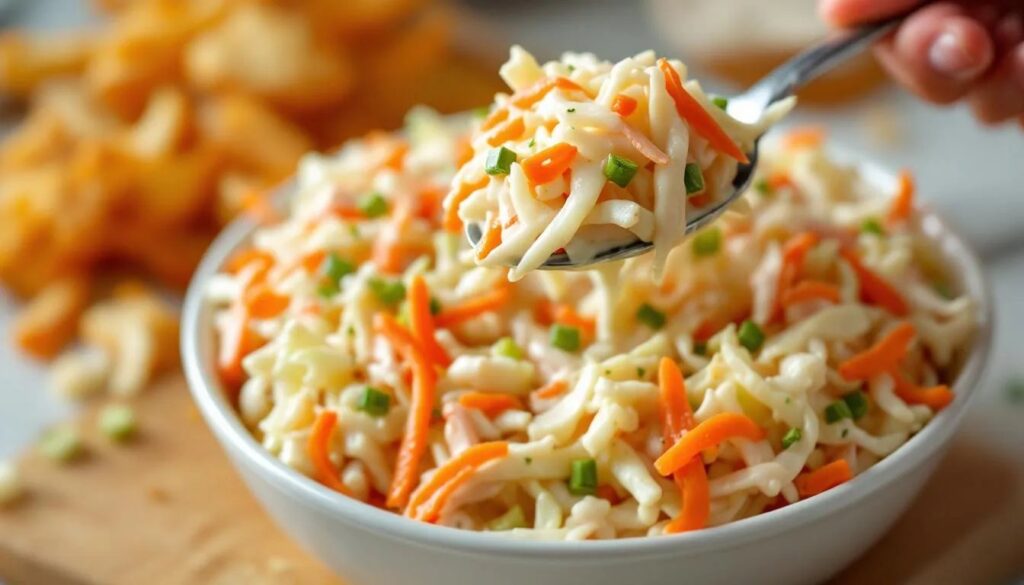
What made that coleslaw so distinctive was its balance: sweet without being cloying, creamy without being heavy, with a faint tang that cut through the richness of a fried chicken sandwich. After years of community testing and careful reverse-engineering, this copycat version replicates those exact ratios. The cabbage is fresh, the dressing comes together in minutes, and the result chills in the refrigerator while you prep the rest of your meal. Tie on your apron — this one is worth making today.
| Preparation | 20 min |
| Rest | 2 hours (minimum) |
| Servings | 8 people |
| Difficulty | Easy |
| Cost | $ |
| Season | Green cabbage, carrots — available year-round, best in early spring |
Suitable for: Vegetarian · Gluten-free
Ingredients
For the slaw base
- 1 small head green cabbage (~6 cups finely shredded, approximately 680 g)
- ¼ cup carrots, finely shredded (about 1 medium carrot)
For the dressing
- ¾ cup mayonnaise (full-fat, preferably Duke's or Hellmann's for closest flavor)
- ⅓ cup granulated sugar
- ¼ cup whole milk
- ¼ cup buttermilk
- 2 tablespoons white vinegar
- 1 tablespoon lemon juice, freshly squeezed
- ½ teaspoon fine salt
- ⅛ teaspoon white pepper
Equipment
- Large mixing bowl
- Medium mixing bowl or large measuring cup
- Box grater or mandoline slicer
- Sharp chef's knife and cutting board
- Whisk
- Airtight container for refrigerating
- Kitchen scale (optional but recommended)
Preparation
1. Shred the cabbage with precision
Remove the tough outer leaves of the green cabbage and quarter it through the core, then cut away the dense white core from each quarter. Using a sharp knife, shred the cabbage into very fine, uniform strips — aim for threads roughly 1–2 mm wide. This fine cut is one of the defining characteristics of the original Chick-fil-A texture; thicker shreds will produce a crunchier, more rustic result that drifts away from the copycat target. If you have a mandoline, set it to its thinnest slicing position and work carefully with the hand guard in place. Measure out approximately 6 cups of shredded cabbage and transfer it to your large mixing bowl. Shred the carrot on the fine holes of a box grater and add it to the bowl. The carrot contributes color and a faint natural sweetness that anchors the dressing's sugar without making it feel artificial.
2. Build the dressing
In your medium bowl, combine the mayonnaise, sugar, milk, buttermilk, white vinegar, and lemon juice. Whisk vigorously until the sugar is fully dissolved and the dressing is smooth and uniform — this typically takes about 90 seconds of active whisking. Do not rush past the point of dissolving the sugar; undissolved granules will create pockets of sweetness rather than the even, background sweetness the dressing is known for. Add the salt and white pepper, whisk once more, and taste. The raw dressing should taste noticeably sweet and slightly sharp — more intense than you want the final slaw to be, because the cabbage will dilute and absorb flavors during the resting period.
3. Combine and coat
Pour the dressing over the shredded cabbage and carrot mixture. Using two large spoons or clean hands, toss thoroughly until every strand of cabbage is coated. The volume will look generous at first — almost too much dressing — but the cabbage will release water as it rests, and the dressing will be absorbed into the vegetable fibers, creating that characteristic soft, almost creamy bite. Do not squeeze or press the cabbage; allow it to soften naturally through osmosis during the chilling step.
4. Chill and let the dressing set
Transfer the slaw to an airtight container and refrigerate for a minimum of 2 hours, though 4 hours produces a noticeably better result and overnight is better still. During this time, a process food scientists call maceration — the softening of plant cell walls by contact with sugar and acid — transforms the raw shred into something closer to the yielding, deli-style texture of the original. Stir once at the halfway point to redistribute the dressing that will have pooled slightly at the bottom. Before serving, taste again and adjust with a pinch of salt or a few extra drops of lemon juice if needed.
Chef's tip
The single biggest mistake in copycat coleslaw is using low-fat mayonnaise. The fat content in full-fat mayonnaise is what gives the dressing its emulsified, clingy texture — it coats each strand of cabbage rather than pooling at the bottom of the bowl. In early spring, when young, tender cabbages start appearing at farmers' markets, the texture of this slaw reaches another level entirely: the leaves are thinner, more delicate, and require even less resting time to soften. If you want to lean into the season, swap a quarter of the green cabbage for finely shredded savoy cabbage, whose crinkled leaves carry the dressing beautifully.
What to serve alongside
This coleslaw asks for contrast — something warm, savory, and richly seasoned to play against its cold sweetness. The obvious pairing is a crispy fried chicken sandwich on a brioche bun with dill pickles, but the slaw works equally well alongside smoked pulled pork, grilled fish tacos, or a simple plate of BBQ ribs. For a non-alcoholic pairing, a tall glass of unsweetened iced tea with lemon echoes the slaw's acidity and refreshes the palate between bites. If you want something with a little more structure, a light American lager or a sparkling hard cider — dry, not sweet — cuts through the creaminess without overwhelming the delicate vegetable flavors.
The story behind the recipe
Chick-fil-A's coleslaw wasn't a seasonal item or a limited-time offering — it was a founding-era side dish, present on the menu from the chain's early years in the 1960s and 70s, when Truett Cathy was building his Southern fast-food concept around the flavors of home cooking in Georgia. The recipe followed a classic American deli tradition: shredded cabbage, a mayo-based dressing sweetened with sugar, and enough acid to keep the whole thing from feeling heavy. It was the kind of coleslaw a grandmother might bring to a church picnic, translated into a consistent, scalable format.
When Chick-fil-A announced the discontinuation in late 2015, the stated reason was a menu simplification effort and a pivot toward "lighter" options — the replacement kale superfood side arrived with considerable marketing fanfare. The public reaction, however, was unexpectedly strong. The chain actually released an approximate version of its own recipe to the press at the time of the discontinuation, a rare gesture of transparency that gave home cooks a starting point. The copycat community refined those proportions over the following years, adjusting ratios of buttermilk to milk, testing different sugar levels, and debating the role of lemon juice versus straight vinegar. The version here reflects that collective refinement.
Nutritional values (per serving, approximate values)
| Nutrient | Amount |
|---|---|
| Calories | ~180 kcal |
| Protein | ~1 g |
| Carbohydrates | ~16 g |
| of which sugars | ~14 g |
| Fat | ~13 g |
| Fiber | ~2 g |
Frequently asked questions
Can this coleslaw be prepared in advance?
Yes — and it should be. The slaw genuinely improves with time as the dressing penetrates the cabbage fibers. Preparing it the evening before you plan to serve it produces the best texture and flavor. The sugar fully dissolves, the vinegar mellows, and the cabbage reaches that soft, deli-style consistency that is the hallmark of the original. Make it up to 24 hours ahead and store it covered in the refrigerator; give it a good stir before serving.
How long do leftovers keep?
Stored in an airtight container in the refrigerator, this coleslaw keeps well for up to 3 days. After that, the cabbage continues to break down and release water, making the dressing watery and the texture mushy. Drain off any excess liquid before serving on day two or three, and add a small spoonful of fresh mayonnaise to revive the creaminess. Do not freeze this slaw — the emulsified dressing will break and the cabbage will become unpleasantly soft on thawing.
What substitutions work in this recipe?
If you do not have buttermilk, combine ¼ cup of whole milk with 1 teaspoon of white vinegar, stir, and let it sit for five minutes — it will thicken slightly and provide the same mild tang. Apple cider vinegar can replace the white vinegar for a slightly more complex, fruity acidity. For a lighter version, replace half the mayonnaise with full-fat Greek yogurt; the flavor profile shifts but the creaminess holds. In summer, finely shredded fennel can replace a portion of the cabbage, adding an anise note that pairs particularly well with fish and shellfish.
Why does my coleslaw turn watery?
Excess water in coleslaw comes from two sources: the cabbage releasing liquid as the salt and sugar draw moisture out of the cells, and an underpowered dressing that cannot hold together once diluted. Both are expected to some degree — this is why the dressing is intentionally built on the sweeter, richer side. If your finished slaw seems too wet after chilling, simply tip the bowl slightly, drain off the pooled liquid, and toss again. Salting the cabbage ahead of time and pressing out moisture before adding dressing is a common technique, but it slightly dulls the cabbage flavor; this recipe avoids that step intentionally.
Is this recipe really close to the original Chick-fil-A version?
It is as close as a home kitchen can reasonably get. Chick-fil-A released a version of their recipe publicly when they discontinued the item, and the proportions here align with those figures while incorporating adjustments that the copycat community has validated over years of testing — primarily a slightly higher lemon juice ratio and the use of both milk and buttermilk together rather than one or the other. Commercial production involves industrial mixing and consistent refrigerated supply chains that affect final texture, but side-by-side comparisons consistently describe this version as near-identical in flavor.