


March is the season of transition — the last cold snaps still bite, the oven stays on, and the cast iron skillet earns its place on the stove. Cornbread sits at the heart of this moment: a slab of golden comfort that asks nothing complicated but rewards every deliberate choice. Most home bakers reach for butter without thinking. A block of cold fat, a quick melt, and into the batter it goes. The result is fine. Sometimes it's even good. But fine and good are not what cornbread is capable of.
The cooks who grew up in Southern kitchens — who watched their grandmothers keep a ceramic jar of drippings next to the stovetop the way others keep olive oil — already know what's coming. Bacon drippings change the game entirely. They introduce a depth of smokiness that butter simply cannot replicate, coat the inside of a cast iron pan with a fat that fries as it bakes, and produce a crust so shattering and crisp it crackles when you press it with a thumb. This recipe doesn't ask you to render a pound of bacon on a weeknight. It asks you to use what's already there, already perfect, already waiting.
| Prep time | 10 min |
| Cook time | 22–25 min |
| Portions | 8 slices |
| Difficulty | Easy |
| Cost | $ |
| Season | Year-round · especially suited to late winter and early spring |
Ingredients
- 3 tablespoons bacon drippings, divided (2 tbsp for the batter, 1 tbsp to coat the skillet)
- 1½ cups stone-ground yellow cornmeal
- ½ cup all-purpose flour
- 1 teaspoon baking powder
- ½ teaspoon baking soda
- 1 teaspoon fine sea salt
- 1 tablespoon granulated sugar (optional — see note in chef's tip)
- 2 large eggs, at room temperature
- 1¼ cups full-fat buttermilk, shaken
Equipment
- 10-inch cast iron skillet
- Large mixing bowl
- Medium mixing bowl
- Whisk
- Oven mitts rated for high heat
- Wire cooling rack
Preparation
1. Preheat the skillet — this step is non-negotiable
Set your oven to 450°F (232°C) and place the empty cast iron skillet on the center rack as the oven heats. This is the move that separates good cornbread from great cornbread. A cold skillet produces a pale, damp bottom that steams rather than fries. A properly preheated cast iron holds heat like a stone hearth — the moment the batter touches it, the bottom crust sets instantly, developing that signature crackling underside that gives Southern cornbread its character. Let the skillet heat for at least 15 minutes before you touch it again.
2. Mix the dry ingredients
In a large bowl, whisk together the cornmeal, flour, baking powder, baking soda, salt, and sugar if using. Take your time here: uneven distribution of the leaveners leads to an uneven rise, with pockets that bake dense while others balloon. Stone-ground cornmeal, as opposed to the finely milled industrial variety, keeps some of the hull and germ intact — this translates into a slightly coarser crumb with a nuttier, more complex corn flavor that holds up to the smoke of the drippings rather than disappearing beneath it.
3. Combine the wet ingredients
In a separate bowl, whisk together the eggs and buttermilk until fully combined. The buttermilk does two things here: its acidity reacts with the baking soda to generate lift, and its fat content contributes to a tight, moist crumb that doesn't dry out after slicing. If you don't have buttermilk on hand, the workaround is straightforward — add 1 tablespoon of white vinegar or lemon juice to a measuring cup, fill to 1¼ cups with whole milk, stir once, and wait 5 minutes until it thickens slightly. This produces a acidulated milk, which functions identically in the batter.
4. Incorporate the bacon drippings into the batter
Melt 2 tablespoons of bacon drippings until just liquid — not smoking, not boiling. If your drippings are solid and stored cold, a few seconds in a small saucepan over low heat is all it takes. Let them cool for 60 seconds so they don't scramble the eggs when combined. Pour the drippings into the wet mixture and whisk briefly to emulsify. You will smell the difference immediately: a low, deep smokiness, the residual character of cured pork fat, settling into the eggs and dairy. Pour the wet ingredients into the dry, and stir with a spatula or wooden spoon until just incorporated. The batter should look slightly lumpy. Overmixing — working the batter past the point where the last streaks of flour disappear — develops gluten in the flour and results in a tough, rubbery texture. Stop when it comes together, even if it looks rough.
5. Coat the hot skillet and pour the batter
Pull the skillet from the oven using heavy-duty oven mitts — at 450°F, the handle will brand you without warning. Add the remaining tablespoon of bacon drippings directly to the center of the hot skillet. The fat will melt and smoke slightly within seconds. Tilt the pan carefully to coat the bottom and an inch up the sides, then pour the batter in immediately. You should hear a distinct sizzle — a confident, steady hiss — as the batter hits the iron. That sound means the bottom crust has already started forming. If you hear nothing, the skillet wasn't hot enough. Place it back in the oven without delay.
6. Bake until the top is cracked and golden
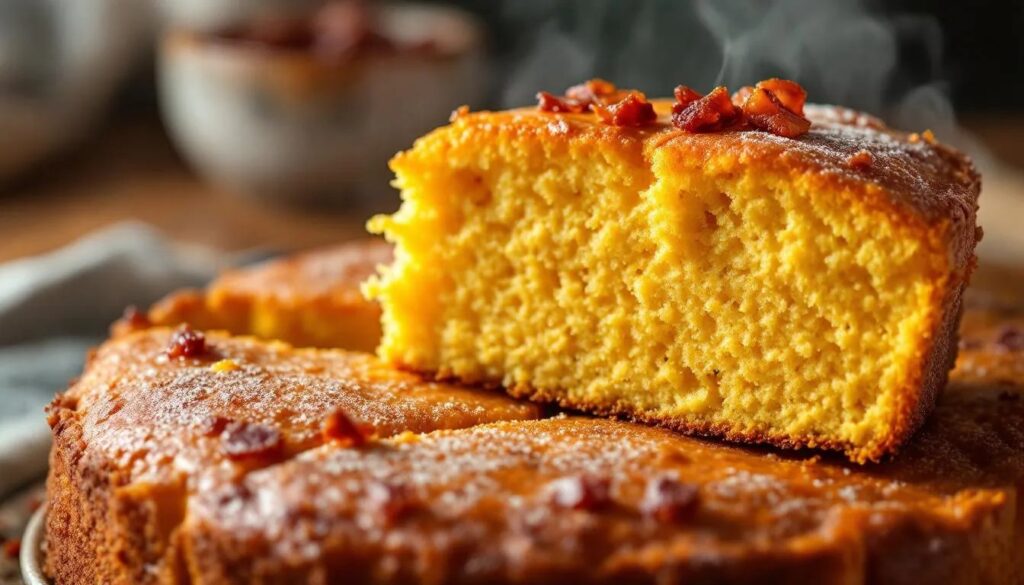
Bake at 450°F for 22 to 25 minutes. At the 20-minute mark, check the top: it should be deep golden brown, with a visible crack running across the center — a classic sign that the interior has fully set. Insert a toothpick into the center; it should come out clean or with a single dry crumb. The edges will have pulled slightly away from the sides of the skillet, and the crust along the rim will look darker than the center, almost mahogany. Remove from the oven and let the cornbread rest in the skillet for 5 minutes before running a butter knife around the edge and inverting it onto a wire rack or serving it directly from the pan in wedges.
Chef's tip
The sugar debate in cornbread is genuinely regional — Northern recipes tend to include it, traditional Southern recipes treat it as an insult to the grain. Neither position is wrong. What sugar does, functionally, is accelerate browning through the Maillard reaction and balance the slight bitterness of stone-ground cornmeal. If your cornmeal is fresh and flavorful, skip the sugar and taste the corn. If it's been sitting in the pantry for a while, a tablespoon helps. As for the drippings: collect them year-round by straining cooled bacon fat through a fine mesh sieve into a sealed glass jar. Stored in the refrigerator, they keep for up to three months and improve with every batch of bacon you add to the jar.
Pairing
Cornbread carries smokiness, a light tang from the buttermilk, and a dense, starchy core. The right drink should cut through the fat without erasing those flavors.
A dry, slightly effervescent hard cider from the American South or the English tradition of farmhouse perry works beautifully — the carbonation scrubs the palate clean between bites, and the apple acidity echoes the buttermilk. If the occasion calls for wine, reach for a Rhône-style white with some body and low aromatic intensity: a Roussanne or Marsanne blend will match the richness without competing. For a non-alcoholic option, cold sweet tea brewed strong and poured over ice is the most honest choice — it's what this bread was born alongside.
The story behind the skillet
Cornbread's roots in American cooking stretch back centuries, tied to Indigenous techniques for processing and cooking dried corn that European settlers adapted as wheat flour remained scarce. The earliest versions were cooked directly on hearthstones or in Dutch ovens buried in coals — no pan, no oven, nothing but grain, fat, and fire. Cast iron arrived later and changed everything: a vessel that holds heat with extraordinary consistency and, when properly seasoned, becomes almost non-stick through layers of polymerized fat built up over years of use.
Bacon drippings as a cooking fat predate refrigeration in Southern households — rendered and strained, they were shelf-stable, flavorful, and abundant at a time when nothing from the pig went to waste. The practice of keeping a drippings jar is one of the oldest forms of kitchen economy still practiced in American homes. What looks like a modern tip or a nostalgic quirk is actually a return to the way this bread was always made, before vegetable shortening and then butter pushed it aside. The cast iron and the drippings belong together. They always have.
Nutrition facts (per slice, ~⅛ of the recipe, approximate values)
| Nutrient | Amount |
|---|---|
| Calories | ~210 kcal |
| Protein | ~5 g |
| Carbohydrates | ~28 g |
| of which sugars | ~3 g |
| Fat | ~8 g |
| of which saturated | ~3 g |
| Fiber | ~2 g |
| Sodium | ~310 mg |
Frequently asked questions
Can I make this cornbread ahead of time?
Yes, with one caveat: the crust softens significantly as it cools and sits. If you're baking for a gathering, the best approach is to prepare the batter up to two hours in advance and keep it covered at room temperature, then bake it right before serving. If you must bake ahead, reheat the cornbread in a 375°F (190°C) oven for 8 to 10 minutes — it won't fully recover the original crunch, but it will come close. Avoid the microwave; it steams the crust and turns it soft.
How should leftovers be stored?
Wrap the cooled cornbread tightly in aluminum foil and store at room temperature for up to two days, or refrigerate for up to five. For longer storage, individual slices freeze well wrapped in plastic and then foil — thaw at room temperature and refresh in a hot oven for best results. Cold cornbread has its own appeal crumbled into a glass of cold buttermilk, which is a genuinely old-fashioned way to eat the leftovers.
What if I don't have bacon drippings?
Lard is the closest substitute — it shares the same animal fat profile and will produce a similarly crisp crust. Duck fat is a more luxurious option with a slightly different flavor register, rounder and less smoky. Butter will work but won't give you the same crackling exterior; it burns faster at high heat and lacks the smoke character. Avoid neutral vegetable oils like canola — they produce a crust that fries rather than crisps, and the flavor profile of the finished bread will feel flat against the cornmeal.
Do I need a cast iron skillet, or can I use another pan?
A cast iron skillet is strongly preferred for this recipe because the entire method is built around its heat-retention properties. A ceramic or glass baking dish can be used in a pinch — reduce the oven temperature to 400°F (204°C) and extend the bake time by 5 to 8 minutes — but you will not achieve the same deep crust. A well-seasoned carbon steel skillet is the most viable alternative and behaves almost identically to cast iron at high heat.
Can this recipe be made gluten-free?
Substituting the all-purpose flour with a 1:1 gluten-free baking flour blend (one that includes xanthan gum) works reliably here. Because the flour is only a supporting element in a predominantly cornmeal batter, the structural change is minor. The crumb will be marginally more tender and slightly less cohesive when slicing, but the crust — which is where this recipe earns its reputation — is unaffected. Ensure your cornmeal is also certified gluten-free if cross-contamination is a concern.