
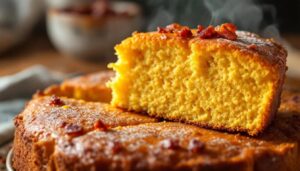

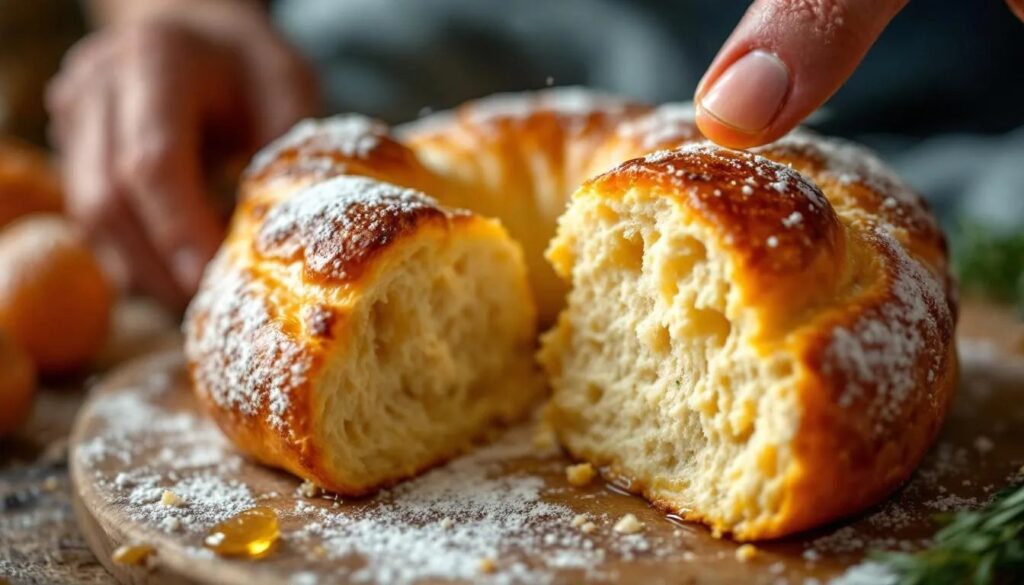
Easter weekend tends to sneak up on you, and the last thing anyone wants is to reach for a refrigerated tube of crescent rolls when the table deserves something made by hand. Spring is here — asparagus bundles on every market shelf, lambs in the fields, and the unmistakable urge to bake something warm that fills the kitchen with the scent of yeast and butter. This three-ingredient Easter bread lands right between a brioche and a dinner roll: a golden, pull-apart loaf that looks like it required skill and patience, but actually comes together in under 20 minutes of active work.
The recipe's simplicity is what makes it worth knowing. Three ingredients, one bowl, one oven — and the result is a soft, slightly sweet bread that holds its shape beautifully on an Easter table. Serve it alongside a glazed ham, a roast leg of lamb, or simply with salted butter and a pot of good honey. Roll up your sleeves — this one is almost too easy not to try.
| Preparation | 15 min |
| Baking | 18–20 min |
| Rest | 30 min |
| Portions | 8–10 people |
| Difficulty | Easy |
| Cost | $ |
| Season | Spring · Easter · Perfect with lamb, asparagus sides |
Suitable for: Vegetarian
Ingredients
- 3 cups self-rising flour [plus a little extra for dusting — the quality here matters, use a fresh bag]
- 1 cup full-fat Greek yogurt [cold, straight from the refrigerator]
- 2 tablespoons honey [raw, unfiltered if possible — a floral spring honey works beautifully]
Equipment
- Large mixing bowl
- Bench scraper or butter knife
- Baking sheet or cast-iron skillet
- Parchment paper
- Kitchen scale or measuring cups
- Pastry brush (optional, for finishing)
Preparation
1. Bring the dough together
Measure your self-rising flour into a large mixing bowl and make a wide well in the center. Spoon the Greek yogurt directly into that well, then drizzle in the honey. Using a fork first, then your hands, work the mixture together until a shaggy, slightly sticky dough forms. Do not overwork it — this is a quick bread, not a kneaded loaf, and the texture relies on a light touch. The dough is ready when it holds together in one rough mass and pulls cleanly away from the sides of the bowl. If it feels excessively sticky, add flour one tablespoon at a time until it becomes manageable. If it seems dry and crumbly, add a teaspoon of yogurt to bring it back.
2. Shape the rolls
Lightly flour a clean work surface and turn the dough out onto it. Divide the dough into 8 to 10 equal portions using a bench scraper or knife — weighing them gives consistent results, aiming for roughly 55–60 g each. Roll each portion gently between your palms to form smooth, round balls. Avoid pressing down hard: you want a dough ball with a little tension on the outside surface, which gives the rolls their characteristic slightly blistered, golden dome once baked. Arrange them on a parchment-lined baking sheet or in a seasoned cast-iron skillet, placing them just close enough to touch — this is what creates that pull-apart effect at the table.
3. Rest before baking
Cover the shaped rolls loosely with a clean kitchen towel and let them rest at room temperature for 25 to 30 minutes. This short rest allows the gluten to relax slightly and the rolls to puff just enough before heat hits them. They will not double in size the way a yeasted dough would; instead, you are looking for a slight plumpness and a surface that has lost its rawness. While the rolls rest, preheat the oven to 400°F (205°C) and position a rack in the upper-middle section.
4. Bake to a deep golden finish
Slide the tray into the preheated oven and bake for 18 to 20 minutes. Watch for the tops to turn a rich amber-gold — a pale result means underbaking, and the centers will be doughy. Tap the base of one roll with your knuckle: it should sound hollow, which tells you the interior structure has fully set. If you want a glossy finish, brush the rolls with a light wash of honey thinned with a splash of warm water in the final 2 minutes of baking. Pull them from the oven and let them cool on the tray for at least 5 minutes before serving — the crumb needs that short window to stabilize.
A Chef's Tip
The single variable that changes everything in this recipe is the temperature of your yogurt. Cold yogurt straight from the fridge keeps the fat molecules intact as the dough comes together, which translates to a more tender, airy crumb once baked. If your yogurt has been sitting out and warmed to room temperature, pop it back in the refrigerator for 15 minutes before you start. In spring, when fresh herbs are coming back into season, try folding a tablespoon of finely chopped rosemary or thyme into the dough before shaping — the rolls will carry a subtle floral fragrance that pairs particularly well with an Easter lamb roast.
Pairings
These rolls sit somewhere between a dinner bread and a lightly sweet bake, which gives them unusual flexibility at the Easter table. Their mild honey note plays equally well with savory and sweet accompaniments.
For a savory Easter meal — roast leg of lamb, glazed ham, or a spring vegetable galette — serve them alongside a dry, mineral-forward white such as a Sauvignon Blanc from the Loire Valley, whose fresh acidity and grassy notes cut through the richness of meat. A light, slightly chilled Beaujolais works well if you prefer red. For a non-alcoholic option, sparkling water with a wedge of lemon and a sprig of fresh mint echoes the season perfectly without competing with the food.
A Little History Behind the Bread
Easter breads are among the oldest baked traditions in European cooking. From the Greek tsoureki — a braided, orange-scented enriched loaf — to Italian colomba di Pasqua, shaped like a dove, to the Russian kulich, generations of bakers have marked the end of Lent with something rich, golden, and made by hand. The common thread is always an element of sweetness that signals celebration after a period of restraint. This three-ingredient version strips the tradition back to its simplest expression: flour, a dairy element, and honey — ingredients that predate written recipes by thousands of years.
The use of Greek yogurt in place of eggs, butter, and yeast is a modern shortcut that has roots in the flatbread traditions of the Middle East and South Asia, where yogurt has long been used to leaven and tenderize doughs without a proofing stage. The result is closer in spirit to an Irish soda bread or a Scottish scone than a classic brioche, but the shape and the honey bring it firmly into Easter territory. It is the kind of recipe that becomes a family habit — simple enough to make every year, memorable enough that people ask for it again.
Nutrition facts (per roll, approximate values)
| Nutrient | Amount |
|---|---|
| Calories | ~165 kcal |
| Protein | ~5 g |
| Carbohydrates | ~30 g |
| of which sugars | ~4 g |
| Fat | ~2 g |
| Fiber | ~1 g |
Frequently Asked Questions
Can i make these rolls ahead of time?
Yes — the dough can be mixed and shaped up to 12 hours in advance. Arrange the raw rolls on their baking sheet, cover tightly with plastic wrap, and refrigerate overnight. Remove them 20 minutes before baking to take the chill off, then proceed with the oven step as written. The texture after a cold rest is often even more tender than when baked immediately.
How do you store leftover rolls?
Store cooled rolls in an airtight container at room temperature for up to 2 days. For longer storage, place them in a zip-lock bag and freeze for up to 1 month. Reheat from frozen in a 350°F (175°C) oven for 8–10 minutes, or split and toast them directly — they turn out particularly good this way, with a lightly crisped crust and a soft, warm center.
What substitutions work if i don't have self-rising flour?
Self-rising flour is simply all-purpose flour with baking powder and salt already incorporated. To make your own, combine 1 cup of all-purpose flour with 1½ teaspoons of baking powder and ¼ teaspoon of fine salt — repeat for each cup called for. Whole wheat flour can replace up to half the total quantity for a nuttier flavor and a slightly denser crumb, which works well with spring cheeses or smoked salmon.
Can i add flavorings or toppings to the dough?
The base recipe is intentionally neutral so that it can go in any direction. For a sweeter Easter roll, fold in the zest of one orange and a pinch of ground cardamom before shaping. For a savory version, add a handful of grated aged cheddar and a teaspoon of garlic powder. Before baking, brush the tops with yogurt instead of the honey wash and scatter sesame seeds, poppy seeds, or flaky sea salt — each gives a different character to the finished crust.
Why is my dough too sticky to shape?
Greek yogurt varies in thickness between brands, and a thinner, more liquid yogurt will produce a stickier dough. The fix is straightforward: add self-rising flour one tablespoon at a time, working it in fully before adding more, until the dough pulls away from the bowl cleanly and can be handled without sticking. Resist the urge to add large amounts of flour at once — small adjustments keep the crumb light and open.