


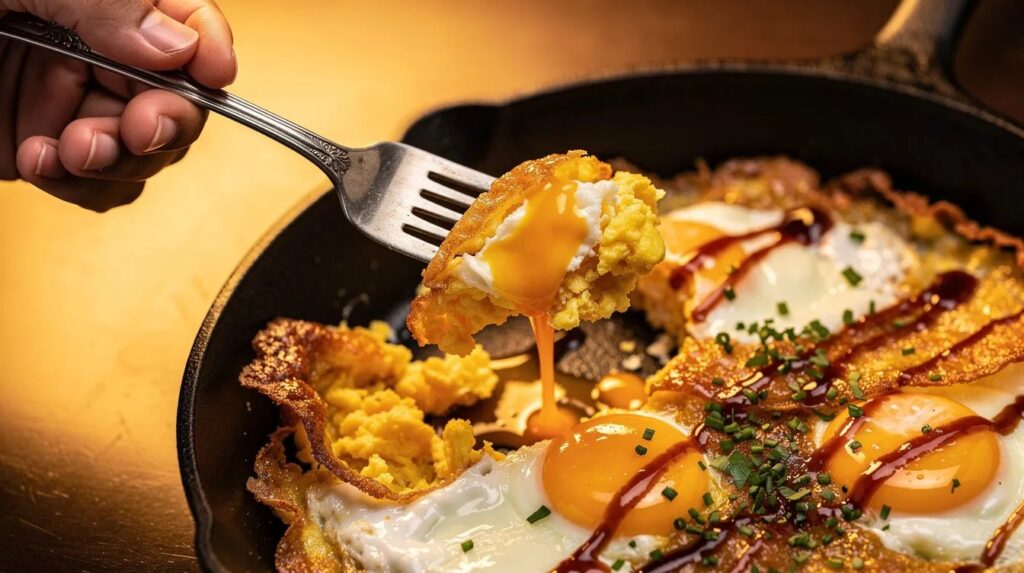
Spring mornings invite something more than routine. As daylight lingers and the kitchen brightens, scrambled or fried eggs alone feel like a compromise—choosing between silky richness and crisp, golden edges. Frambled eggs offer both. This technique combines frying and scrambling into a relaxed process, achieving a texture unmatched by either: buttery, crinkled edges, and custardy centers with yolks lightly blended into the whites.
This deceptively simple method—one pan, one motion, about four minutes—yields results far more sophisticated. Understanding the process will make you see eggs in a new light. Get the butter ready, and let's cook.
| Prep time | 2 min |
| Cook time | 4 min |
| Servings | 1 person |
| Difficulty | Easy |
| Cost | $ |
| Season | Year-round · Spring herbs (chives, tarragon) at peak right now |
Suitable for: Vegetarian · Gluten-free · High-protein
Ingredients
- 2 or 3 large eggs, as fresh as possible
- 1 tablespoon unsalted butter
- Flaky sea salt, to finish
- Freshly cracked black pepper
- 1 teaspoon cold water or whole milk (optional, for a softer curd)
- Fresh chives or tarragon, finely sliced, to serve
Equipment
- 8-inch nonstick or carbon steel skillet
- Silicone spatula with a thin, flexible edge
- Small bowl
- Fork
Preparation
1. Crack and barely beat the eggs
Crack your eggs into a small bowl and lightly beat them with a fork—about five or six strokes. Avoid creating a uniform liquid; the yolk and white should remain distinct but slightly mixed, with visible streaks of unblended yolk. This step is crucial: over-beaten eggs will scramble cleanly, lacking the marbled, layered texture of frambled eggs. If using water or milk, add it now with one or two folds.
2. Heat the pan slowly
Place your skillet over medium-low heat and warm for sixty seconds before adding butter. Gradual heating ensures even heat distribution. Frambled eggs need a surface hot enough to set the edges while keeping the center underdone. The butter should melt and foam immediately; this indicates the correct temperature. If the butter browns quickly, remove the pan from heat. Beurre noisette, or browned butter, adds a nutty flavor but cooks too fast for this technique.
3. Pour, then wait — briefly
Pour the eggs into the foaming butter and let them sit undisturbed for 20 to 30 seconds. The outer edge will turn opaque and pull from the pan. This "fried" moment sets the base, creating the crinkled, crisp border of frambled eggs. Resist the urge to stir.
4. The frambling motion
Once the edges are set but the center is liquid, use your spatula to make two or three slow, sweeping folds across the pan—not a rapid scramble or tight stir. Imagine folding a letter: bring one edge to the center, tilt the pan to let unset egg flow underneath, and repeat. Each fold should form distinct curds, not homogenous flakes. Maintain medium-low heat and stop when the eggs are about 80% set; residual heat will finish them.
5. Plate immediately
Slide the eggs onto a warm plate—never leave them in the pan. Retained heat quickly overcooks frambled eggs from custardy to rubbery. Finish with flaky sea salt, black pepper, and fresh herbs. The herbs' clean, green sharpness balances the butter's richness, completing the dish.
Chef's tip
Your choice of fat significantly alters the dish. Butter offers sweetness and classic golden foam. A half-and-half mix of butter and neutral oil raises the smoke point. Use cultured butter from farmers markets in spring for a complex flavor. Also, a cold pan is your enemy; a warm plate is your best friend.
Pairing suggestions
Frambled eggs' richness and butteriness, with a custard-like center, require contrasting flavors: acidity, bitterness, or crunch.
Serve with lightly toasted sourdough rubbed with garlic, or arugula dressed with lemon juice and olive oil for peppery freshness. Pair with sparkling water and lemon to cleanse the palate. For special occasions, dry sparkling wine—Crémant d'Alsace or Cava brut—complements the eggs and butter with acidity.
A little history behind the technique
"Frambled" blends fried and scrambled. Though popular on food blogs recently, the technique is not new. Cooks have long combined eggs in a hot, buttered pan, loosely folding rather than fully frying or scrambling—it was practical improvisation. The French œufs brouillés keeps scrambled eggs soft and sauce-like, while Spanish preparations bridge tortilla and revuelto in texture.
The technique's name legitimizes stopping at the in-between stage. Naming something encourages experimentation. Frambled eggs suit the trend for technique-driven home cooking that requires attention, good equipment, and decent eggs.
Nutritional values (per serving, approximate values)
| Nutrient | Amount |
|---|---|
| Calories | ~230 kcal |
| Protein | ~18 g |
| Carbohydrates | ~1 g |
| of which sugars | ~0.5 g |
| Fat | ~17 g |
| Fiber | ~0 g |
Frequently asked questions
Can I make frambled eggs ahead of time?
Frambled eggs are best enjoyed immediately. The texture—especially the center and edges—degrades quickly as they set. Making them ahead, even by ten minutes, diminishes the technique's benefits. Prepare everything else before cooking the eggs.
What kind of pan works best?
An 8-inch seasoned carbon steel skillet or nonstick pan suits one to two servings. Pan size matters: a larger pan spreads the egg too thinly. Stainless pans work with more butter and heat control.
Can I add cheese or other mix-ins?
Yes, carefully. Add soft, quick-melting cheeses during the final fold. Cook heavier additions separately due to moisture and weight.
What is the difference between frambled eggs and soft scrambled eggs?
Soft scrambled eggs are stirred continuously, creating a fine, creamy curd. Frambled eggs begin with a resting period, setting the edges, then incorporate slow folds for a layered texture and marbled yolk.
How do I know when to stop cooking?
Remove the pan when the eggs are about 20% underdone—slightly wet, with visible liquid egg. Residual heat will complete them. Overcooked eggs in the pan become overcooked on the plate.