

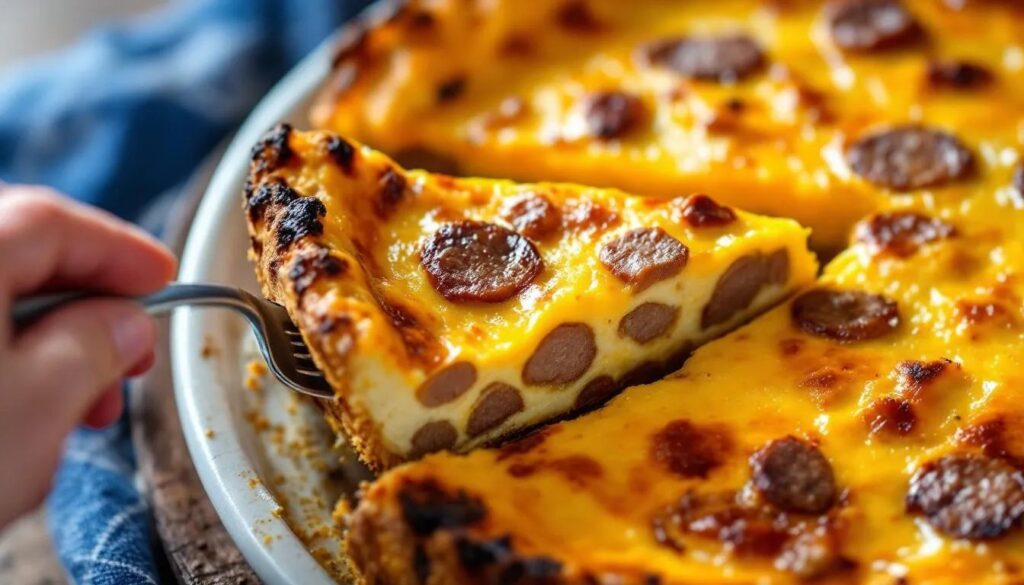
Spring brunch has a way of demanding something that feels both hearty and celebratory — a dish that holds its own next to a pitcher of orange juice and a basket of warm rolls, without requiring hours of fuss on a Saturday morning. Ree Drummond's Cowboy Quiche answers that call with remarkable confidence. Built on a buttery, deep-dish crust and layered with caramelized onions, crispy bacon, and a richly custard-like egg filling, it occupies a different category from the delicate, slender quiches of the bistro tradition. This is something bigger, bolder, and built to feed a crowd.
After testing this recipe three weekends in a row, it was clear that everyone wanted more. The original Pioneer Woman version leans heavily into the spirit of the American ranch kitchen: generous portions, unfussy technique, and ingredients that speak plainly. What follows is a faithful reconstruction of that recipe, with a few notes gathered across multiple test sessions, covering everything from crust hydration to the exact moment the custard sets without turning rubbery. Get your apron on — the oven is about to get busy.
| Prep time | 30 min |
| Cook time | 1 hr 10 min |
| Rest | 15 min |
| Servings | 8 people |
| Difficulty | Medium |
| Cost | $$ |
| Season | Early spring — green onions, fresh chives, market eggs |
Suitable for: Rich in protein
Ingredients
For the crust
- 2 cups all-purpose flour, plus more for dusting
- 1 tsp fine sea salt
- ¾ cup (1½ sticks) unsalted butter, very cold, cut into ½-inch cubes
- 4–6 tbsp ice water
For the filling
- 8 strips thick-cut bacon
- 1 large yellow onion, thinly sliced
- 1 tbsp unsalted butter
- 6 large eggs, at room temperature
- 1½ cups heavy cream
- ½ cup whole milk
- 1½ cups shredded sharp cheddar cheese
- 3 green onions, thinly sliced
- 1 tsp kosher salt
- ½ tsp freshly ground black pepper
- Pinch of cayenne pepper
- Pinch of freshly grated nutmeg
Equipment
- Deep-dish 9-inch pie pan
- Rolling pin
- Large cast iron or heavy-bottomed skillet
- Large mixing bowl
- Whisk
- Pastry cutter or food processor
- Wire cooling rack
- Pie weights or dried beans
- Parchment paper
Preparation
1. Make the pie dough
Combine the flour and salt in a large mixing bowl. Add the cold butter cubes and use a pastry cutter — a curved blade tool used to break fat into flour without warming it — to work the butter into the flour until the mixture resembles coarse breadcrumbs with a few pea-sized chunks still visible. Those remaining chunks are not a flaw; they are what create the flaky, layered texture that a good crust demands. Add the ice water one tablespoon at a time, tossing the mixture with a fork after each addition. Stop when the dough just comes together — it should feel slightly tacky but not wet. Press it into a flat disc, wrap tightly in plastic wrap, and refrigerate for at least 30 minutes. Resting allows the gluten to relax, ensuring the dough will roll out smoothly.
2. Blind bake the crust
Preheat the oven to 400°F (200°C). On a lightly floured surface, roll the chilled dough into a circle roughly 12 inches in diameter and about ⅛ inch thick. Carefully drape it over the rolling pin and transfer it into the deep-dish pie pan, pressing gently into the corners without stretching the dough. Trim the overhang to about 1 inch and fold it under itself to form a raised, thicker edge. Crimp the edge with your fingers or a fork. Line the crust with parchment paper, fill it with pie weights or dried beans, and blind bake — meaning bake without filling — for 15 minutes. Remove the weights and parchment, then return the crust to the oven for another 5 minutes until the base is pale golden and dry to the touch. This pre-baking step prevents the soggy bottom that plagues many home quiches. Set aside and reduce the oven temperature to 325°F (165°C).
3. Cook the bacon and onions
Lay the bacon strips in a cold skillet, then set it over medium heat. Starting cold helps render the fat gradually, producing bacon that is deeply crispy without scorching the exterior. Cook for about 8 minutes, turning once, until the strips are mahogany-brown and rigid. Transfer to a paper towel-lined plate. Pour off most of the rendered fat, leaving just a thin coat in the pan, then add the tablespoon of butter and the sliced onion. Cook over medium-low heat, stirring occasionally, for 20 to 25 minutes, until the onions have collapsed entirely and turned a deep amber color — this is caramelization, the slow conversion of natural sugars under heat, and it is non-negotiable for depth of flavor. Roughly chop the cooled bacon and set aside with the onions.
4. Prepare the custard
In a large mixing bowl, whisk together the eggs, heavy cream, and whole milk until the mixture is fully homogenous and a few bubbles form on the surface. The ratio of cream to milk here is intentional: the higher fat content of the cream contributes to a silky, trembling set rather than a firm, rubbery one. Season with the kosher salt, black pepper, cayenne, and nutmeg. The cayenne will not read as heat — it will simply add a quiet warmth that rounds out the richness of the cheese and cream. Stir in the shredded cheddar and green onions.
5. Assemble and bake
Scatter the caramelized onions evenly across the blind-baked crust, then distribute the chopped bacon on top. Pour the custard mixture slowly over the filling, pausing if necessary to allow it to settle between the solid pieces without overflowing. The quiche will be very full — this is correct. Place the pie pan on a rimmed baking sheet to catch any potential drips, then slide it into the 325°F (165°C) oven. Bake for 45 to 50 minutes, rotating the pan once at the halfway mark. The quiche is ready when the edges are fully set and the center retains a slight wobble — similar to the movement of a barely-set panna cotta — when the pan is gently nudged. An internal temperature of 160°F (71°C) at the center confirms it is done. Transfer to a wire rack and allow to rest for at least 15 minutes before slicing. This resting time allows the custard to finish setting from residual heat and makes for clean, cohesive slices.
Chef's note
The single change that most improved this quiche across three weekends of testing was chilling the assembled, unbaked quiche for 20 minutes in the refrigerator before it went into the oven. A cold custard poured into a cold crust heats more evenly, which dramatically reduces the risk of the edges overcooking before the center catches up. In early spring, when local markets begin offering the first thin-stalked green onions and farm-fresh eggs with their vivid yolks, both will visibly improve the color and flavor of the custard — the difference between a pale, neutral filling and one that is deep gold and aromatic is often simply the quality of the eggs.
Wine pairing
A quiche this rich — layered with aged cheddar, bacon fat, and cream — needs a wine with enough acidity to cut cleanly through the filling without competing with its smoky, savory notes.
A Burgundian Chardonnay — Mâcon-Villages or Saint-Véran — brings the right balance of stone fruit, light oak, and bright acidity to work with the custard's texture. For a more accessible option, a crisp Sonoma Coast Chardonnay with minimal oak does the same job at a lower price point. Those skipping wine will find that a well-made sparkling water with a squeeze of lemon, or a cold-brewed black tea served unsweetened, provides the same palate-cleansing function between bites.
Background on this dish
The quiche has French roots — specifically Alsatian ones, with the quiche lorraine dating back to the 16th century as a simple custard baked in bread dough, later refined into the short-crust pastry shell recognized today. The American adaptation, however, took the French blueprint and expanded it outward: deeper pans, more filling, stronger cheeses, and the addition of proteins like bacon that transform it from a light entrée into a proper one-dish meal. Ree Drummond's version represents this evolution fully. Her cooking has always drawn from the traditions of the American Great Plains, where feeding a working family means prioritizing substance alongside flavor.
The "cowboy" designation is less a precise culinary category and more a statement of intent — this is a quiche built for appetite, not for ceremony. Its deep-dish format sets it apart from the classic French version, and the caramelized onion base gives it a sweetness that anchors the saltiness of the bacon and cheddar. Modern variations have included jalapeños for heat, smoked gouda in place of cheddar, or a layer of roasted spring vegetables folded into the custard — all of which sit comfortably within the spirit of the original.
Nutrition facts (per serving, approximate values)
| Nutrient | Amount |
|---|---|
| Calories | ~520 kcal |
| Protein | ~18 g |
| Carbohydrates | ~22 g |
| of which sugars | ~3 g |
| Fat | ~40 g |
| Fiber | ~1 g |
Frequently asked questions
Can this quiche be made ahead of time?
Yes, and it actually holds up well. The fully baked quiche can be made the evening before, cooled to room temperature, then refrigerated overnight. Reheat individual slices in a 325°F (165°C) oven for 10 to 12 minutes, loosely covered with foil to prevent the crust from over-browning. The texture of the custard remains intact and the flavors deepen slightly after resting overnight, making this an excellent candidate for a stress-free brunch.
How should leftovers be stored?
Cover the quiche tightly with plastic wrap or transfer slices to an airtight container and refrigerate for up to 3 days. For longer storage, individual slices freeze well — wrap each in plastic wrap, then in aluminum foil, and freeze for up to 2 months. Thaw overnight in the refrigerator before reheating. Avoid microwaving if possible, as it softens the crust and creates an uneven texture in the custard.
What substitutions work in this recipe?
The bacon can be replaced with pancetta for a milder, less smoky result, or omitted entirely in favor of a larger quantity of caramelized onions and roasted mushrooms for a vegetarian version. Sharp cheddar can be swapped for Gruyère, smoked gouda, or a combination of both. In spring, thin slices of blanched asparagus or halved cherry tomatoes fold naturally into the custard layer. For the crust, a store-bought refrigerated pie dough works as a practical substitute when time is short — the structural result is slightly less flaky but entirely functional.
Why does my custard come out rubbery?
A rubbery custard is almost always the result of either too high an oven temperature or overbaking. Egg proteins tighten and squeeze out moisture when overheated, producing a texture closer to scrambled eggs than to silk. Keeping the oven at 325°F (165°C) and pulling the quiche while the center still has a visible wobble are the two adjustments that solve the problem in most cases. The residual heat trapped inside the quiche will complete the cooking during the rest period on the rack.
Can this be baked in a different pan?
A standard 9-inch pie pan will work but will require reducing the custard quantity by roughly a quarter, as a standard pan holds significantly less volume than a deep-dish format. A 10-inch cast iron skillet is an excellent alternative — it retains heat evenly, promotes a crispier bottom crust, and goes directly from oven to table. If using a springform pan, wrap the outside in foil to prevent leaking during baking.