



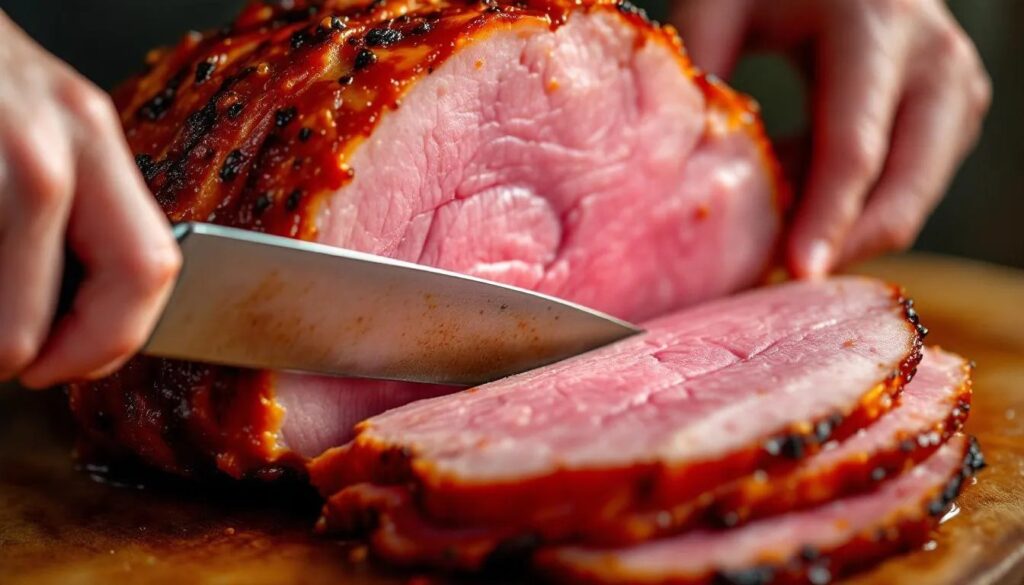
Every Easter table has its centerpiece, and in early spring, few things pull a crowd like a burnished, fragrant baked ham emerging from the oven. That glaze can be tricky to perfect — it needs to be sticky enough to cling, flavorful enough to complement the rich meat, and simple enough for a host already managing numerous dishes.
Ina Garten, the Barefoot Contessa, made her name with this kind of quiet precision: the one move that makes everything else fall into place. Her baked ham relies on a single pantry staple, and once you understand its effect on the meat, you won't need anything else. This recipe is worth saving for Easter and beyond.
| Preparation | 20 min |
| Cook time | 2 hr 30 min |
| Resting time | 20 min |
| Serves | 10–12 people |
| Difficulty | Easy |
| Cost | $$ |
| Season | Spring — ideal for Easter and early April gatherings |
Ingredients
For the ham
- 1 bone-in smoked ham, about 7–9 lbs (3.2–4 kg), pre-cooked
- Whole cloves, for studding (optional but traditional)
For the Dijon glaze
- 1 cup (240 g) Dijon mustard — the pantry staple at the heart of this recipe
- 1 cup (200 g) light brown sugar, packed
- 1 teaspoon freshly ground black pepper
- ¼ teaspoon ground cloves
Equipment
- Large roasting pan with rack
- Sharp carving knife
- Pastry brush or silicone basting brush
- Mixing bowl
- Aluminum foil
- Instant-read thermometer
Preparation
1. Bring the ham to temperature
Remove the ham from the refrigerator at least 1 hour before roasting. A cold ham placed directly into a hot oven cooks unevenly — the outside overcooks while the center struggles to warm through. Allowing it to sit at room temperature gives the meat a head start, resulting in a more consistent texture and better glaze adhesion throughout. Preheat your oven to 325°F (165°C) while you prepare everything else. Place the ham cut-side down on a rack set inside a large roasting pan. The rack keeps the base from sitting in its own drippings, which would steam rather than roast the bottom.
2. Score the skin and stud with cloves
Using a sharp knife, score the ham's surface in a crosshatch pattern — diagonal cuts about 1 inch apart, roughly ¼ inch deep. This technique serves two purposes: it opens up the surface so the glaze can penetrate below the outer layer rather than simply sitting on top, and it creates those iconic diamond shapes that caramelize beautifully in the oven. If you're using whole cloves, press one into the intersection of each diamond. Their aromatic oils will slowly infuse into the meat during the long roast, adding a subtle warmth that deepens the overall flavor without announcing itself too loudly.
3. Make the Dijon glaze — and understand why it works
In a mixing bowl, whisk together the Dijon mustard, brown sugar, black pepper, and ground cloves until fully combined. Here’s the trick. Dijon mustard is not simply a flavor — it is a structural agent. Its natural emulsifiers and acidity allow it to bond with the sugars and create a glaze that grips the surface of the ham rather than sliding off during baking. Where a pure sugar glaze can pool at the base of the pan or burn too quickly at high heat, the mustard holds everything in suspension. The result is a lacquered, mahogany-colored crust that stays on the meat from oven to table. Brush a generous first coat over the entire scored surface, working the glaze into the cuts with the brush.
4. First stage of roasting — covered
Tent the ham loosely with aluminum foil and slide it into the preheated oven. Roast for approximately 15 minutes per pound during this first phase. The foil traps steam from the meat, keeping it moist while the interior heats through gradually. A bone-in ham of 8 lbs will need around 2 hours in this covered phase. Avoid opening the oven frequently — each time the door opens, the oven temperature drops and the roasting time extends.
5. Glaze and finish — uncovered
Remove the foil for the final 30 minutes of cooking. Apply a second coat of the Dijon glaze generously with the pastry brush, then return the ham to the oven. At around the 15-minute mark, brush a third and final coat over the surface — this layering is what creates that deeply caramelized, slightly sticky exterior that catches the light on a serving platter. The internal temperature should reach 140°F (60°C) when measured with an instant-read thermometer inserted near the bone without touching it. The surface should be a deep amber, with some edges catching toward a darker brown — this is exactly what you want.
6. Rest before carving
Transfer the ham to a cutting board and tent loosely with foil for 20 minutes. Resting allows the internal juices — which have been pushed toward the center by the heat — to redistribute evenly throughout the meat. A ham carved immediately after coming out of the oven will bleed onto the board; one that has rested properly will hold its moisture with every slice. Carve against the bone in long, thin strokes for the cleanest presentation.
Chef's note
The quality of your Dijon mustard matters more than you might expect. A grainy or whole-grain Dijon will create a slightly more textured, rustic glaze — beautiful in its own right, but different in finish from the smooth lacquer of a classic smooth Dijon. Garten uses a smooth variety for that mirror-like caramel surface. If you want to push the glaze further toward complexity, add a tablespoon of good bourbon or a teaspoon of apple cider vinegar to the mix — the acidity brightens the sweetness and plays off the smokiness of the ham. In early spring, a few teaspoons of orange zest stirred into the glaze adds a brightness that lifts the whole dish without changing its character.
Wine and drinks pairing
The glaze's sweet-savory balance — that interplay of mustard sharpness, caramelized brown sugar, and smoky pork — calls for wines with enough fruit and acidity to match without overwhelming the table.
A Pinot Noir from Oregon or Burgundy is a natural pairing: its red cherry notes, gentle tannins, and earthy undertones hold up to the richness of the ham without competing with the glaze. For something with more body, a Zinfandel from California echoes the smokiness beautifully. If the table leans toward white, an off-dry Alsatian Riesling — with its stone fruit and mineral edge — plays directly against the sweet-salt contrast of the glaze. For a non-alcoholic option, a sparkling apple cider with good acidity performs the same function with genuine elegance.
About this dish
Baked ham has been a fixture on American Easter tables since at least the 19th century, tied in part to the practical reality that hogs slaughtered in fall were cured through winter and ready to eat by spring. The timing aligned naturally with Easter celebrations, and the tradition became a cultural staple. Over the decades, glazes evolved from simple honey or brown sugar applications to the more complex combinations that define contemporary recipes.
Ina Garten's contribution to this lineage is characteristic of her broader philosophy: strip the recipe to its most effective form, understand why each element is there, and trust the process. The Dijon mustard trick is not new in a strict historical sense — French cooks have long used mustard as a coating for roasted meats — but its application to the American holiday ham, popularized through Garten's cookbooks and television presence, gave it a new audience and a new home. Her version remains one of the most replicated Easter recipes in the country, and the reason is straightforward: it works every time.
Nutrition facts (per serving, approximate values)
| Nutrient | Amount |
|---|---|
| Calories | ~420 kcal |
| Protein | ~38 g |
| Carbohydrates | ~22 g |
| of which sugars | ~20 g |
| Fat | ~18 g |
| Fiber | ~0 g |
Frequently asked questions
Can this ham be prepared ahead of time?
The glaze can be mixed up to three days in advance and stored in the refrigerator in a sealed jar. The ham itself can be scored and studded the night before, covered tightly in plastic wrap, and refrigerated overnight — just make sure to bring it to room temperature for at least an hour before roasting. Applying the first coat of glaze before it goes into the oven is best done fresh, as the mustard begins to dry out on scored meat if left too long.
How should leftovers be stored?
Leftover ham keeps well wrapped tightly in foil or in an airtight container in the refrigerator for up to 4 to 5 days. For longer storage, slice the meat before freezing and lay the slices flat in a freezer-safe bag — they'll keep for up to 2 months. Reheat gently in a low oven (300°F / 150°C) with a small splash of water or apple juice to prevent drying.
What substitutions work in the glaze?
Maple syrup can replace some or all of the brown sugar for a deeper, more woodsy sweetness that pairs particularly well with the smokiness of the ham. Honey works similarly. For those who find Dijon too sharp, a mild whole-grain mustard softens the edge while maintaining the structural function of the mustard base. In spring, a tablespoon of fresh orange juice or a teaspoon of grated ginger added to the glaze brings brightness and a gentle heat that works well with the season's produce.
Does the cut of ham matter for this recipe?
A bone-in ham is strongly preferred over a boneless version. The bone conducts heat into the center of the meat during roasting, promotes more even cooking, and contributes collagen and flavor to the drippings. It also makes for a more dramatic presentation. A pre-cooked (fully cured and smoked) ham is what this recipe calls for — the goal is to heat it through and build the glaze, not to cook raw pork. Confirm on the label that your ham is labeled "fully cooked" or "ready to eat."
What can be made with the leftover drippings?
The pan drippings — a mix of rendered fat, caramelized mustard-sugar glaze, and smoky meat juices — are too good to discard. Strain them through a fine mesh sieve, skim off the excess fat, and use the liquid as a base for a light pan sauce or add it to split pea soup, lentils, or bean dishes in the days that follow. A spoonful stirred into scrambled eggs the next morning is also a very reasonable decision.