



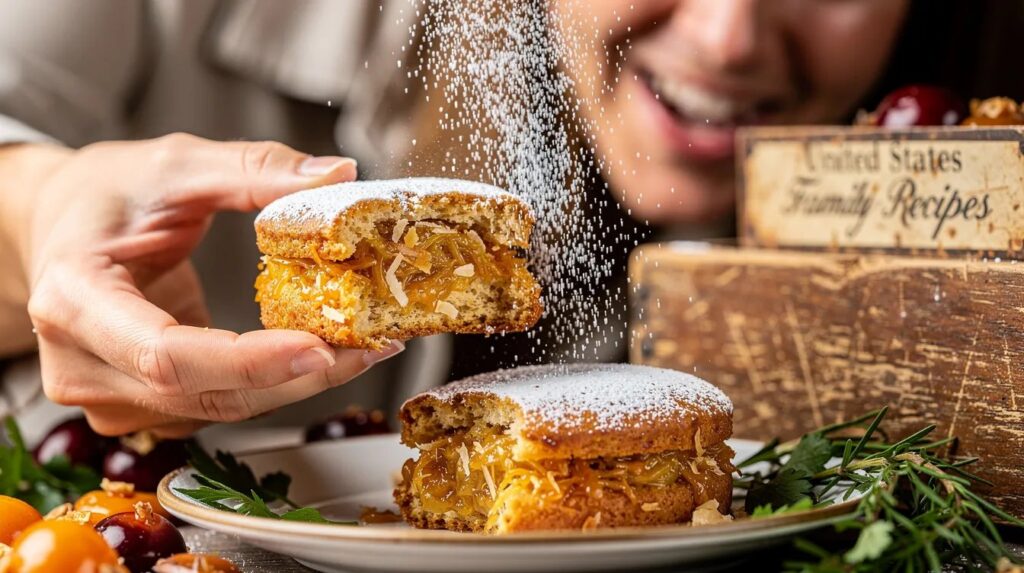
Spring arrives quietly in Kentucky — the dogwoods bloom, the air softens, and somewhere in a drawer lined with faded index cards, a handwritten recipe resurfaces. Kentucky Coconut Drops are exactly that kind of dessert: humble, quick to make, and carrying the particular warmth of a kitchen that never felt the need to impress anyone. Three ingredients. No oven required. A cookie tin that empties itself before anyone notices.
This recipe belongs to the category of Southern sweets that survive precisely because they ask so little and deliver so much. Shredded coconut, sweetened condensed milk, a touch of vanilla — combined, shaped, chilled. What comes out is a dense, chewy little mound with a faintly caramelized edge and a scent that fills the room fast. If you have twenty minutes and a baking sheet, you are already most of the way there. Time to clear the counter.
| Prep time | 10 min |
| Bake time | 15 min |
| Cooling time | 20 min |
| Servings | About 24 drops |
| Difficulty | Easy |
| Cost | $ |
| Season | Year-round — particularly well-suited to spring gatherings and Easter dessert trays |
Suitable for: Vegetarian · Gluten-free · Nut-free
Ingredients
- 3 cups sweetened shredded coconut (about 8 oz / 225 g)
- ⅔ cup sweetened condensed milk (about 5 fl oz / 150 ml)
- 1 tsp pure vanilla extract
Equipment
- Large mixing bowl
- Baking sheet (half-sheet pan)
- Parchment paper or silicone baking mat
- Small cookie scoop or two spoons
- Wire cooling rack
Preparation
1. Preheat and line the pan
Set your oven to 325°F (165°C) and allow it a full ten minutes to come to temperature. An oven that hasn't stabilized is the most common reason coconut drops spread unevenly or brown on one side before cooking through. Line your baking sheet with parchment paper or a silicone mat. Do not use an unlined pan: the condensed milk caramelizes on direct metal contact and the drops will bond to the surface, tearing apart when you try to lift them. The parchment is not optional here.
2. Combine the three ingredients
In a large bowl, pour the sweetened condensed milk over the shredded coconut. Add the vanilla extract. Using a sturdy spatula or a wooden spoon, fold everything together until the coconut strands are thoroughly coated and the mixture holds together when pressed between your fingers. The texture should feel slightly sticky but cohesive — not wet, not dry. If it feels too loose, let it rest for two minutes: the coconut will absorb the moisture and tighten up without any additional ingredient needed.
3. Portion and shape the drops
Using a small cookie scoop (roughly 1.5 tablespoons capacity) or two spoons, portion the mixture into compact mounds directly onto the prepared baking sheet. Space them about 1 inch apart — these don't spread like a conventional cookie, but they need airflow to brown evenly on all sides. Press each mound gently to ensure it holds its shape: a roughly domed, slightly irregular form is exactly right. Grandma's recipe never called for perfection here, and that freeform quality is part of what makes them look homemade in the best possible sense.
4. Bake until golden at the edges
Slide the pan into the center rack of your preheated oven and bake for 13 to 17 minutes, watching carefully from the 12-minute mark. Aim for the tips of the coconut strands to turn a deep golden brown while the center of each drop remains pale and slightly soft. The smell shifts from sweet milk to something closer to toasted caramel — that is your cue that the Maillard reaction is underway and the drops are close. Pull them at golden edges, not at a fully uniform brown: they will continue to firm up as they cool, and an overbaked coconut drop turns brittle rather than chewy.
5. Cool completely before handling
Transfer the baking sheet to a wire rack and leave the drops completely undisturbed for at least 20 minutes. They are fragile when hot — the condensed milk is still fluid and molten at that stage — but they firm into a dense, almost fudgy chew as they cool. Once cooled, they lift cleanly from the parchment with no resistance. Avoid the temptation to move them early.
My chef's tip
The single biggest upgrade you can make to this three-ingredient recipe is to toast half the coconut before mixing. Spread 1.5 cups of the shredded coconut on a dry skillet over medium heat and stir constantly for three to four minutes until it turns golden and fragrant. Let it cool, then combine it with the remaining raw coconut before adding the condensed milk. The contrast between the toasted and untoasted strands creates two distinct layers of flavor and texture inside each drop — a nutty depth at the core and a softer chew at the center — without adding a single extra ingredient or breaking the simplicity of the recipe. In spring, a half-teaspoon of finely grated lime zest folded into the mixture lifts the whole thing with a brightness that the original recipe never needed but benefits from enormously.
Dessert & beverage pairings
Kentucky Coconut Drops sit somewhere between a cookie and a confection — dense, sweet, and carrying a toasted, milky warmth that pairs best with something that can cut through the richness without competing with the coconut's tropical register.
A strong, lightly sweetened black coffee — drip-brewed in the Southern tradition — is the natural companion here, its bitterness creating clean contrast against the caramelized edges of each drop. A glass of cold whole milk works in the same direction, with a different kind of softness. For a more deliberate pairing, a late-harvest Riesling from the Finger Lakes — with its notes of apricot, honey, and bright acidity — echoes the condensed milk sweetness while preventing the palate from feeling overwhelmed. For a non-alcoholic option, a well-made coconut water with a squeeze of fresh lime keeps the tropical thread running through the experience.
The story behind the recipe
Kentucky Coconut Drops belong to a long tradition of Southern church-supper sweets: recipes designed to feed a crowd without a long list of ingredients, requiring no special equipment and no formal baking knowledge. Shredded coconut became widely available across the American South in the early twentieth century as canned and packaged goods reached rural kitchens through general stores, and sweetened condensed milk — shelf-stable, affordable, and deeply sweet — became a staple ingredient in the absence of reliable refrigeration. The combination of these two pantry items produced a category of sweets that spread informally through community recipe boxes, church newsletters, and handwritten cards passed between neighbors across Kentucky, Tennessee, and the surrounding states.
This particular version carries the name "Kentucky" not from any formal regional designation but from the kitchens where it was most faithfully kept: small, warm spaces where dessert was expected at every gathering and economy of ingredients was a point of quiet pride rather than limitation. The recipe has no single author and no definitive version. Instead, it has continuity — the same three components appearing in the same proportions across decades of handwritten cards, adapted here and there with a pinch of salt, a drop of almond extract, a dip in melted chocolate, but always returning to its essential, unfussy form.
Nutrition facts (per drop, approximate values)
| Nutrient | Amount |
|---|---|
| Calories | ~75 kcal |
| Protein | ~1 g |
| Carbohydrates | ~9 g |
| of which sugars | ~8 g |
| Fat | ~4 g |
| Fiber | ~1 g |
Frequently asked questions
Can i make Kentucky Coconut Drops ahead of time?
Yes — and they actually improve with a little time. Once fully cooled, the drops firm up and develop a chewier, more cohesive texture than they have straight from the oven. Prepare them up to three days in advance and store them in an airtight container at room temperature. They hold their shape and flavor well and require no reheating before serving.
How do i store leftovers?
Store Kentucky Coconut Drops in a single layer in an airtight container at room temperature for up to five days. If you need to stack them, separate the layers with parchment paper to prevent sticking. Refrigeration is not necessary and can actually make them slightly dry — room temperature is the right environment for maintaining that characteristic dense chew.
Can i freeze them?
Coconut Drops freeze well. Arrange them in a single layer on a baking sheet, freeze until solid (about one hour), then transfer to a zip-lock bag or airtight container. They keep in the freezer for up to two months. Thaw at room temperature for 20 to 30 minutes before serving — no oven needed.
What substitutions work in this recipe?
Unsweetened shredded coconut can replace the sweetened variety if you prefer a less sweet result — the texture remains the same but the overall sweetness drops considerably, which works particularly well if you plan to dip the finished drops in dark chocolate. Sweetened condensed coconut milk (a dairy-free alternative available in most grocery stores) substitutes one-for-one and makes the recipe fully vegan without any other adjustment. Almond extract can replace vanilla for a more pronounced flavor, though half a teaspoon is sufficient — it carries more intensity than vanilla and can easily overpower the coconut if used in equal measure.
Why are my drops falling apart before baking?
If the mixture doesn't hold together when pressed, the ratio of liquid to coconut is slightly off — this can happen with different brands of shredded coconut, which vary in strand length and moisture content. Add condensed milk one teaspoon at a time, folding gently, until the mixture just coheres. Alternatively, chilling the mixed dough for ten minutes before portioning helps the coconut absorb the liquid and makes the drops easier to shape and transfer to the pan.