
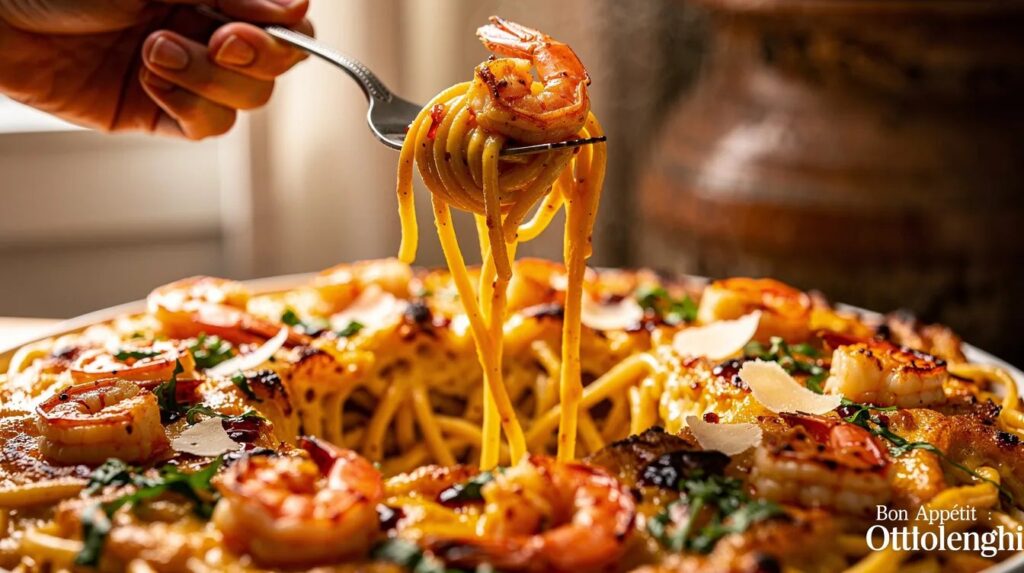
March is the in-between season—not quite winter's heavy comfort food, not yet summer's lightness—and that's exactly when a baked pasta dish hits differently. The air still has a bite to it, evenings call for something warm and filling, and the oven becomes the best tool in the kitchen. This garlicky shrimp Alfredo bake brings together plump, juicy shrimp, a silky homemade Alfredo sauce loaded with roasted garlic, and rigatoni baked until the top turns golden and the edges bubble. It's the kind of dish that turns a Tuesday night into something worth sitting down for.
What sets this version apart is the double hit of garlic: raw minced garlic stirred into the sauce for sharpness, and slow-roasted garlic folded in for sweetness and depth. The shrimp are sautéed separately before baking, ensuring they stay tender rather than rubbery—a step most recipes skip, and one that makes all the difference. If you've habitually reached for the jarred Alfredo sauce, now is the time to reconsider. Tie on your apron and get the oven going.
| Prep Time | 20 min |
| Cook Time | 35 min |
| Servings | 6 people |
| Difficulty | Medium |
| Cost | $$ |
| Season | Early spring—shrimp, fresh garlic, parsley |
Suitable for: High in protein
Ingredients
For the roasted garlic
- 1 whole head of garlic
- 1 tablespoon olive oil
For the Alfredo sauce
- 3 tablespoons unsalted butter
- 4 cloves fresh garlic, finely minced
- 2 cups heavy cream
- 1 cup whole milk
- 1½ cups freshly grated Parmesan cheese (about 4 oz), plus more for topping
- ½ teaspoon freshly grated nutmeg
- 1 teaspoon kosher salt, or to taste
- ½ teaspoon freshly ground black pepper
For the shrimp
- 1½ lbs (680 g) large shrimp (21–25 count), peeled and deveined
- 2 tablespoons olive oil
- 3 cloves garlic, minced
- ½ teaspoon red pepper flakes
- ½ teaspoon kosher salt
- Zest of 1 lemon
For the pasta bake
- 1 lb (450 g) rigatoni or penne pasta
- 1 cup shredded low-moisture mozzarella
- ¼ cup panko breadcrumbs
- 2 tablespoons unsalted butter, melted
- 2 tablespoons fresh flat-leaf parsley, roughly chopped
Equipment
- Large pot for boiling pasta
- Colander
- 9×13-inch baking dish
- Small aluminum foil pouch (for roasting garlic)
- Large skillet or sauté pan (12-inch)
- Medium saucepan
- Microplane or fine grater
- Wooden spoon or silicone spatula
- Tongs
Preparation
1. Roast the garlic
Preheat your oven to 400°F (200°C). Slice the top ¼ inch off the head of garlic to expose the cloves, drizzle with olive oil, and wrap tightly in aluminum foil. Place the pouch directly on the oven rack and roast for 35 to 40 minutes, until the cloves are deeply golden, completely soft, and smell almost caramel-sweet. Remove from the oven, unwrap, and let cool for at least 10 minutes before squeezing the cloves out of their papery skins. Aim for a paste-like consistency—the cloves should collapse under gentle pressure. Set aside. This roasted garlic imparts a sweet, mellow undertone to the sauce, balancing the sharp intensity of the raw minced garlic added later.
2. Cook the pasta
Bring a large pot of water to a rolling boil. Salt it generously—it should taste seasoned, not salty, roughly 1 tablespoon of kosher salt per 4 quarts of water. Add the rigatoni and cook until al dente—firm to the bite, with a thin white line still visible in the center when you cut a piece open. Typically, this is 2 minutes less than the package's suggested time, as the pasta will continue cooking in the oven. Drain the pasta, reserving about ½ cup of the starchy cooking water. Set both aside.
3. Sauté the shrimp
Pat the shrimp completely dry with paper towels—moisture is the enemy of a proper sear. In a large skillet over medium-high heat, warm the olive oil until it shimmers. Add the minced garlic and red pepper flakes, stirring for 30 seconds until fragrant but not browned—browned garlic at this stage will turn bitter. Add the shrimp in a single layer, season with salt and lemon zest, and cook for 1 to 1½ minutes per side only. The shrimp should be barely pink with a slight translucency still at the center—they will finish cooking in the oven. Transfer them immediately to a plate to stop the cooking. Overcooking shrimp at this stage is a common mistake; the bake will handle the rest.
4. Make the Alfredo sauce
In a medium saucepan over medium heat, melt the butter. Add the minced garlic and cook for 1 minute, stirring constantly, until softened and fragrant. Pour in the heavy cream and whole milk, then squeeze in the roasted garlic paste, whisking to combine. Allow the mixture to come to a gentle simmer—small bubbles around the edge of the pan, not a full boil, which would cause the cream to separate. Reduce the heat to low and stir in the Parmesan in three additions, waiting for each batch to melt before adding the next. This technique, called mounting, keeps the sauce smooth and glossy rather than grainy. Season with nutmeg, salt, and black pepper. If the sauce seems too thick, stir in a splash of the reserved pasta water. The finished sauce should coat the back of a spoon and leave a clean line when you draw your finger through it.
5. Assemble the bake
Reduce the oven temperature to 375°F (190°C). Lightly butter your 9×13-inch baking dish. Add the drained rigatoni to the saucepan with the Alfredo sauce and stir to coat every tube evenly. Fold in half of the sautéed shrimp, then transfer the mixture to the prepared baking dish and spread it into an even layer. Nestle the remaining shrimp on top, pressing them slightly into the pasta. Scatter the shredded mozzarella evenly across the surface.
6. Make the panko topping and bake
In a small bowl, combine the panko breadcrumbs with the melted butter and a pinch of salt, tossing until every crumb is coated. Scatter this mixture evenly over the mozzarella layer—it will form a golden, crackling crust as it bakes. Place the dish in the oven and bake for 20 to 22 minutes, until the top is deep golden brown, the sauce is visibly bubbling at the edges, and the mozzarella has fully melted. Let the dish rest for 5 minutes before serving—this allows the sauce to tighten slightly and makes portioning cleaner. Finish with freshly chopped parsley scattered over the top.
Chef's Tip
Opt for shrimp that were frozen at sea rather than "fresh" shrimp at the seafood counter, which are almost always previously frozen and thawed—meaning you're paying more for older product. Frozen-at-sea shrimp, thawed at home in cold water for 20 minutes, will be noticeably sweeter and firmer. In early spring, when citrus is still at its tail end before stone fruits arrive, a generous squeeze of Meyer lemon juice over the finished bake just before serving adds brightness that cuts through the richness of the cream sauce beautifully.
Wine Pairings
The Alfredo sauce is rich, fatty, and garlic-forward, so you'll want a white wine with enough acidity to cut through the cream without overpowering the delicate sweetness of the shrimp.
A Pinot Grigio from Friuli-Venezia Giulia is a fitting pairing—crisp, mineral, with hints of green apple and white peach that complement the garlic without competing with it. A Vermentino from Sardinia works equally well and tends to be more budget-friendly. For a domestic option, a well-chilled California Sauvignon Blanc from the Sonoma Coast brings citrus zest and herbal notes that echo the parsley and lemon. For non-drinkers, sparkling water with a slice of lemon and a sprig of fresh basil served ice-cold offers a thoughtful alternative that cleanses the palate between bites.
About This Dish
Alfredo sauce traces its origins to Rome, where in the early 20th century, a restaurateur named Alfredo di Lelio created a simple pasta of butter and Parmesan—no cream—to help his wife recover her appetite after childbirth. American tourists, particularly from the entertainment world, introduced the dish to the United States, where it was adapted and amplified with heavy cream to suit different tastes and ingredient availability. The result diverged significantly from the Roman original, eventually becoming its own distinct tradition in American Italian cooking.
The baked pasta format adds another layer of American practicality: a one-dish meal that can be assembled ahead, feeds a crowd without fuss, and yields that crispy-topped, bubbling-edged result that no stovetop pasta can replicate. Adding shrimp firmly places it in the coastal American South's canon of comfort food—a tradition that treats seafood not as luxury but as a weeknight staple. This version honors that spirit while integrating the technique of roasting garlic, common in French and Spanish cooking, to enhance complexity without demanding more effort.
Nutrition Facts (per serving, approximate values)
| Nutrient | Amount |
|---|---|
| Calories | ~720 kcal |
| Protein | ~42 g |
| Carbohydrates | ~58 g |
| of which sugars | ~5 g |
| Fat | ~32 g |
| Fiber | ~3 g |
| Sodium | ~870 mg |
Frequently Asked Questions
Can I make this dish ahead of time?
Yes—it actually benefits from it. Assemble the entire bake up through the panko topping step, cover tightly with plastic wrap, and refrigerate for up to 24 hours. When ready to bake, remove the dish from the fridge 30 minutes before it goes in the oven to take the chill off, then bake as directed, adding 5 extra minutes to the total time. The sauce will thicken overnight; if it looks very dense after refrigerating, stir a splash of cream or milk into the pasta before transferring to the baking dish.
How do I store and reheat leftovers?
Transfer leftovers to an airtight container and refrigerate for up to 3 days. To reheat, place a portion in an oven-safe dish, add 2 tablespoons of cream or milk, cover with foil, and warm at 325°F (165°C) for 15 to 20 minutes. The foil traps steam and prevents the pasta from drying out. If possible, avoid microwaving—the cream sauce tends to separate, and the shrimp turns rubbery. The panko topping will lose its crunch during storage; a quick uncovered blast under the broiler for 2 to 3 minutes at the end of reheating restores it.
What substitutions work well in this recipe?
The heavy cream can be partially replaced with half-and-half to reduce richness, though the sauce will be thinner—compensate by letting it reduce a minute or two longer. For a gluten-free version, swap the rigatoni for a brown rice or chickpea pasta and use gluten-free panko. Scallops, cut into halves, can replace the shrimp with excellent results—sear them the same way but for slightly less time. In late spring when asparagus appears, add 1 cup of blanched asparagus tips folded in with the pasta for a seasonal variation that adds texture and a slight grassy sweetness.
My sauce turned out grainy—what went wrong?
Grainy Alfredo is almost always caused by adding Parmesan to liquid that is too hot. If the cream is at a full boil when the cheese goes in, the proteins seize and clump rather than melt smoothly. Maintain the heat at a gentle simmer—small bubbles only—and add the cheese in small batches, stirring constantly. Pre-grated Parmesan from a can also tends to contain anti-caking agents that prevent proper melting; always use a block of Parmigiano-Reggiano or Grana Padano grated fresh on a microplane for the smoothest result.
Can I freeze the Shrimp Alfredo Bake?
Cream-based sauces generally do not freeze well—they tend to separate and become watery upon thawing, and shrimp turn tough when frozen after cooking. That said, you can freeze the assembled but unbaked dish (without the panko topping) for up to 1 month. Thaw overnight in the refrigerator, add the panko topping fresh, and bake as directed with an additional 10 minutes on the total time. Expect a slightly softer sauce texture than the fresh version.