
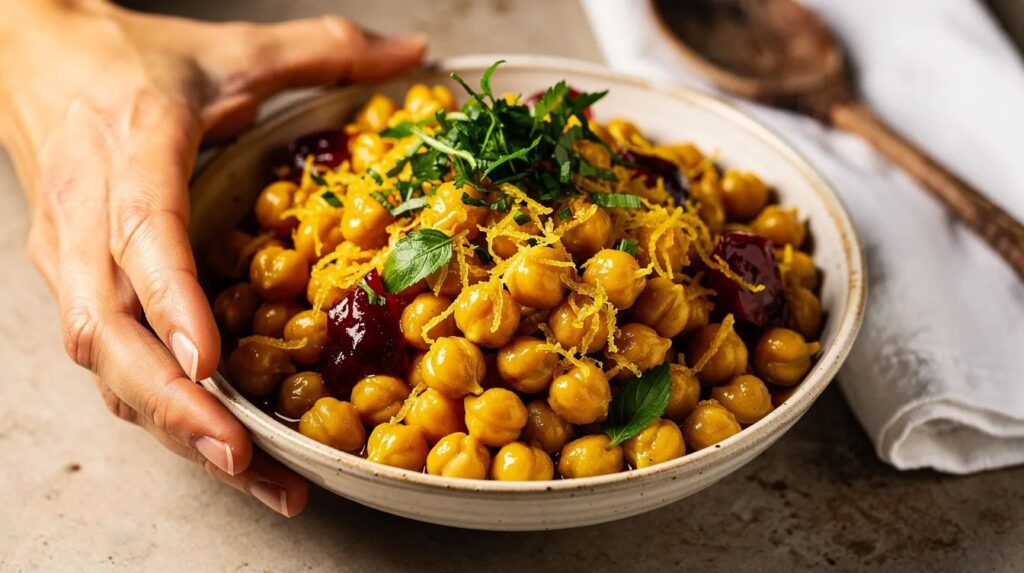
March arrives and the kitchen shifts before the garden does. Daylight stretches a little further each evening, the air carries that tentative warmth that makes you reach for lighter pots and brighter flavors — and that is exactly when a pan of lemony chickpeas becomes the most persuasive argument for spring. Zesty, golden, and built in twenty minutes flat, this dish speaks the language of the season before the season has fully committed to showing up. It bridges that restless stretch between winter's heaviness and the first genuine warmth, when the pantry still leans on canned legumes but the palate craves something alive.
What makes this version stand apart from a simple chickpea sauté is the layering of lemon — juice stirred in at the end for brightness, zest added with the garlic for depth, and a final flourish of fresh herbs that brings the whole thing into focus. The technique is forgiving, the ingredient list short, and the payoff immediate. Whether you serve it over creamy polenta, spooned alongside warm flatbread, or piled onto thick slices of toasted sourdough, this dish rewards a cook willing to trust simplicity. Tie on your apron and start with a cold pan — the rest follows naturally.
| Prep time | 5 min |
| Cook time | 15 min |
| Servings | 2–3 people |
| Difficulty | Easy |
| Cost | $ |
| Season | Spring · pantry staples · fresh lemon · parsley or dill |
Suitable for: Vegan · Vegetarian · Gluten-free · Dairy-free · High in plant protein
Ingredients
- 2 cans (15 oz each) chickpeas, drained and rinsed (or ~3 cups cooked from dried)
- 3 tablespoons extra-virgin olive oil, divided
- 5 cloves garlic, thinly sliced
- 1 teaspoon ground cumin
- ½ teaspoon smoked paprika
- ¼ teaspoon red pepper flakes, or more to taste
- Zest of 1 large lemon, finely grated
- Juice of 1½ lemons (~4 tablespoons)
- ½ cup vegetable broth (or water)
- 1 handful fresh flat-leaf parsley, roughly chopped
- 2 tablespoons fresh dill, optional but recommended in spring
- Flaky sea salt and freshly cracked black pepper, to finish
- Good olive oil, for drizzling at service
Equipment
- Large skillet or wide sauté pan (12-inch recommended)
- Microplane or fine grater
- Wooden spoon or heat-resistant spatula
- Citrus juicer
- Cutting board and sharp knife
Preparation
1. Dry the chickpeas thoroughly
Spread the drained chickpeas on a clean kitchen towel or a double layer of paper towels and pat them as dry as you can manage. This step is non-negotiable if you want any browning — moisture is the enemy of a golden crust. Leave them uncovered for two to three minutes while you prep the garlic and zest the lemon. A dry chickpea hitting a hot, oiled pan will blister and develop a light skin that adds both texture and flavor. A wet one will simply steam and remain soft throughout, which produces a very different — and considerably less interesting — result.
2. Build the aromatic base
Set your skillet over medium heat and add 2 tablespoons of the olive oil. Once the oil shimmers — roughly 60 seconds — add the sliced garlic and the lemon zest simultaneously. This is blooming: allowing fat-soluble aromatic compounds in the garlic and zest to dissolve into the oil, amplifying their flavor far beyond what they would contribute added raw at the end. Keep the heat moderate. You are looking for the garlic to turn pale gold at the edges and for the kitchen to smell unmistakably of citrus and allium — approximately 2 minutes. The moment the garlic deepens to a true amber, move fast: it tips from toasty to bitter with very little warning. Add the cumin, smoked paprika, and red pepper flakes, and stir constantly for 30 seconds more, letting the spices toast briefly in the fat.
3. Add and sear the chickpeas
Tip the dried chickpeas into the pan and raise the heat to medium-high. Resist stirring for the first 2 to 3 minutes. Letting the chickpeas sit undisturbed against the hot surface is what produces those desirable blistered patches — a light char that carries smokiness and textural contrast. When you hear an active, steady sizzle and see the underside of the chickpeas beginning to color, toss them once and let them sit again for another 2 minutes. Season generously with salt and black pepper at this stage, because seasoning layered during cooking penetrates more deeply than seasoning applied only at the end.
4. Deglaze and build the sauce
Pour in the vegetable broth and scrape up any golden bits stuck to the pan — this process is called deglazing, and those caramelized remnants carry concentrated flavor that will enrich the final dish. Let the liquid bubble and reduce by about half, which takes roughly 3 minutes over medium-high heat. The chickpeas should look glossy and the pan sauce just slightly thickened. Add the lemon juice now, stir to combine, and lower the heat to medium-low. Taste and adjust salt. If the lemon reads as sharp rather than bright, a very small drizzle of olive oil will soften it without dulling the citrus note.
5. Finish and plate
Remove the pan from heat. Fold in the fresh parsley and dill — off the heat, so the herbs stay green and grassy rather than wilting into khaki. Drizzle the remaining tablespoon of good olive oil directly over the chickpeas in the pan and toss once more. Taste for seasoning a final time. Serve immediately in wide bowls or onto your chosen base, with a wedge of lemon on the side for anyone who wants more brightness. A pinch of flaky sea salt over the top right before it hits the table brings everything into sharp relief.
Chef's tip
The single move that elevates this dish from good to excellent is using a lemon that is heavy for its size — that weight signals high juice content and thick, aromatic skin. In early spring, when Meyer lemons are still available in some markets, use one Meyer in place of a regular lemon for a softer, more floral acidity. If the chickpeas seem to be absorbing the sauce too quickly and the pan looks dry before they are done, add broth a tablespoon at a time rather than reaching for more lemon juice — you will maintain balance without pushing the citrus into sourness. Finally, a spoonful of good tahini stirred in off the heat turns this into something closer to a weeknight centerpiece than a side dish.
Wine & drink pairings
The dish's driving acidity and herbal freshness call for a white wine with enough tension to match the lemon without competing with it — something lean, mineral, and dry.
A Vermentino from Sardinia or Corsica brings citrus pith, white flowers, and a saline finish that mirrors the chickpeas beautifully. A Grüner Veltliner from Austria's Wachau — with its characteristic white pepper note — also handles the cumin and paprika with ease. For a non-alcoholic option, sparkling water with a squeeze of lemon and a few fresh mint leaves keeps the palate clean between bites and respects the dish's vibrancy.
About this dish
Chickpeas braised with lemon and olive oil belong to a broad Mediterranean and Middle Eastern tradition that stretches from Catalonia to Lebanon, from the Sicilian coast to the markets of Marrakech. The legume itself — Cicer arietinum — has been cultivated for more than ten thousand years and remains one of the most consumed plant proteins on earth. Its affinity with citrus is not incidental: the fat-soluble aromatic compounds in lemon zest bind to olive oil in a way that makes the whole dish smell louder and more complex than its parts suggest.
In the American kitchen, chickpeas spent decades confined to hummus and the occasional salad bar. The past ten years have seen a quieter transformation — they appear now in restaurant pasta dishes, roasted as a snack, and simmered in coconut-based curries. This particular preparation owes its DNA to revithia, the Greek island chickpea soup slow-cooked with lemon and olive oil, accelerated into a weeknight-friendly sauté that keeps the same essential dialogue between fat, acid, and legume. Spring is its natural moment: bright, quick, and unashamed of simplicity.
Nutrition facts (per serving, approximate values)
| Nutrient | Amount |
|---|---|
| Calories | ~340 kcal |
| Protein | ~14 g |
| Carbohydrates | ~38 g |
| of which sugars | ~6 g |
| Fat | ~15 g |
| of which saturated | ~2 g |
| Fiber | ~10 g |
| Sodium | ~320 mg |
Frequently asked questions
Can i make this dish ahead of time?
The chickpeas hold well, but the texture shifts as they sit — they soften and absorb the sauce over time, losing their blistered exterior. If cooking ahead, stop after the deglazing step and refrigerate. Reheat over medium heat and add the lemon juice and fresh herbs only at the last moment, just before serving, to preserve their brightness and color.
How do i store leftovers?
Transfer cooled leftovers to an airtight container and refrigerate for up to 3 days. Reheat gently in a skillet with a splash of broth or water to loosen the sauce. The herbs will have wilted, so add a small handful of fresh parsley when reheating to bring the dish back to life. Freezing is not recommended — the chickpeas become mealy and the lemon flavor flattens significantly.
What substitutions work well?
White beans — cannellini or Great Northern — swap in seamlessly for chickpeas and produce a creamier, more yielding texture. In late spring, a handful of fresh or frozen peas stirred in off the heat adds sweetness and color. Lemon can be partially replaced with preserved lemon paste (use about 1 teaspoon) for a more complex, fermented citrus note. If fresh dill is unavailable, fennel fronds or tarragon carry a similar anise brightness.
What should i serve this with?
Over soft polenta or creamy mashed white beans for a complete meal. Spooned into warm pita with sliced cucumber and a drizzle of tahini for a quick wrap. Alongside a fried or poached egg — a runny yolk stirred into the lemony sauce is one of the more persuasive arguments for keeping a stocked pantry. It also works as a room-temperature side at a spring gathering, served with good bread for scooping.
Can i use dried chickpeas instead of canned?
Absolutely, and the texture will reward the extra planning. Soak 1 cup of dried chickpeas overnight in cold water, then simmer in fresh unsalted water for 60 to 90 minutes until tender but not splitting. The cooking liquid — aquafaba — can be reserved and used as an egg white substitute in other recipes. Cooked-from-dried chickpeas brown more evenly and hold their shape better under high heat than their canned counterparts.