


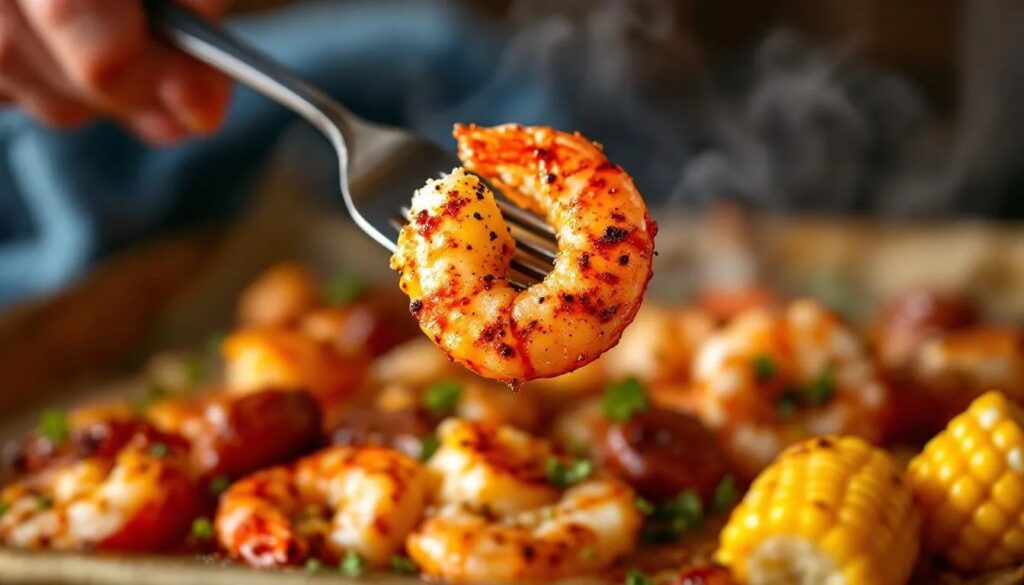
There's a particular kind of cooking that belongs to late March — the kind that bridges the last cold evenings and the first warm ones, where you want something bold, a little smoky, a little spicy, but still simple enough to pull off on a Tuesday night. A Louisiana shrimp boil checks every box, except for one: it traditionally demands a massive stockpot, a backyard, and about an hour of careful watching. This sheet pan version compresses all that flavor — the Old Bay, the smoky andouille, the sweet corn, the butter-slicked shrimp — into a 20-minute window and a single pan that slides straight into the oven.
What makes this recipe more than just a shortcut is the technique behind it. By controlling the heat of the oven and layering the ingredients in the right order, every element finishes at exactly the right moment: the shrimp stay plump and just-cooked, the sausage gets a proper caramelized edge, and the corn chars slightly at the tips. The spring market is already showing the first ears of the season alongside reliably good Gulf shrimp, which makes this the right moment to make it. Grab a large rimmed sheet pan and let's get into it.
| Prep Time | 10 min |
| Cook Time | 20 min |
| Servings | 4 people |
| Difficulty | Easy |
| Cost | $$ |
| Season | Gulf shrimp, spring corn, baby potatoes, andouille |
Suitable for: Gluten-Free · High-Protein · Dairy-Free (with oil substitution)
Ingredients
For the sheet pan
- 1½ lb large raw shrimp (16/20 count), shell-on, deveined
- 12 oz andouille sausage, sliced into ½-inch rounds
- 2 ears fresh corn, husked and cut into 2-inch rounds
- 1 lb baby potatoes, halved
- 1 small red onion, cut into thick wedges
- 4 cloves garlic, smashed and roughly chopped
- 3 tbsp unsalted butter, melted (or olive oil for dairy-free)
- 2 tbsp olive oil
- 2 tbsp Old Bay seasoning
- 1 tsp smoked paprika
- ½ tsp cayenne pepper, or to taste
- 1 tsp kosher salt
- ½ tsp black pepper, freshly ground
For finishing
- 2 tbsp fresh flat-leaf parsley, roughly chopped
- 2 tbsp unsalted butter, for melting over at the end
- 1 lemon, cut into wedges
- Hot sauce, to serve
Equipment
- 1 large rimmed sheet pan (18×13 inches / half-sheet)
- Small saucepan or microwave-safe bowl (for melting butter)
- Large mixing bowl
- Aluminum foil (optional, for easier cleanup)
- Kitchen tongs
- Instant-read thermometer (optional)
- Chef's knife and cutting board
Preparation
1. Pre-cook the potatoes to give them a head start
This is the step most sheet pan shrimp boil recipes skip, and it's the reason theirs come out wrong. Baby potatoes need more time than shrimp — roughly 20 to 25 minutes versus the 6 to 8 minutes shrimp require — so you can't just throw everything onto the pan at once. Place the halved baby potatoes in a microwave-safe bowl with a small splash of water, cover tightly with plastic wrap, and microwave on high for 5 minutes, or until just barely fork-tender. They should yield under light pressure but still feel firm at the center. Alternatively, parboil them in salted boiling water for 8 minutes and drain well. Once done, pat them dry with paper towels — moisture on the surface of a potato will steam instead of roast, preventing the caramelized exterior you're after. While they cool slightly, preheat your oven to 425°F (220°C) with a rack positioned in the upper-middle position.
2. Build the seasoning base and coat everything evenly
In a large mixing bowl, whisk together the melted butter, olive oil, Old Bay seasoning, smoked paprika, cayenne, salt, and black pepper until fully combined. The fat is not just flavor here — it's the conductor that carries the spices onto every surface and ensures the maillard reaction (the browning process that creates hundreds of flavor compounds) can happen efficiently in a hot oven. Add the pre-cooked potatoes, corn rounds, andouille slices, and red onion wedges to the bowl. Toss well with your hands or tongs until every piece is coated. Spread this mixture onto your sheet pan in a single layer, cut sides of the potatoes facing down. Do not crowd the pan — if ingredients are stacked, they will steam rather than roast. If your pan is too small, use two pans side by side. Scatter the smashed garlic across the surface.
3. Roast the base ingredients until the edges begin to brown
Slide the pan into the preheated oven and roast for 12 to 14 minutes. You're looking for specific visual cues: the cut faces of the potatoes should be turning golden at the edges, the andouille slices should be caramelizing and showing a slight char on their flat surfaces, and the corn tips should be beginning to bronze. The fat in the andouille will render and spread across the pan, mingling with the butter and paprika into a spiced glaze. At the 12-minute mark, open the oven and listen — there should be a steady, assertive sizzle. If the pan sounds quiet, increase the heat to 450°F (230°C) for the final shrimp phase.
4. Add the shrimp at exactly the right moment
Remove the pan from the oven. Working quickly, arrange the shrimp directly on top of the roasted ingredients, spacing them out so they're not touching. If shrimp are touching, they trap steam between them and poach rather than roast, resulting in a rubbery, gray texture rather than the firm, slightly caramelized exterior you want. Return the pan to the oven and roast for 6 to 8 minutes, flipping the shrimp once at the halfway point. The shrimp are done when they form a tight C-shape, the flesh turns from translucent grey-blue to an opaque pinkish-white, and the edges nearest the pan pick up a faint golden color. If they're curling into a tight O-shape, they've gone 1 to 2 minutes too long. Pull the pan the moment they hit that C.
5. Finish with butter, parsley, and lemon
Remove the pan from the oven. Immediately drop the 2 remaining tablespoons of cold butter in small pieces across the hot shrimp and vegetables — the residual heat will melt the butter into a light glaze that coats everything as it pools across the pan. Scatter the chopped flat-leaf parsley over the top, squeeze two of the lemon wedges directly onto the pan, and serve the remaining wedges on the side with a bottle of hot sauce. The dish goes directly from oven to table in the same pan, which is the point: no transfer, no plating, no extra dishes.
Chef's Note
The single most common mistake with sheet pan shrimp is treating it like everything else on the pan — roasting it from the start. Shrimp are protein, and protein overcooks fast. The correct move is always to treat the shrimp as a finisher, not a starter. If you want additional smokiness that pushes this closer to an actual fish fry, switch your oven to the broil setting (high) for the final 2 minutes after the shrimp go in — stand at the oven and watch closely. Early spring corn can be less sweet than peak summer ears, so a brush of the seasoned butter over the cut corn ends before roasting helps compensate.
Drink Pairings
The heavy spice profile here — Old Bay, cayenne, smoked paprika, andouille fat — calls for something that can match the intensity without amplifying the heat to an uncomfortable level. Crisp acidity and a slight sweetness work best as counterpoints.
A dry Riesling from Alsace is the most elegant match: its bright stone-fruit notes and clean mineral finish stand up to the spice and cut through the butter beautifully. A cold Pinot Gris from the same region reads slightly richer and handles the andouille's smokiness well. For something closer to the Louisiana spirit, an ice-cold pale lager — Abita Amber from New Orleans, if available, otherwise any well-carbonated lager — is the traditional and very correct choice. Non-alcoholic option: sparkling water with a heavy squeeze of lemon and a few dashes of hot sauce works as a palate cleanser between bites.
Background: The Louisiana Shrimp Boil
The shrimp boil is one of the defining communal meals of Louisiana Cajun culture, rooted in the practicality and abundance of the Gulf Coast. Traditionally prepared outdoors in a large propane-heated stockpot with several gallons of water, heavily seasoned with spice blends like Old Bay or Zatarain's, the boil would accommodate bushels of shrimp, whole crabs, crawfish, links of andouille, fresh corn, and potatoes — all tipped directly onto newspaper-covered tables and eaten by hand. It is food designed for gathering, for standing, for conversation over a shared pile.
The sheet pan adaptation emerged from the practical reality of urban kitchens without outdoor space or a stockpot large enough to serve the purpose. While it doesn't replicate the exact texture a boil produces — the shrimp carry a roasted edge the water version doesn't — the seasoning profile remains faithful, and the one-pan format preserves the spirit of low-effort, high-reward communal cooking. This kind of improvisation is viewed as part of the tradition rather than a departure from it.
Nutrition Facts (per serving, approximate values)
| Nutrient | Amount |
|---|---|
| Calories | ~520 kcal |
| Protein | ~42 g |
| Carbohydrates | ~32 g |
| of which sugars | ~5 g |
| Fat | ~24 g |
| Fiber | ~4 g |
| Sodium | ~980 mg |
Frequently Asked Questions
Can I use frozen shrimp?
Yes, but the thawing process matters significantly. Place the frozen shrimp in a colander under cold running water for 5 to 7 minutes until fully thawed, then spread them on paper towels and pat completely dry before adding them to the pan. Surface moisture is the enemy of roasting — any water left on the shrimp will create steam in the oven, turning your roast into a poach. Do not thaw shrimp in warm water, which starts to cook the outer layers unevenly.
Can this be prepped ahead of time?
The vegetables and sausage can be seasoned and arranged on the sheet pan up to 4 hours ahead, covered with plastic wrap and held in the refrigerator. Do not add the shrimp until just before roasting. Pull the pan from the fridge 15 minutes before cooking to allow the ingredients to approach room temperature — a cold pan going into a hot oven slows the browning process.
How do you store and reheat leftovers?
Transfer leftovers to an airtight container and refrigerate for up to 2 days. For reheating, spread the leftovers on a sheet pan and warm in a 375°F (190°C) oven for 6 to 8 minutes. Avoid microwaving shrimp — the uneven heat causes the protein to seize and toughen rapidly. The potatoes and corn reheat well regardless of method, but the shrimp are best consumed fresh or as cold leftovers in a salad the next day.
What can I substitute for andouille sausage?
Andouille's defining characteristics are its smokiness and its spice, so any substitute should match at least one of those qualities. Spanish chorizo (cured, not fresh) is the closest widely available alternative — similar fat content, similar paprika backbone. Smoked kielbasa works well if you add an extra half-teaspoon of smoked paprika to the seasoning mix. For a lighter version, smoked turkey sausage holds up reasonably well on the pan but will release less fat, so increase the butter by one tablespoon.
How do I scale this recipe for a larger group?
For 6 to 8 people, double all ingredients and use two large sheet pans, rotating them top-to-bottom at the halfway point of the first roasting phase to ensure even browning. Do not attempt to crowd everything onto one pan — a single overcrowded pan will produce steamed, not roasted, results. The timing remains the same; a second pan in the same oven will slightly extend the initial roasting phase by 2 to 3 minutes as the oven works to maintain temperature.