

March is a pivot point in the kitchen. The last cold snaps still justify something warm and satisfying on the table, yet the first signs of spring — a bunch of bright scallions at the farmers market, early herbs pushing through the soil — pull you toward lighter, fresher combinations. A one-skillet chicken dinner lands exactly in that gap: substantial enough to feel like real cooking, simple enough to become a genuine weekly habit. Rachael Ray, who has spent decades convincing home cooks that a good meal doesn't require a culinary degree, reportedly returns to this dish every single Monday. That kind of personal loyalty says more than any five-star review.
The concept is straightforward — bone-in, skin-on chicken pieces seared until the skin crackles, then finished with aromatics, white wine, and a handful of pantry staples — but the technique is where everything happens. Getting the skin genuinely crisp before any liquid touches the pan is the step most home cooks rush, and it's the step that changes everything. This recipe walks through each moment in detail, with the timing cues, visual markers, and textural signals that tell you exactly what's working. Pull out your largest, heaviest skillet and let's get into it.
| Prep time | 15 min |
| Cook time | 40 min |
| Portions | 4 people |
| Difficulty | Easy |
| Cost | $$ |
| Season | Early spring — scallions, flat-leaf parsley, lemon |
Suitable for: Gluten-free · High-protein · Dairy-free (optional)
Ingredients
- 4 bone-in, skin-on chicken thighs (approximately 2.5 lb / ~1.1 kg total), patted very dry
- 1½ tsp kosher salt, plus more to taste
- 1 tsp freshly cracked black pepper
- 1 tsp smoked paprika
- 2 tbsp olive oil
- 1 medium yellow onion, thinly sliced into half-moons
- 6 garlic cloves, smashed and roughly chopped
- 4 scallions, white and light green parts sliced, dark green tops reserved for garnish
- 1 tsp dried oregano
- ½ tsp crushed red pepper flakes
- ½ cup (120 ml) dry white wine (a Pinot Grigio or unoaked Chardonnay works well)
- 1 cup (240 ml) low-sodium chicken stock
- 1 can (14 oz / 400 g) crushed tomatoes or whole peeled tomatoes, crushed by hand
- 1 tbsp capers, drained (optional, but recommended)
- Zest of 1 lemon
- Small bunch flat-leaf parsley, leaves only, roughly torn
Equipment
- 12-inch (30 cm) cast-iron or heavy stainless-steel skillet with a lid (or a sheet of aluminum foil as a substitute)
- Kitchen tongs
- Paper towels
- Sharp chef's knife and cutting board
- Microplane or fine grater (for lemon zest)
- Measuring cups and spoons
Preparation
1. Dry and season the chicken
Remove the chicken thighs from any packaging at least 20 minutes before cooking and press them firmly between several layers of paper towels. Moisture on the skin is the enemy of a proper sear: any surface water will steam the chicken rather than brown it, leaving the skin pale and flabby instead of lacquered and crisp. Once dry, combine the kosher salt, black pepper, and smoked paprika in a small bowl, then rub the mixture all over the thighs — skin side, underside, and into any crevices. The paprika does two things here: it adds a subtle earthiness and it deepens the mahogany color of the finished skin. Let the seasoned chicken rest uncovered on a plate or rack for at least 10 minutes while you prep the aromatics.
2. Build the sear — skin side down, no touching
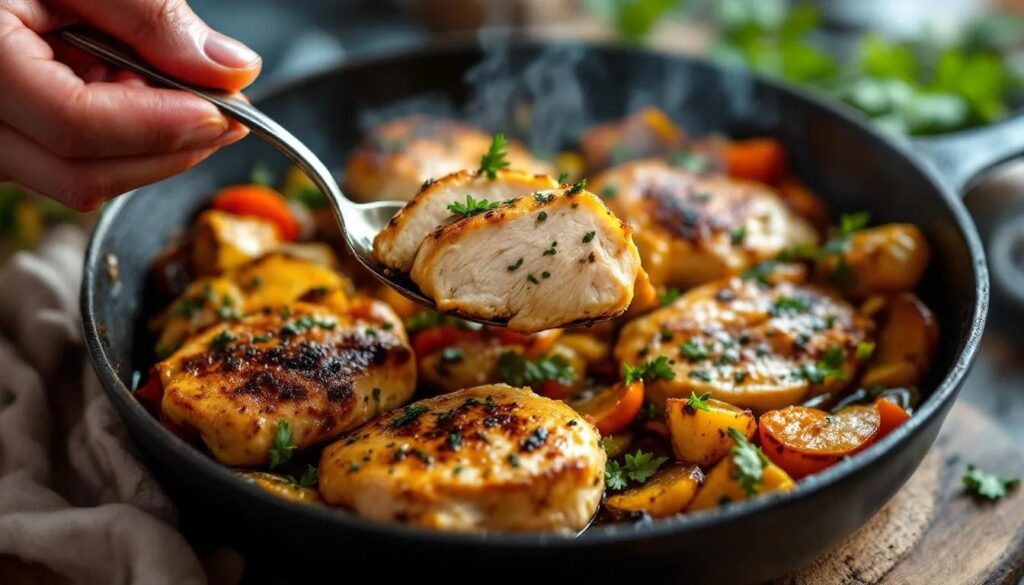
Set your skillet over medium-high heat and pour in the olive oil. Let it warm until it shimmers — that liquid, almost rippling quality the surface takes on just before it begins to smoke. Place the chicken thighs skin side down in the pan without crowding them, pressing each piece gently but firmly against the surface with the back of your tongs for the first 10 seconds to ensure full contact. Now leave them completely alone. The instinct to move them is strong — resist it entirely. After about 8 to 10 minutes, the skin will have rendered much of its fat, turned a deep amber-gold, and released naturally from the pan without sticking. If you're fighting the pan to lift a piece, it needs another minute. Flip them only once, cook the second side for 4 minutes, then transfer to a plate. The thighs won't be fully cooked through yet — that happens in the sauce. You should now have a generous pool of golden chicken fat in the pan. Keep it.
3. Soften the aromatics in the rendered fat
Reduce the heat to medium. Add the sliced onion to the skillet and stir to coat it in the rendered fat. Cook for 4 to 5 minutes, scraping up any browned bits stuck to the bottom of the pan with a wooden spoon — those caramelized fragments are flavor, and you want every last one incorporated into the base. When the onion has softened and turned translucent with slightly golden edges, add the garlic, sliced scallion whites, dried oregano, and red pepper flakes. Stir constantly for 60 to 90 seconds, until the garlic is fragrant but not brown. Browning garlic at this stage would introduce bitterness that no amount of liquid will correct later.
4. Deglaze and build the braising liquid
Pour in the white wine and let it deglaze the pan — the technique of using liquid to dissolve and lift the caramelized proteins and sugars bonded to the cooking surface. The pan will hiss loudly and release a burst of steam. Stir vigorously for about 1 minute while the wine reduces by roughly half and the sharp alcohol edge mellows. Add the chicken stock, then the crushed tomatoes, stirring everything together into an even, rust-colored base. If you're using capers, add them now — they'll dissolve into the background subtly, contributing a brininess that rounds out the acidity of the tomatoes without announcing themselves. Taste the liquid and adjust salt if needed. It should taste pleasantly bold, knowing it will mellow as it reduces around the chicken.
5. Nestle the chicken back in and finish on the stovetop
Return the seared chicken thighs to the skillet, skin side up, pressing them slightly into the braising liquid without submerging the skin. This positioning is deliberate: the bottom of each thigh braises and becomes tender, while the top of the skin stays above the liquid and remains crisp rather than turning soft and waterlogged. Bring the liquid to a steady simmer — small, regular bubbles breaking the surface every second or two, not a rolling boil that would toughen the meat — then reduce the heat to medium-low and cover the pan. Cook for 20 to 22 minutes, until the internal temperature of the thickest part of each thigh reads 165°F (74°C) on an instant-read thermometer. If the sauce looks too thin when you lift the lid, remove the chicken to a plate and let it reduce uncovered over medium heat for 3 to 4 minutes until it coats the back of a spoon.
6. Finish and serve
Take the pan off the heat. Grate the lemon zest directly over the chicken and sauce — the volatile oils released from fresh zest will brighten everything, cutting through the richness of the rendered fat and tomatoes in a way that dried herbs simply can't replicate. Scatter the torn flat-leaf parsley and the reserved dark green scallion tops over the top. Serve directly from the skillet, over creamy polenta, crusty sourdough to mop the sauce, or simply alongside roasted spring vegetables.
Chef's note
The single biggest upgrade you can make to this dish is to season the chicken the night before and leave it uncovered in the refrigerator overnight. The salt draws a small amount of moisture to the surface, then reabsorbs it, seasoning the meat deeply rather than just the exterior. More importantly, the skin dries out in the cold, dry air of the fridge, setting you up for a sear that most home kitchens rarely achieve. Even a one-hour dry brine makes a noticeable difference. If spring herbs are available, consider swapping the dried oregano for fresh marjoram or young thyme — the difference in brightness is immediate and worth the extra handful of change.
Wine pairing
The braising liquid here is tomato-forward, lightly acidic, with a savory backbone from the chicken fat and capers. The aim is a wine that can match that acidity rather than be flattened by it — a medium-bodied red with good natural lift works far better than anything too tannic or too extracted.
A Barbera d'Asti from Piedmont is a natural fit: its high natural acidity, plummy fruit, and relatively low tannins make it a companion to tomato-based chicken dishes that feels almost instinctive. A Côtes du Rhône built on Grenache offers rounder fruit with peppery herbal notes that mirror the oregano and red pepper in the dish. For a white, a skin-contact Vermentino from Sardinia, with its bitter almond finish and slight oxidative character, holds its own remarkably well. For those forgoing alcohol, sparkling water with a long squeeze of lemon and a few bruised fresh herbs over ice is a clean, refreshing counterpoint to the richness on the plate.
About this dish
The one-skillet chicken dinner is less a specific recipe than a cooking philosophy that stretches across Italian pollo in padella, French poulet sauté, Greek kotopoulo me saltsa, and dozens of Mediterranean traditions that predate any celebrity kitchen by centuries. What unites all of them is an understanding that bone-in, skin-on chicken pieces — cheaper and more forgiving than breasts — reward patience and fat management with flavor that's difficult to achieve any other way. Rachael Ray's version, as she has described it across various formats over the years, emphasizes speed and technique over elaborate ingredient lists — a professional cook's approach to a weeknight reality.
The Monday ritual is more deliberate than it might appear. Cooking the same dish on the same day every week is a practice common among professional chefs. It removes decision fatigue, allows near-effortless mise en place from memory, and creates a rhythm that makes real home cooking sustainable rather than aspirational. The base recipe adapts with the seasons almost without effort: cherry tomatoes in summer, a handful of olives and fennel in autumn, preserved lemon in winter. In early spring, the scallions and fresh herbs do the seasonal work naturally.
Nutrition facts (per serving, approximate values)
| Nutrient | Amount |
|---|---|
| Calories | ~420 kcal |
| Protein | ~38 g |
| Carbohydrates | ~12 g |
| of which sugars | ~6 g |
| Fat | ~22 g |
| Fiber | ~2 g |
Frequently asked questions
Can this dish be made ahead of time?
Yes, and it actually improves after a night in the refrigerator. The braising liquid thickens slightly as it cools and the flavors consolidate. Reheat gently over low heat with a splash of chicken stock to loosen the sauce, keeping the lid on for the first few minutes to bring the chicken back up to temperature without drying it out. The skin will soften during storage. If that matters, reheat the thighs uncovered in a 400°F (200°C) oven for 8 minutes before serving while warming the sauce separately on the stovetop.
How do I store and reheat leftovers?
Transfer the cooled chicken and sauce to an airtight container and refrigerate for up to 3 days. The dish also freezes well: portion it into freezer-safe containers, label with the date, and freeze for up to 2 months. Thaw overnight in the refrigerator before reheating. The sauce tends to separate slightly after freezing so a quick stir over low heat brings it back together.
Can I use chicken breasts instead of thighs?
Bone-in, skin-on chicken breasts work as a substitute, though they require slightly more attention. Breasts have less fat and cook faster; reduce the covered braising time to 15 to 18 minutes and check the internal temperature earlier, pulling them at exactly 165°F (74°C) to avoid any dryness. Boneless, skinless breasts are possible but will produce a fundamentally different result: no rendered fat, no crisp skin, and a sauce that lacks the depth the rendered fat contributes. The thighs are genuinely the right cut for this technique.
What should I serve alongside this?
Creamy polenta is the most natural pairing since its neutral, slightly sweet corn base absorbs the tomato-herb sauce beautifully. Crusty sourdough or a good baguette works for a simpler weeknight. Mashed white beans with olive oil are a high-protein, gluten-free alternative that holds up well against the boldness of the sauce. For a lighter spring plate, a simple green salad dressed with lemon vinaigrette alongside is all you need; the acidity of the dressing echoes the wine and tomatoes in the dish without competing with them.
What spring variations can I try as the season progresses?
As April arrives, add a handful of frozen or fresh peas to the sauce in the last 5 minutes of cooking. They brighten both the color and the flavor considerably. Asparagus tips, added at the same late stage, work beautifully. Swap the crushed tomatoes for a lighter base of chicken stock alone with a generous squeeze of lemon for a more delicate, almost French preparation. Fresh tarragon in place of the parsley at the finish introduces an anise-forward note that pairs particularly well with the wine-based sauce during warmer weeks.