


Spring has a way of bringing deviled eggs back to every table. Easter gatherings, backyard brunches, potlucks still humming with that late-March chill — the platter of deviled eggs always disappears first, yet the recipe almost never changes. Same pale yellow filling, same paprika dusted on top almost as an afterthought, same slightly flat flavor that leaves you reaching for a second one hoping the next will somehow taste more interesting than the first.
The upgrade you're looking for isn't at a specialty grocery store. It isn't a trendy ingredient that costs twelve dollars for a small jar. It's already sitting in your pantry right now — and once you understand what it does to the filling, you'll never make deviled eggs the plain way again. Pull out your eggs and your mixing bowl.
| Prep Time | 20 min |
| Cook Time | 12 min |
| Rest | 10 min (ice bath) |
| Servings | 6 people (24 halves) |
| Difficulty | Easy |
| Cost | $ |
| Season | Spring — ideal for Easter, April brunches, outdoor gatherings |
Suitable for: Vegetarian · Gluten-free · High in protein · Keto-friendly
Ingredients
- 12 large eggs, as fresh as possible
- 3 tablespoons mayonnaise, full-fat
- 1 tablespoon Dijon mustard
- 1 tablespoon pickle brine — from a jar of dill pickles or bread-and-butter pickles (the pantry upgrade)
- 1 teaspoon apple cider vinegar
- ½ teaspoon kosher salt
- ¼ teaspoon white pepper
- ¼ teaspoon smoked paprika, plus more to finish
- 1 tablespoon fresh chives, thinly sliced (optional but recommended in spring)
Equipment
- Large saucepan
- Large bowl for ice bath
- Sharp paring knife
- Small spoon or melon baller
- Fine-mesh sieve or fork
- Piping bag with a star tip, or a zip-lock bag with one corner snipped
- Serving platter or deviled egg tray
Preparation
1. Cook the eggs low and deliberate
Place the 12 eggs in a single layer in a large saucepan and cover them with cold water by at least one inch. Set the pan over medium-high heat and bring the water to a full, rolling boil. The moment the water reaches a boil, remove the pan from the heat entirely, cover it with a tight-fitting lid, and let the eggs sit undisturbed for exactly 12 minutes. This method — called carry-over cooking, where residual heat finishes the job — gives you yolks that are fully set but still bright amber-yellow rather than the dull gray-green ring that forms when eggs are overcooked. Timing matters here. Set a timer and walk away.
2. Ice bath and peel
While the eggs rest, fill a large bowl with cold water and a generous amount of ice. After the 12 minutes are up, transfer the eggs immediately into the ice bath using a slotted spoon. Let them cool for a full 10 minutes — not 3, not 5. The cold shock causes the egg white to contract slightly away from the membrane, which makes peeling noticeably cleaner. Peel each egg under a thin stream of cool running water, starting from the wide end where the air pocket sits. The shell should release in large, satisfying pieces rather than stubborn flecks. Pat each peeled egg dry with a paper towel.
3. Halve and release the yolks
Using a sharp paring knife, slice each egg lengthwise with a single, confident cut. A confident cut minimizes ragged edges on the white, which matters if you want the finished eggs to look composed on the platter. Gently pop each yolk out into a fine-mesh sieve set over a medium bowl — or simply into a regular bowl if you're using a fork. The sieve method gives a smoother final texture, because pressing the yolks through the mesh breaks up any remaining lumps before you even add the other ingredients. Set the empty white halves on a clean kitchen towel while you build the filling.
4. Build the filling — and add the upgrade
Press the yolks through the sieve or mash them thoroughly with a fork until no visible lumps remain. Add the mayonnaise and Dijon mustard, then the apple cider vinegar. Mix until the base is smooth and cohesive. Now add the pickle brine. One tablespoon is all it takes. The brine — whether from a jar of dill pickles or the sweeter bread-and-butter variety — brings acidity, salt, and a faint herbaceous or tangy depth that cuts through the richness of the yolk-and-mayo base in a way that plain vinegar alone never quite achieves. It doesn't make the filling taste like pickles. It makes it taste more like itself, only more awake. Season with the kosher salt, white pepper, and smoked paprika. Taste the filling and adjust — it should be creamy, sharp at the edges, and slightly smoky.
5. Pipe and finish
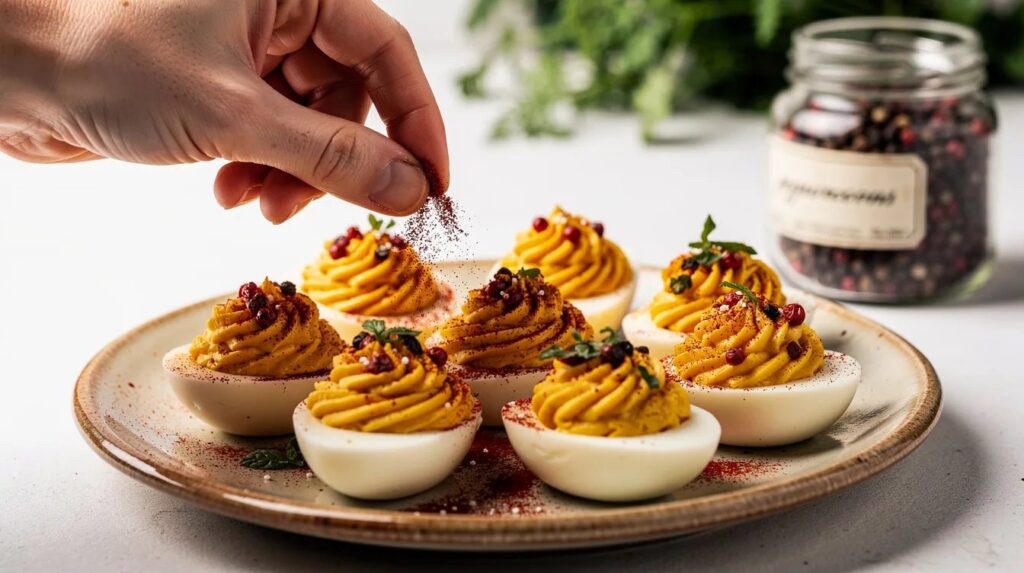
Transfer the filling into a piping bag fitted with a star tip, or use a zip-lock bag with one corner snipped to about half an inch. Pipe the filling into each white half in a slow, steady spiral, finishing with a slight upward pull to create a peak. The filling should sit just slightly above the rim of the white — generous but not collapsing. Dust lightly with smoked paprika, then scatter the thinly sliced chives across the platter. The thin green lines against the pale yellow and white read as springlike and precise. Serve within two hours at room temperature, or refrigerate uncovered for up to four hours before serving.
The chef's move
The type of pickle brine you use quietly steers the whole flavor profile. Dill pickle brine gives a sharp, savory, slightly garlicky finish that holds up well against smoked paprika or a few drops of hot sauce stirred into the filling. Bread-and-butter brine, which is sweeter and more aromatic with notes of celery seed and turmeric, pushes the filling in a milder, more old-fashioned Southern direction — ideal for gatherings where the crowd skews toward classic flavors. Keep both jars in your pantry and decide based on your audience. In early spring, when fresh tarragon starts appearing at farmers markets, a pinch of finely chopped tarragon stirred into the dill-brine version adds a faint anise note that feels genuinely seasonal.
Pairing suggestions
Deviled eggs have enough richness and acidity in the filling to handle something with real freshness and a crisp finish. The smoked paprika and Dijon create a slightly piquant, savory profile that calls for a wine with good minerality and low residual sugar.
A Muscadet Sèvre et Maine sur Lie from the Loire Valley is a natural match — its lean citrus character and faint bready quality from extended lees aging bridges the egg richness without fighting it. A dry, unoaked Aligoté from Burgundy works similarly. For a domestic option, an unoaked California Sauvignon Blanc from Sonoma Coast stays bright enough to cut through the mayo base. For guests who prefer something without alcohol, a sparkling water with a squeeze of fresh lemon over ice mirrors the acidity in the filling without competing with it.
The history of deviled eggs in America
The term "deviled" as applied to food dates back to at least the eighteenth century in England, where it referred to preparations involving sharp, spicy, or piquant seasonings — mustard, pepper, cayenne. Deviled eggs as a cold appetizer became fixtures of American cookbooks throughout the nineteenth century, appearing under names like "dressed eggs" or "salad eggs" depending on the region. By the mid-twentieth century, they were a staple of Southern church suppers, Midwestern potlucks, and holiday tables from coast to coast.
The classic American filling — hard-cooked yolks, mayonnaise, mustard, a touch of vinegar, paprika on top — crystallized somewhere in the postwar years and changed very little for decades. Since then, it's less a reinvention than a quiet expansion of the pantry logic already built into the original recipe. Pickle brine, miso, relish, horseradish, ranch seasoning, sriracha — cooks have always reached for what was nearby. The best upgrades aren't departures from the original; they're the original, thought through one step further.
Nutritional information (per 2 halves, approximate values)
| Nutrient | Amount |
|---|---|
| Calories | ~145 kcal |
| Protein | ~8 g |
| Carbohydrates | ~1 g |
| of which sugars | ~0.5 g |
| Fat | ~12 g |
| Fiber | ~0 g |
| Sodium | ~210 mg |
Frequently asked questions
Can I make deviled eggs the day before?
You can prepare each component separately up to 24 hours in advance. Store the peeled, halved egg whites in an airtight container lined with damp paper towels in the refrigerator, and keep the filling in a separate piping bag or sealed container. Pipe and garnish the eggs no more than two to three hours before serving — assembled deviled eggs tend to weep, and the whites can dry out or become rubbery if they sit filled and uncovered in the fridge overnight.
What's the best way to store leftover deviled eggs?
Arrange any leftover assembled deviled eggs in a single layer in an airtight container and refrigerate for up to two days. The filling may develop a slightly firmer texture as it sits, but a few minutes at room temperature before eating softens it back. Avoid stacking the eggs — the filling will smear, and the whites will stick together. A deviled egg tray with a fitted lid is the cleanest solution if you're making these regularly.
What substitutions work if I don't have pickle brine?
If your pickle jar is empty, the closest substitution is a small amount of olive brine from a jar of pitted green olives — it has a similar salty, tangy, slightly herbal quality. A few drops of hot sauce combined with an extra half-teaspoon of apple cider vinegar also bridges the gap reasonably well. Capers brine works too and adds a pleasant briny punch, though it changes the flavor profile slightly toward a more Mediterranean direction. Primarily, you're replacing the combination of salt, acid, and aromatic depth — any liquid that delivers all three will do a version of the same job.
Why do my egg whites sometimes look greenish or rubbery?
A greenish tinge or rubbery texture in the white almost always points to overcooking. When eggs are boiled too long or left in hot water past their window, the proteins in both the white and yolk continue to tighten well beyond the ideal point. The 12-minute off-heat method described in this recipe is specifically designed to prevent that — the gentle carry-over heat sets everything without pushing past the point of tenderness. Very fresh eggs can sometimes be harder to peel cleanly, since the membrane adheres more tightly to the white in a fresh egg than in one that's a week old. For easy peeling, eggs that are 7 to 10 days old hit the sweet spot.
Can I make these without mayonnaise?
Yes, with some adjustments to texture. Full-fat plain Greek yogurt is the most straightforward swap — it's tangy, creamy, and binds the yolks well, though the filling will be slightly lighter and less rich. Avocado mashed to a very smooth paste creates a denser, more buttery filling with its own distinct character. If you use Greek yogurt, reduce the apple cider vinegar slightly since the yogurt already brings significant acidity. The pickle brine upgrade works just as well in any of these variations — it's the brine's role in the flavor balance, not the fat source, that makes the difference.