
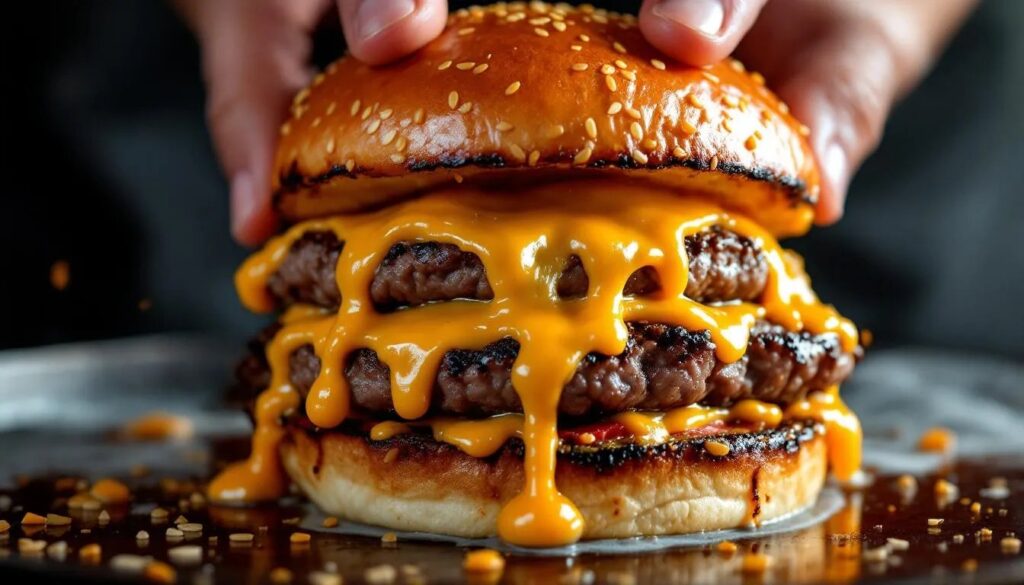
Late March brings that restless energy back to the grill — the days stretch longer, the first warm weekends invite outdoor cooking, and the craving for a proper burger hits harder than it has since last summer. But not just any burger. A smash burger: thin, lacey-edged, caramelized on the outside, impossibly juicy within. The kind that drips down your wrist before you've even sat down. If you've spent years chasing that specific experience at In-N-Out — or trying to replicate it at home without quite getting there — the gap between your attempt and the real thing usually comes down to one or two techniques most recipes quietly skip over.
What follows is the method that closes that gap. It borrows the structural logic behind In-N-Out's patty technique, pushes it further with a few adjustments developed through serious trial and error, and results in a burger that holds its own against the California original — made entirely in your kitchen, on a cast-iron skillet, in under fifteen minutes. Time to heat the pan.
| Prep time | 10 min |
| Cook time | 6 min |
| Portions | 2 burgers |
| Difficulty | Easy |
| Cost | $$ |
| Season | Spring — pairs well with early-season tomatoes and fresh lettuce from the market |
Good source of: High in protein
The hack — what In-N-Out actually does (and what you should do instead)
In-N-Out's patties are made from fresh, never-frozen beef, pressed thin on a very hot griddle. That part is widely known. The less-discussed element is the Maillard reaction — the chemical browning process that occurs when proteins and sugars in the meat hit a surface hot enough to trigger rapid dehydration at the point of contact. In-N-Out's industrial flat-top reaches temperatures that a home stove struggles to match consistently. This is why home smash burgers often come out steamed rather than seared: the pan wasn't hot enough, or the smash didn't happen fast enough, or both.
The hack centers on three adjustments: fat selection, smash timing, and surface temperature management. Together, they reproduce — and in some respects exceed — the crust quality that makes the In-N-Out patty so distinctive.
Ingredients
- 300 g ground beef, 80/20 fat ratio — chuck is ideal, freshly ground if possible
- 2 potato buns, brioche-style, sliced
- 4 slices American cheese (or mild cheddar, thinly sliced)
- 1 white onion, very finely diced
- 4 leaves iceberg lettuce, crisp and cold
- 1 spring tomato, sliced thin — look for the first vine tomatoes at the market this time of year
- 2 tbsp unsalted butter
- 1 tsp neutral oil (canola or grapeseed)
- Kosher salt and black pepper, coarsely ground
For the sauce:
- 3 tbsp mayonnaise
- 1 tbsp ketchup
- 1 tsp yellow mustard
- 1 tsp sweet pickle relish
- ½ tsp white wine vinegar
- Pinch of garlic powder
Ustensils
- 10–12 inch cast-iron skillet
- Heavy spatula (stiff, thin-edged — a burger spatula or bench scraper)
- Second, smaller spatula or flat-bottomed bowl for pressing
- Instant-read thermometer (optional)
- Small bowl for sauce
- Sheet of parchment paper (for smashing)
Preparation
1. Make the sauce and prep the toppings
Combine the mayonnaise, ketchup, mustard, relish, vinegar, and garlic powder in a small bowl. Whisk until smooth. Taste: the balance you're looking for is creamy-tangy, with the mustard providing sharpness and the vinegar cutting through the fat. Set aside. Slice the tomato — spring tomatoes at this point in the season are firmer and less watery than their August counterparts, which actually works in your favor here. Separate the lettuce leaves and keep them refrigerated until the last moment; cold lettuce against a hot patty creates a textural contrast that's part of what makes this burger work. Dice the onion as finely as you can — the pieces will be pressed directly into the meat during the smash.
2. Toast the buns
Place a small knob of butter in a dry skillet over medium heat. Once foaming, lay the buns cut-side down and press gently. You want a deep golden color, verging on amber — not pale, not burnt. This takes about 90 seconds. A properly toasted bun creates a moisture barrier that prevents the sauce and tomato juice from making the bread collapse. Remove and set aside, cut-side up.
3. Heat the cast iron properly — this is the moment most people rush
Wipe the skillet clean and place it over high heat for a full 4 to 5 minutes. This is longer than feels comfortable. The pan should be smoking slightly before you add anything. Add the neutral oil and swirl — it should ripple and smoke immediately. If it doesn't, wait another minute. The surface temperature needs to be above 230°C (450°F) for the Maillard reaction to occur fast enough to build a crust without cooking the interior. This is the single most-skipped step in home smash burger recipes, and it's the one that makes the biggest difference.
4. Form the balls and smash — fast and committed
Divide the beef into two equal portions (~150 g each). Do not season yet, and do not overwork the meat — handle it as little as possible to keep the fat structure intact. Roll loosely into balls. Drop the first ball into the screaming-hot skillet, immediately scatter a pinch of finely diced onion over the top, then place a small sheet of parchment paper over it and press down hard with the flat of your spatula or the bottom of a heavy bowl. Press as hard as you can for 10 full seconds. You want a patty roughly 5 mm thick — almost translucent at the edges. Now season the exposed surface generously with kosher salt and coarse black pepper. Do not touch it for 90 seconds. You'll hear aggressive sizzling; that's correct. The edges will turn brown and lacy — this is the crust formation you're building.
5. Flip once, cheese immediately
Slide the thin spatula under the patty with a scraping motion — you want to collect the crust, not leave it behind on the pan. Flip in one clean movement. Immediately lay two slices of cheese over the hot surface. The residual heat from the cooked side will begin melting the cheese from below while the second side finishes for another 45 to 60 seconds. For a double patty — which is the In-N-Out standard — repeat with the second ball, place it cheese-side down directly on the first patty, and let them fuse together for 20 seconds before sliding the stack off the pan.
6. Assemble with intention
Spread the sauce generously on both halves of the toasted bun. On the bottom: one slice of tomato, two leaves of cold lettuce. Add the patty stack. Close with the top bun. Press down lightly. The burger should hold its shape but yield at the first bite. Serve immediately — the window between peak and past-peak for a smash burger is short.
Chef's note
The onion-in-the-smash technique is borrowed from the griddle operators at old-school American diners: the onion bits get pressed into the beef and essentially steam-caramelize from the inside during cooking, releasing their sugars directly into the patty rather than sitting on top. If you want to lean further into the seasonal moment, swap the raw diced onion for quick-pickled spring onions — slice thin, cover with white wine vinegar, a pinch of sugar and salt for 20 minutes, drain. They bring acidity and a brightness that cuts through the fat in a way raw onion doesn't quite manage.
Drink pairings
The flavor profile here is rich, fatty, and saline, with an acidic counterpoint from the sauce. You need something either cold and effervescent enough to cleanse the palate, or structured enough to hold its own against the beef.
A cold lager — pilsner-style, light bitterness, high carbonation — is the most reliable match. If you want something with more character, a pale ale with citrus hop notes works well without overwhelming the meat. For a non-alcoholic option, a housemade lemonade with a little sparkling water added achieves a similar palate-cleansing effect. Avoid anything tannic or overly structured — this is not the moment for Cabernet.
The smash burger — where it comes from
The smash burger predates In-N-Out by several decades. The technique of pressing beef thin on a hot flat-top was standard practice at roadside diners and lunch counters across the American Midwest from the 1940s onward, driven by practical necessity: thinner patties cook faster, use less beef, and turn over more quickly during a lunch rush. What changed in recent years is the cultural reframing — what was once an efficiency technique became a culinary statement, with chefs and food media recasting the smash as a deliberate method for maximizing crust-to-meat ratio and Maillard browning.
In-N-Out's specific influence stems less from innovation and more from consistency at scale: the chain maintained fresh beef and a simple menu when the rest of the fast food industry moved toward frozen and processed. That simplicity became its own form of distinction. The "secret menu" culture that developed around the brand — Animal Style, 4x4, mustard-grilled patty — reflects a customer base that treats the burger as a customizable system rather than a fixed product. The method above borrows that logic: understand the core technique, then adjust the variables deliberately.
Nutritional information (per burger, approximate values)
| Nutrient | Amount |
|---|---|
| Calories | ~720 kcal |
| Protein | ~38 g |
| Carbohydrates | ~42 g |
| of which sugars | ~9 g |
| Fat | ~44 g |
| of which saturated | ~18 g |
| Fiber | ~2 g |
| Sodium | ~980 mg |
Frequently asked questions
Can I use frozen beef for a smash burger?
Technically yes, but the results are noticeably different. Frozen beef releases more moisture as it thaws and cooks, which generates steam at the surface and actively works against the crust formation you're trying to achieve. Fresh, never-frozen 80/20 chuck gives you better fat distribution and a drier surface that contacts the skillet directly. If frozen is the only option, thaw completely, pat the beef dry with paper towels, and proceed — but manage your expectations on the crust.
Why 80/20 beef? Can I use a leaner grind?
The 20% fat content in 80/20 is not optional for this technique — it's structural. As the fat renders during the smash, it bastes the patty from within and contributes directly to the lacy, crispy edges that define a proper smash burger. A 90/10 or 93/7 grind will produce a patty that dries out quickly and lacks the textural contrast between crust and interior. For a lighter version, use 85/15 at minimum and accept a slightly less pronounced crust.
What if I don't have a cast-iron skillet?
A stainless steel skillet is the closest alternative — it retains heat reasonably well and can reach the temperatures needed. Avoid non-stick pans: most cannot safely handle the sustained high heat required here, and even those that can won't develop the same crust because the non-stick coating prevents the beef from adhering momentarily to the surface, which is part of what creates the sear. A carbon steel pan is also an excellent choice if you have one.
Can the sauce be made ahead of time?
The sauce actually improves with a short rest. Make it up to 48 hours in advance and refrigerate in a sealed jar. The flavors integrate overnight, and the relish softens slightly into the mayonnaise base. Bring it to room temperature for about 10 minutes before using — cold sauce straight from the fridge will cool the bun and mute the aromatics.
What does "Animal Style" actually mean, and can I replicate it?
Animal Style — one of In-N-Out's most requested off-menu preparations — involves mustard-cooking the patty (a thin layer of yellow mustard spread on the raw side before flipping), adding extra pickles, caramelized onions cooked in spread (their proprietary sauce), and an additional layer of that sauce on the bun. To replicate it: spread a thin line of yellow mustard on the uncooked face of the patty just before flipping, cook caramelized onions separately in a mix of butter and a small amount of ketchup until deeply golden, and be generous with the sauce on both sides of the bun. The mustard caramelizes against the hot skillet and adds a sharp, slightly bitter note that cuts through the richness of the cheese and sauce.