
March brings that particular moment where winter comfort food and the first impulse toward lighter eating collide head-on. Meatballs sit squarely in that intersection: hearty enough to satisfy after a long day, adaptable enough to turn lean, bright, and vegetable-forward without losing any of their substance. Whether rolled from ground turkey, lentils, salmon, or classic beef trimmed of excess fat, they hit the table fast — most recipes clock in under forty minutes from start to finish.
These twelve recipes cover a range of proteins, dietary needs, and flavor profiles, from Moroccan-spiced lamb balls served over cauliflower rice to baked turkey meatballs swimming in a quick tomato-herb sauce. Each one has been selected for its nutritional balance: adequate protein, controlled sodium, and ingredients that are easy to find at any grocery store this time of year. Pull out your mixing bowl and a rimmed baking sheet — dinner is closer than you think.
| Prep Time | 15–20 min per recipe |
| Cook Time | 20–30 min per recipe |
| Servings | 4 per recipe |
| Difficulty | Easy to Medium |
| Cost | $$ |
| Season | Early spring — fresh herbs, spinach, asparagus, leeks |
Suitable for: High-Protein · Gluten-Free Options · Dairy-Free Options · Low-Carb Options
Why meatballs work for a healthy dinner
The meatball's genius is structural. Because the protein is broken down and reformed, you can dilute it with vegetables, grains, and legumes without the result falling apart — provided the binder and fat ratios hold. Grated zucchini, finely minced mushrooms, cooked lentils, or mashed chickpeas can replace anywhere from a quarter to half the meat volume, cutting saturated fat and adding fiber simultaneously. The resulting texture stays dense and moist, sometimes more so than a straight-meat version, because the added moisture from vegetables steams the interior during baking.
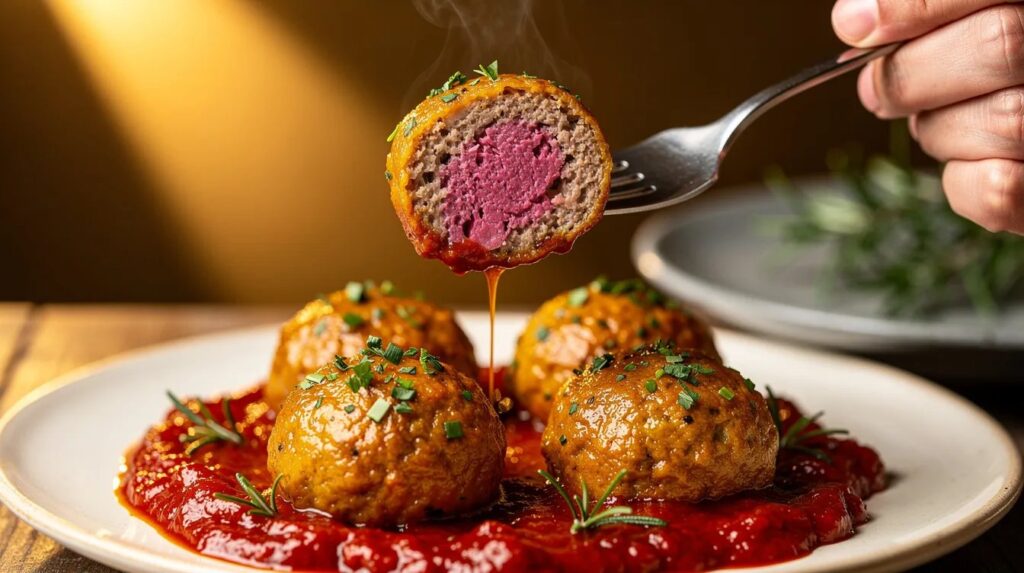
Baking rather than pan-frying removes the need for shallow-frying oil. A 400°F (200°C) oven on a lightly oiled rack allows fat to drip away while the exterior develops a firm, slightly crisped shell — what cooks call the Maillard crust, the brown layer formed by the reaction between amino acids and reducing sugars when exposed to dry heat above roughly 280°F (140°C). That crust is not just texture; it is flavor — roasty, slightly caramelized, with a faint chew that contrasts the yielding center.
The 12 recipes
1. Baked turkey meatballs in quick tomato sauce
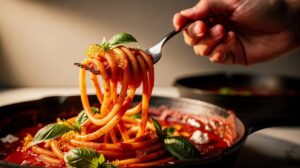
Ground turkey — specifically the 93% lean variety — forms the base here, mixed with grated Parmesan, one egg, panko breadcrumbs, and a generous amount of fresh flat-leaf parsley. The mixture should feel tacky but not wet; if it slides off a spoon without resistance, add breadcrumbs one tablespoon at a time. Roll into 1½-inch balls, place on a rack set over a baking sheet, and roast at 400°F for 20 minutes. While they bake, simmer crushed San Marzano tomatoes with garlic, a pinch of red pepper flakes, and a few torn basil leaves. Nestle the finished meatballs into the sauce for the final 5 minutes so they absorb the acidity and become lacquered and glossy. Serve over whole wheat spaghetti or zucchini noodles.
2. Greek lamb meatballs with tzatziki
Lean ground lamb — trimmed shoulder, not rib — carries natural fat that keeps these meatballs self-basting. Combine it with finely minced red onion, dried oregano, ground cumin, a small amount of crumbled feta, and lemon zest. The feta dissolves during cooking, leaving pockets of salt and tang throughout. Bake at 400°F for 22 minutes, turning once at the halfway mark for even browning. Serve with a tzatziki made from full-fat Greek yogurt, grated and well-drained cucumber, fresh dill, and a squeeze of lemon. The cool, acidic sauce cuts the richness of the lamb with each bite.
3. Chicken and spinach meatballs
Ground chicken breast is lean to the point of dryness if handled carelessly. The fix here is finely chopped, thoroughly squeezed baby spinach — about 2 cups raw wilted down and wrung out — folded directly into the mixture along with ricotta and garlic. The ricotta adds creaminess where fat would otherwise be, and the spinach introduces color and iron. Shape into slightly larger balls, about 2 inches, to preserve moisture at the center. Roast at 375°F for 25 minutes. The interior should read 165°F on an instant-read thermometer.
4. Salmon meatballs with ginger and scallion
Use skinless, boneless salmon fillet pulsed briefly in a food processor — five or six pulses only, until coarsely chopped, never pureed. Combine with minced fresh ginger, thinly sliced scallion, a tablespoon of low-sodium soy sauce, sesame oil, and a beaten egg. The mixture will be soft; refrigerating it for 20 minutes before forming firms it enough to roll cleanly. Bake at 400°F for 15 minutes. Salmon meatballs cook quickly and overcooking turns them chalky. Serve with a dipping sauce of rice vinegar, soy, and honey, thinned with a few drops of water.
5. Moroccan-spiced lamb and chickpea meatballs
Half ground lamb, half blended chickpeas — drained, rinsed, and roughly mashed with a fork — creates a meatball with a slightly crumbly, fragrant interior. Season with ras el hanout, cinnamon, coriander, and a touch of harissa paste. The chickpeas absorb the spices and add bulk without heaviness. Roast at 400°F for 20 minutes. Serve over cauliflower rice with a drizzle of pomegranate molasses and a handful of fresh mint leaves — the kind of combination that makes the whole kitchen smell like a spice market from the moment the oven opens.
6. Beef and mushroom meatballs
Finely minced cremini mushrooms, cooked in a dry pan until all moisture has evaporated and they turn deeply brown and almost paste-like — this is called a duxelles — replace roughly a third of the ground beef by weight. The result is a meatball with a richer umami depth than pure beef achieves, and significantly less saturated fat per serving. Use 90% lean ground beef, season with Worcestershire, Dijon mustard, and black pepper. Bake at 400°F for 22 minutes. The mushroom paste keeps the interior moist even as the exterior crisps.
7. Lentil and walnut meatballs (vegan)
Cooked green lentils and toasted walnuts, blended together with caramelized onion, smoked paprika, garlic, and a tablespoon of tomato paste, form a plant-based meatball that holds its shape after baking. The key is the ratio: the mixture should be dry enough to roll without sticking but moist enough not to crack. A flaxseed egg — 1 tablespoon ground flaxseed mixed with 3 tablespoons water, rested for 5 minutes — provides the binding. Bake at 375°F for 25–28 minutes, turning once. These are the meatballs that convert skeptics.
8. Turkey and quinoa meatballs
Cooked quinoa replaces the traditional breadcrumb binder here, adding a faintly nutty texture and a complete amino acid profile. Combine with ground turkey, grated garlic, fresh thyme, and lemon zest. The quinoa's texture remains distinct even after baking, giving each bite a slight, pleasing irregularity. Roast at 400°F for 20 minutes. These pair particularly well with a light broth poured tableside — a simple chicken stock with wilted spring greens and a wedge of lemon.
9. Pork and cabbage meatballs (Asian-style)
Ground pork shoulder, not loin, provides the fat necessary for succulence. Fold in finely shredded napa cabbage — salted, rested for 10 minutes, and then squeezed bone-dry — along with fresh ginger, garlic, scallion, and a small amount of five-spice powder. The method of salting and pressing the cabbage is non-negotiable: undrained cabbage turns the mixture wet and produces meatballs that steam rather than roast. Bake at 400°F for 22 minutes. Serve with steamed brown rice and a quick sauce of low-sodium soy, rice vinegar, and chili oil.
10. Cod and herb meatballs
White fish meatballs are less common but deserve a place in the weeknight rotation. Cod — flaky, mild, high in lean protein — blends with fresh parsley, dill, capers, lemon zest, and a small amount of almond flour as binder. The texture will be delicate; handle the formed balls with care and refrigerate for 15 minutes before baking. Roast at 375°F for 18 minutes. Serve over mashed cauliflower or alongside roasted asparagus, which is beginning its brief, sweet spring season right about now.
11. Chicken and oat meatballs with pesto
Old-fashioned rolled oats, pulsed briefly into a coarse flour, stand in for breadcrumbs and provide soluble fiber. Combine with ground chicken, one egg, minced shallot, and a generous amount of fresh basil. Bake at 400°F for 20 minutes. Toss the finished meatballs in a light basil pesto thinned with a splash of pasta cooking water. The starchy water helps the pesto cling without requiring additional oil. Spring basil is young and vivid right now — worth seeking out at the farmers' market if one is accessible.
12. Bison and sweet potato meatballs
Ground bison is leaner than beef, with a slightly sweeter, gamier edge. Mix with roasted and mashed sweet potato, smoked paprika, cumin, garlic, and an egg. The sweet potato keeps the texture moist and adds natural sweetness that balances the bison's mineral intensity. Roll into 1½-inch balls and bake at 400°F for 20–22 minutes. These work equally well served as a main with a simple green salad or cooled and packed into a lunchbox the next day — they hold their shape and flavor well at room temperature.
My chef's tip
The single most common mistake with any meatball — regardless of protein — is overworking the mixture. Once you combine the wet and dry ingredients, mix with your hands just until no dry streaks remain, then stop. Overworking develops the proteins into a tight matrix that turns the finished meatball dense and rubbery, the opposite of what you want. For extra tenderness, soak the breadcrumbs or oats in milk or a plant-based alternative for two minutes before adding them to the bowl — the pre-soaked crumb creates a softer interior structure as it bakes. In spring, swap dried herbs for fresh wherever possible: parsley, dill, chives, and basil are all coming back into season and make a noticeable difference in brightness.
Wine and beverage pairings
Meatball pairings depend less on the protein and more on the sauce and spice profile. A tomato-based preparation calls for acidity to match; a yogurt or cream-adjacent sauce wants something with texture and restraint.
For the tomato-sauced turkey and beef versions, a Chianti Classico or a domestic Sangiovese from California works well — high acid, earthy tannins, and cherry fruit that mirrors the cooked tomato. For the Moroccan lamb variation, a spiced, medium-bodied Côtes du Rhône or a Grenache-forward blend from Washington State handles the cumin and cinnamon without fighting them. The Asian-style pork or salmon meatballs pair naturally with an off-dry Riesling from the Finger Lakes or Alsace, where a trace of residual sugar tempers heat and ginger. For non-alcoholic options, sparkling water with yuzu or a cold-brewed green tea carries the job cleanly across all twelve recipes.
The history behind the meatball
Every culture with access to ground meat has a meatball. The Persian koofteh, stuffed with dried fruit and nuts and simmered in broth, predates the Italian polpette by centuries. Swedish köttbullar, now inextricably linked to a certain Scandinavian furniture retailer, derive from a recipe King Charles XII reportedly brought back from Ottoman Turkey in the early eighteenth century — an origin story disputed by food historians but persistent nonetheless. The Italian-American meatball — large, pan-fried, served in vast quantities of Sunday gravy — is itself a relatively recent invention, shaped as much by the economics of immigrant life in early twentieth-century New York as by any regional Italian tradition.
The healthy meatball is the newest chapter in that long story. It emerged from the intersection of sports nutrition, home-cooking culture, and the ongoing shift toward whole-food protein sources. What unites all twelve recipes here is the same thing that united their predecessors: the desire to make something satisfying and complete out of whatever is on hand, shaped by hand, cooked by heat, and eaten together.
Nutritional overview (per serving, values approximate)
Nutritional values (per serving, approximate values)
| Nutrient | Average Range Across All 12 Recipes |
|---|---|
| Calories | ~280–420 kcal |
| Protein | ~24–36 g |
| Carbohydrates | ~12–22 g |
| of which sugars | ~3–7 g |
| Fat | ~10–18 g |
| Fiber | ~2–5 g |
| Sodium | ~380–520 mg |
Frequently asked questions
Can I make these meatballs ahead of time?
All twelve recipes can be fully prepared and baked up to three days in advance, then stored in an airtight container in the refrigerator. Reheat in a 350°F oven for 10–12 minutes or directly in a simmering sauce for 5 minutes. The texture may firm slightly after refrigeration, but warming them through in sauce restores most of the original moisture. Raw, formed meatballs can also be frozen on a baking sheet, then transferred to a freezer bag, for up to three months — bake directly from frozen at 400°F, adding roughly 8 minutes to the cook time.
How do I keep meatballs from falling apart?
The binder-to-meat ratio is the key variable. As a general rule, use one egg per pound of protein and approximately ¼ cup of breadcrumbs, oats, or cooked grain per pound. If the mixture feels too loose after combining, refrigerate it for 20 minutes before forming — cold fat holds the structure together more reliably. Avoid the temptation to add extra binder in response to a wet mixture; instead, drain or press out any liquid from added vegetables before folding them in. Plant-based meatballs benefit from a brief rest in the refrigerator after forming, which allows the binding agents to hydrate and set.
What substitutions work for gluten-free versions?
Any of the twelve recipes using panko or standard breadcrumbs can be made gluten-free by substituting certified gluten-free rolled oats, almond flour, or cooked quinoa at a 1:1 ratio by volume. The texture will differ slightly — almond flour produces a denser, richer crumb; oats add a nuttier quality; quinoa contributes visual texture. Check any soy sauce or Worcestershire used in the recipe and replace with a certified gluten-free tamari. All other core ingredients in these recipes are naturally gluten-free.
Can I pan-fry instead of baking?
Pan-frying produces a deeper, more even crust and takes less total time — approximately 8–10 minutes over medium-high heat, turning every 2 minutes for even color. The trade-off is added oil and the need for more active attention at the stove. Use a cast-iron or stainless steel pan rather than nonstick for best crust development. For fish and plant-based meatballs, baking is generally preferable because their structure is more fragile and they are less likely to break apart on a rack than they are when moved around a hot pan.
How do I scale these recipes for a crowd?
All twelve recipes scale linearly — double or triple the quantities without adjusting ratios. The practical limitation is oven space: baking multiple sheet pans simultaneously requires rotating them halfway through cooking for even heat distribution, especially in ovens where the top and bottom elements are not balanced. For large batches, forming and freezing the meatballs a day or two in advance reduces day-of preparation to simply arranging frozen balls on a rack and sliding them into a hot oven.