


Spring is barely underway, and already the grill is calling. But before you reach for the usual cuts at the butcher counter, consider this: some of the most satisfying "steak" experiences of the season have nothing to do with beef. Thick slabs of swordfish, dense wedges of cauliflower, meaty portobello mushrooms, and cross-cut cabbage are stealing the show at tables across the country — and they deserve the same heat, attention, and respect as any rib-eye.
This isn't about substitution or deprivation. It's about unlocking the full range of what a high-heat sear, a resting period, and a good cast-iron pan can do to ingredients that most people treat as afterthoughts. Whether you're feeding a pescatarian, a vegetable skeptic, or simply someone bored with the same weekend routine, these non-beef "steaks" deliver crust, depth, and that particular satisfaction of cutting into something substantial. Here's how to treat them right.
Swordfish: the ocean's answer to a tuna steak's bolder cousin
Swordfish comes in slabs — thick, firm, and almost cartilaginously dense when raw. That density is exactly why it behaves like a steak under heat. Cut at least 1 inch thick, a swordfish steak sears in a screaming-hot cast-iron or grill pan in 3 to 4 minutes per side, developing a crust that's genuinely crisp while the interior stays opaque and moist, never flaky in the way a delicate fish would be.
The key is not moving it. Let the fish release naturally from the surface before you flip — if it sticks, it isn't ready. Season aggressively with flaky sea salt, cracked black pepper, and a thin coat of olive oil. A compound butter made with capers, lemon zest, and a little Dijon resting on top during the final minute off heat does more for a swordfish steak than any marinade. At this time of year, early-season swordfish from the Atlantic is coming into better availability — ask your fishmonger for steaks cut from the collar end, which are fattier and more forgiving.
Rest it for 2 full minutes before cutting, just as you would a beef steak. The juices redistribute. The texture firms slightly. It matters.
Cauliflower: dense, nutty, and better than it has any right to be
A whole cauliflower, sliced straight through the core into 1½-inch planks, is one of the most structurally honest "steaks" in the vegetable kingdom. The core holds the florets together, giving you something that won't fall apart on a grill grate or in a pan. The natural sugars in cauliflower caramelize at high heat into a deep, nutty-brown crust that smells faintly of popcorn and tastes like something far more complex than a vegetable side dish.
Start in a cast-iron skillet with a generous amount of neutral oil or ghee, searing over high heat for 4 to 5 minutes per side until the surface is deeply golden — not pale, not beige, genuinely mahogany at the edges. Finish in a 425°F oven for 10 minutes to cook through to the center without burning the surface. Salt aggressively before and after. A spoonful of chermoula (a North African herb sauce of cilantro, parsley, cumin, and lemon) or a drizzle of tahini with a squeeze of lime transforms it into a complete plate.
In late March, cauliflower from California and the Southeast is at its sweetest — heads are compact and dense, which is exactly what you want for even cooking.
Cabbage: the dark horse with real smoke potential
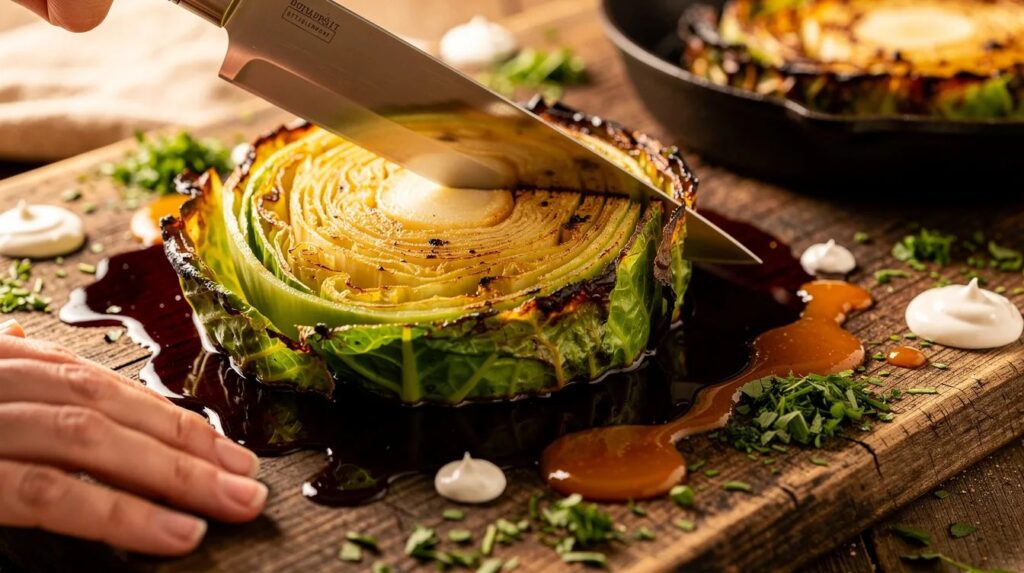
Cabbage steaks are the most misunderstood entry on this list, and consistently the most surprising to first-time eaters. A green or Savoy cabbage, cut into 1-inch rounds through the core, holds together on a grill with remarkable stubbornness. The outer leaves char and crisp, the inner layers steam in their own moisture, and the result is a combination of textures — smoky, silky, and slightly sweet — that no one expects from a vegetable that usually ends up braised for hours.
Brush both sides generously with a mixture of olive oil, smoked paprika, garlic powder, and a pinch of red pepper flakes. Grill over direct medium-high heat for 5 to 6 minutes per side, pressing gently with a spatula to maximize contact. The char lines should be visible and dark. A finishing sauce of miso butter — unsalted butter whisked with white miso and a drop of rice vinegar — applied in the last 90 seconds of cooking takes the whole thing somewhere unexpected and deeply savory.
Cabbage is a winter-into-spring vegetable that's still in excellent condition right now, before the heat of early summer softens its structural integrity. Buy heads that feel genuinely heavy for their size.
Portobello mushrooms: the classic, done properly
Portobello mushrooms have suffered from a decade of being treated as sad burger replacements. The problem is almost always technique: they're not dried out before cooking, they're crowded in a pan so they steam instead of sear, and they're under-seasoned because people are nervous about the result. Treated correctly, a large portobello cap — gill-side up, seasoned generously inside the cup with olive oil, salt, minced thyme, and a splash of soy sauce — is a genuinely satisfying plate.
The preparation step that most recipes skip: place the caps gill-side up on a rack over a baking sheet and let them sit uncovered in the refrigerator for at least one hour, ideally overnight. This draws out excess moisture so that when they hit a hot pan, they sear rather than steam. Cook gill-side down first over high heat for 3 to 4 minutes, then flip and add a small knob of butter with a crushed garlic clove. Baste for another 2 minutes. The interior becomes dense and meaty, almost liver-like in texture, with a concentrated umami depth that holds up to bold accompaniments.
Serve on a pool of aïoli loosened with a little lemon, or alongside roasted spring potatoes with whole-grain mustard. Do not apologize for the plate.
The rules that apply to all of them
Whatever you're cooking, the principles that make a beef steak great transfer almost entirely. Pat the surface completely dry before seasoning — moisture is the enemy of a crust. Season more aggressively than feels comfortable, because these ingredients can take it. Use high heat and don't crowd the pan. Rest everything before cutting. And finish with something acidic — a squeeze of lemon, a splash of good vinegar, a scatter of pickled onions — to cut through the richness of the sear.
This spring, the grill doesn't need a monopoly on the familiar. The best "steak" of the season might be waiting in the produce section, sitting next to the fish counter, or lurking in a crate of cabbage at a farmers' market. The only thing it needs from you is heat, patience, and a little respect.
Pairing these dishes
The right glass depends on what you're searing. Fish-based "steaks" like swordfish lean toward a full-bodied white — an aged white Burgundy, a white Rhône blend, or a serious California Chardonnay with restrained oak all work well, matching the richness of the sear without overwhelming the brine of the fish. A chilled Fino Sherry is a less obvious but compelling option.
For vegetable steaks — cabbage, cauliflower, portobello — the smoke and umami open the door to lighter reds: a Gamay from Beaujolais, a young Pinot Noir from Oregon, or a cool-climate Grenache from Spain. For a non-alcoholic route, a well-made kombucha with a dry, slightly funky finish handles the char notes on cabbage and mushroom better than most people expect.
Frequently asked questions
Can i cook these in a regular skillet instead of cast iron?
Yes, but cast iron retains and distributes heat more evenly, which is important for developing a consistent crust. If using a stainless steel skillet, preheat it longer — at least 2 minutes over high heat before adding oil. Non-stick pans are not recommended: they can't reach the temperatures needed for a proper sear, and they degrade quickly at high heat.
How thick should i cut vegetable steaks to prevent them from falling apart?
A minimum of 1 inch is the baseline, but 1½ inches is safer for cauliflower and cabbage. The core is the structural anchor — always cut straight through it rather than around it. For cabbage, use a sharp chef's knife and a single decisive cut rather than sawing, which breaks the leaf structure.
Is swordfish sustainable to buy right now?
North Atlantic swordfish caught by U.S. vessels under federal management is generally considered a well-managed fishery. Look for the Marine Stewardship Council (MSC) label when available, or ask your fishmonger about the catch origin. Avoid imported swordfish with no clear provenance, as sustainability practices vary significantly by region.
What's the best way to tell when a cauliflower steak is cooked through?
Insert a thin knife or skewer into the thickest part of the core. It should slide in with minimal resistance — similar to testing a potato. If it catches or drags, the center is still raw. The surface color alone is not a reliable indicator, since cauliflower can brown quickly on the outside while remaining undercooked at the core.
Can these be prepared in advance for a dinner party?
Swordfish is best cooked to order — it loses texture quickly once rested. Cauliflower steaks, however, can be seared up to 2 hours ahead and finished in a hot oven for 8 minutes just before serving with minimal quality loss. Portobello mushrooms can complete the drying step a day in advance, but should be cooked immediately before serving. Cabbage steaks reheat reasonably well in a hot skillet but lose some of their char crispness.