



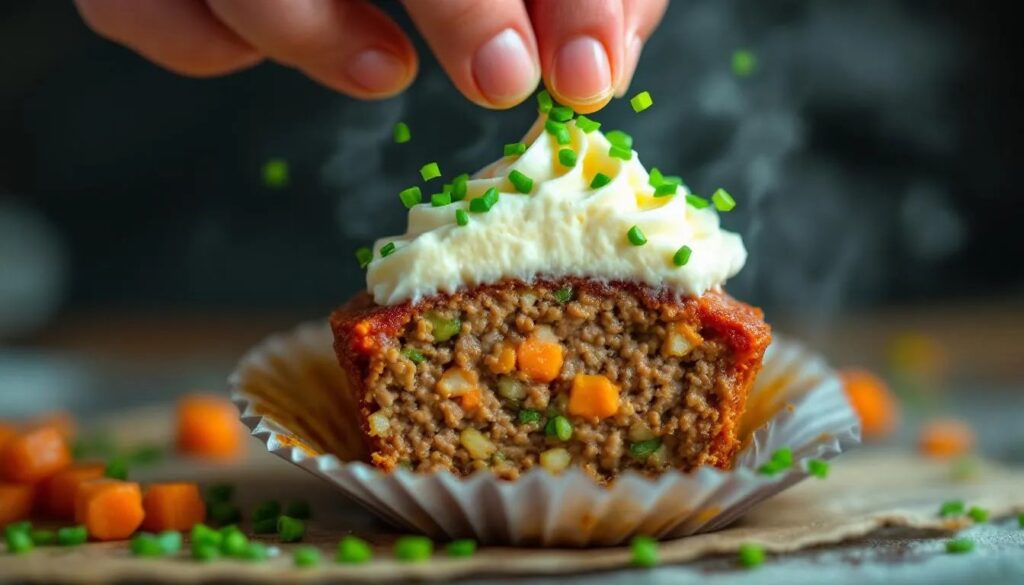
Every year, as April 1st approaches, the same request echoes through the kitchen: "Dad, are you making the cupcakes again?" They mean the meatloaf cupcakes — the ones that look exactly like vanilla frosted birthday cupcakes, down to the swirled topping and the little sprinkles on top, but hide a savory, herb-seasoned beef center beneath a cloud of mashed potato "frosting." Three years ago, this idea started as a simple April Fools' prank for two skeptical kids who thought they were getting dessert before dinner. What happened instead was the birth of a family tradition that now marks the calendar more reliably than the joke itself.
This recipe works because it commits fully to the illusion. The meatloaf mixture is kept moist and well-seasoned — onion, garlic, Worcestershire, a splash of whole milk — so the result is never dry or disappointing once the "trick" lands. The mashed potato topping is piped through a pastry bag fitted with a star tip, tinted with just a drop of gel food coloring to mimic vanilla buttercream. The confusion on a child's face when they bite in is something that cannot be staged twice. If you are hosting a spring gathering this late March or planning ahead for April 1st, this is the dish that earns its place at the table — get your piping bag ready.
| Prep time | 25 min |
| Cook time | 22 min |
| Portions | 12 cupcakes (serves 4–6) |
| Difficulty | Medium |
| Cost | $$ |
| Season | Spring — pairs well with early peas, chives, fresh herbs |
Suitable for: High-protein · Kid-friendly · Gluten-free adaptable
Ingredients
For the meatloaf cupcakes
- 1 ½ lbs ground beef (80/20 fat ratio for moisture)
- ½ cup breadcrumbs (plain, or gluten-free panko)
- ⅓ cup whole milk
- 1 egg, lightly beaten
- 1 small yellow onion, finely grated
- 2 cloves garlic, minced
- 2 tbsp Worcestershire sauce
- 2 tbsp ketchup, plus extra for glazing
- 1 tsp kosher salt
- ½ tsp black pepper
- ½ tsp smoked paprika
- 1 tbsp fresh flat-leaf parsley, finely chopped
For the mashed potato "frosting"
- 2 lbs Yukon Gold potatoes, peeled and cubed
- 4 tbsp unsalted butter
- ⅓ cup warm whole milk
- 2 tbsp cream cheese (for body and piping stability)
- Salt to taste
- Gel food coloring — pink, yellow, or blue (optional, for visual effect)
- Colorful nonpareil sprinkles (for the final illusion)
Equipment
- Standard 12-cup muffin tin
- Muffin tin liners (paper cupcake liners, for full visual commitment)
- Large mixing bowl
- Box grater or microplane (for the onion)
- Large saucepan (for boiling potatoes)
- Potato ricer or electric hand mixer
- Piping bag fitted with a large open-star tip (1M tip recommended)
- Pastry brush (for glazing)
- Meat thermometer
Preparation
1. Building the meatloaf base
Preheat your oven to 375°F (190°C). In a large mixing bowl, combine the breadcrumbs and whole milk first, letting them sit for two minutes — this step, called a panade, is the single most important thing you can do for moisture retention in a meatloaf. The bread absorbs the milk and then releases it slowly during cooking, keeping the texture tender rather than compact. Once the breadcrumbs have softened into a paste, add the beaten egg, grated onion, minced garlic, Worcestershire sauce, ketchup, salt, pepper, smoked paprika, and chopped parsley. Mix everything together before adding the ground beef. When you do add the beef, fold it in with your hands just until the mixture comes together — overworking activates the proteins in the meat and produces a dense, rubbery texture rather than the soft, sliceable crumb you want. The finished mixture should feel tacky and cohesive, not stiff.
2. Filling the muffin tin
Line your muffin tin with paper cupcake liners — this is non-negotiable for the prank to work visually when you carry the tray to the table. Divide the meat mixture evenly among the 12 cups, pressing it gently into each well so there are no air pockets. Each cup should be filled to about three-quarters of its depth, leaving room at the top for the potato "frosting" to sit convincingly. Using a pastry brush, dab a small amount of ketchup across the top of each portion — this creates a glaze that caramelizes in the oven, adding a faint sweetness and a deep amber surface that mimics the golden top of a baked muffin. Place the tin in the preheated oven.
3. Baking the cupcakes
Bake at 375°F (190°C) for 20–22 minutes, until the centers read 160°F (71°C) on an instant-read thermometer. The tops will have pulled away very slightly from the edges of the liners and taken on a rich, brown crust from the ketchup glaze. The smell filling the kitchen at this point — sweet-savory, faintly smoky from the paprika — is part of what makes the prank so effective: everyone assumes something sweet is baking. Remove from the oven and allow to cool in the tin for 10 minutes before piping. Piping over hot meatloaf will cause the potato frosting to melt and slide, ruining the illusion entirely.
4. Making the mashed potato "frosting"
While the meatloaf cupcakes are in the oven, boil the peeled and cubed Yukon Gold potatoes in a large saucepan of well-salted cold water. Bring to a boil, then reduce to a steady simmer and cook for 15–18 minutes, until a fork slides into the largest piece with no resistance. Drain thoroughly — residual water will make the mash too loose to pipe. Pass the potatoes through a ricer directly into a clean bowl for the smoothest, lump-free result; alternatively, beat with a hand mixer on low. Stir in the butter first, letting it melt completely before adding the warm milk in two additions. Add the cream cheese last — this ingredient is the key to a piping-stable frosting. Without it, the mashed potatoes will sag and lose their swirled shape. Season with salt and taste. If you want the pink or pastel effect, add a single drop of gel food coloring and fold it through gently.
5. Piping and the final reveal
Transfer the mashed potato mixture into a piping bag fitted with a large open-star tip. Starting from the outer edge of each cupcake and working inward in a spiral, pipe a generous swirl over each meatloaf cup, finishing with a small peak at the center — the motion is identical to frosting a real cupcake. Apply steady, even pressure on the bag and keep the tip about half an inch above the surface as you work. Once all twelve are piped, scatter the nonpareil sprinkles immediately, before a skin forms on the surface of the potato. The finished tray, lined up in its colorful liners with pastel swirls and sprinkles, is genuinely indistinguishable from a tray of birthday cupcakes at a distance. Carry it in with a candle if the occasion calls for it.
Chef's tip
The piping is where most home cooks lose the illusion — they pipe too thin, too flat, or let the potatoes cool until they are stiff and crumble rather than swirl. The fix is simple: keep your mashed potato frosting warm (not hot) in the piping bag by wrapping it briefly in a clean kitchen towel just before you pipe. In early spring, young chives make an excellent addition to the potato mixture — fold in 2 tablespoons of finely snipped chives for a faint onion note that also adds tiny green flecks, giving the "frosting" a speckled vanilla-bean look that deepens the deception considerably.
Pairings
The richness of the beef and the buttery mashed potato topping calls for something with acidity and freshness to cut through — the same logic that drives a classic wine pairing.
A light, fruit-forward Zinfandel from California or a soft Côtes du Rhône (Grenache-dominant) pairs well with the Worcestershire and ketchup glaze, matching the slight sweetness without amplifying the fat. For a non-alcoholic option, sparkling water with a squeeze of lemon and a few drops of apple cider vinegar performs the same palate-cleansing role. For the kids at the table who are in on the joke: pour their apple juice into a wine glass and let them feel included in the theater of the meal.
The story behind the trick
Meatloaf has been a fixture of American home cooking since at least the 1870s, when German and Scandinavian immigrants brought their tradition of minced meat loaves to the Midwest. It became a Depression-era staple in the 1930s precisely because ground meat could be stretched with bread, oats, or crackers — the panade technique has practical origins, not merely culinary ones. The cupcake format, however, is a much more recent innovation, surfacing in American food blogs sometime in the early 2010s as the "individual portion" and "fun food" movements collided.
The distinctiveness of the April Fools' version lies in the deliberate mimicry, the full commitment to fooling the eye. Swapping buttercream for mashed potato frosting is not a new idea in the novelty baking world, but executing it at the dinner table, for children who are still at the age where the boundary between food categories feels firm and serious, is the specific pleasure this recipe delivers. The "prank" is kind rather than cruel: the reveal is a savory dinner that the kids already love, dressed in the costume of a birthday treat. Three years of requests is the best review any recipe can receive.
Nutrition facts (per cupcake, approximate values)
| Nutrient | Amount |
|---|---|
| Calories | ~215 kcal |
| Protein | ~14 g |
| Carbohydrates | ~17 g |
| of which sugars | ~2 g |
| Fat | ~9 g |
| Fiber | ~1.5 g |
Frequently asked questions
Can these be made ahead of time?
Yes — the meatloaf cupcakes themselves can be baked up to 24 hours in advance and stored in the refrigerator, covered tightly. Make the mashed potato frosting fresh on the day you plan to serve, as it pipes best when warm. Reheat the meatloaf cups in a 325°F oven (160°C) for 8–10 minutes before piping. Piping over a cold base is fine as long as the potato mixture itself is at the right consistency.
How should leftovers be stored?
Piped and assembled cupcakes keep in the refrigerator for up to 3 days in an airtight container. The potato topping will lose its sharp piped edges overnight but remains entirely edible. Reheat in a microwave for 60–90 seconds, or in a covered dish in a low oven at 300°F (150°C) for 12 minutes. Freezing is possible for the meatloaf portion only — freeze before piping, then defrost overnight in the fridge and add fresh mashed potato topping before serving.
What substitutions and variations work well?
Ground turkey or a 50/50 mix of ground pork and beef both work well in place of straight ground beef. For a gluten-free version, replace the breadcrumbs with certified gluten-free panko or finely ground rolled oats. In spring, a tablespoon of finely chopped fresh tarragon or chives stirred into both the meat mixture and the potato topping adds a seasonal brightness. For a more festive visual effect closer to Easter, try tinting the potato frosting in pale yellow and adding a candy-coated chocolate egg on top of each swirl.
How do I keep the piped mashed potato from melting or sliding?
Two factors control piping stability: temperature and cream cheese content. The potato mixture should be warm but not hot — around 130–140°F (55-60°C) is ideal for piping. Adding cream cheese (or even a tablespoon of cold butter beaten in at the end) firms the starch structure so the swirl holds its shape at room temperature for at least 20–30 minutes after piping. If your kitchen is warm, work quickly and refrigerate the assembled tray immediately after adding sprinkles.
What is the best way to reveal the prank?
The delivery matters as much as the recipe. Carry the tray to the table without comment, set it down as if serving dessert, and let someone else reach for one first. The moment of the bite — the pause, the confusion, then the recognition — lands best when you have not pre-announced anything. For very young children who might be distressed by the mismatch, a quick wink or a whispered "April Fools!" as they reach for one prevents any genuine upset while still preserving the theater of the moment.