


The moment the days start to stretch and the air loses its winter bite, strawberries begin to appear at farm stands and grocery stores — still firm, slightly tart, carrying the unmistakable scent of something alive again. Spring's arrival is a sensory event, and no dessert captures it more honestly than this one: a simple, four-ingredient strawberry fool that takes less than twenty minutes from start to finish and relies entirely on the quality of what the season puts in front of you. There is no baking involved, no complicated technique to master, no specialized equipment to dig out of a cabinet. What you get is a layered, cloud-like dessert where lightly crushed strawberries meet softly whipped cream, brightened with a touch of lemon and a whisper of honey.
This is the kind of recipe that has existed in one form or another for centuries — a British classic, stripped to its architecture and rebuilt for the American spring table. The version here keeps the spirit intact while leaning into the season's first fruit: ripe strawberries at peak sweetness, whipped cream brought to a billowy, soft peak, fresh lemon zest that cuts through the richness, and a small amount of good honey to round the edges. No powdered sugar, no vanilla extract, no artificial shortcuts. Understanding why each of these four ingredients does what it does is the key to making this dessert work every single time. Tie on your apron — this will take less time than you think.
| Prep time | 15 min |
| Cook time | None |
| Chilling time | 30 min |
| Servings | 4 people |
| Difficulty | Easy |
| Cost | $ |
| Season | Spring strawberries, fresh lemon |
Suitable for: Vegetarian · Gluten-free
Ingredients
- 1 lb fresh spring strawberries, hulled
- 1 cup heavy whipping cream, very cold
- 2 tbsp good-quality honey (wildflower or clover)
- 1 large lemon, zest only
Equipment
- Large mixing bowl (chilled in the freezer for 10 minutes, if possible)
- Hand mixer or stand mixer with whisk attachment
- Medium bowl for the strawberries
- Fork or potato masher
- 4 serving glasses or glass dessert bowls
- Fine-mesh zester or microplane
Preparation
1. Macerate the strawberries
Hull the strawberries and slice them in half. Place them in a medium bowl and drizzle over 1 tablespoon of honey. Toss gently to coat, then set aside at room temperature for 10 to 15 minutes. This process — called maceration, meaning the fruit is encouraged to release its natural juices through contact with a sweetener — is what transforms ordinary sliced strawberries into something glossy and deeply flavored. As the berries sit, they will begin to pool their liquid into a thin, jewel-colored syrup at the bottom of the bowl. Do not rush this step. The syrup is part of the dessert, and it carries as much flavor as the fruit itself. If your strawberries are particularly sweet and ripe, the full tablespoon of honey may be more than you need — taste one before you start and adjust accordingly.
2. Partially crush the fruit
Once the strawberries have released their juices, use a fork or a potato masher to crush roughly half of them into a loose, uneven pulp. Leave the other half intact or in large, identifiable pieces. This two-texture approach is intentional: the crushed portion will streak through the cream in ribbons of color and flavor, while the whole pieces provide moments of bright, concentrated fruit when you reach them with a spoon. Avoid blending or processing — smoothness is not the goal here. The roughness is the point. Add the lemon zest directly into the strawberry mixture and stir once to combine. The zest's essential oils will bloom almost immediately, sharpening the berry flavor and keeping the sweetness from feeling flat.
3. Whip the cream to soft peaks
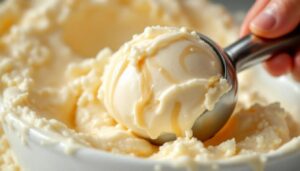
Pour the very cold heavy cream into your chilled bowl. Using a hand mixer or stand mixer on medium speed, whip the cream until it reaches soft peaks — meaning when you lift the whisk, the cream holds its shape briefly before gently folding over on itself, like a wave that hasn't fully broken. This is not stiff whipped cream; it is something more yielding, with a texture closer to thick yogurt than frosting. Add the remaining 1 tablespoon of honey as the cream approaches this stage and continue whipping for another 20 to 30 seconds. The cream will look slightly matte, slightly airy, and it should coat the back of a spoon with confidence. Stop before you reach stiff peaks — overwhipped cream will feel grainy in the final dessert and will not fold as cleanly with the fruit.
4. Fold and layer
Add half the strawberry mixture into the whipped cream. Using a large spoon or a rubber spatula, fold — meaning you move the spatula in a slow, deliberate J-shape through the mixture, lifting from the bottom and turning it over the top — rather than stirring. Three or four folds are enough. You want streaks of pink and white to remain visible; full incorporation would eliminate the visual contrast that makes this dessert so appealing. Spoon a layer of the cream mixture into the bottom of each glass, then add a spoonful of the reserved whole strawberry pieces and their syrup. Repeat with a second layer of cream and a final spoonful of fruit. The syrup should pool slightly at each layer, creating a stained-glass effect through the glass. Refrigerate for at least 30 minutes before serving.
My chef's tip
The quality of this dessert is almost entirely determined by the strawberries themselves. In early spring, before local berries come into full season, look for strawberries from California or Florida at your farmers' market — they tend to be smaller, more fragrant, and considerably more flavorful than large supermarket varieties grown for shelf life rather than taste. If the berries you find are underwhelming, add an extra few minutes of maceration time and increase the honey slightly. And if you happen to find wild strawberries — fragaria vesca, tiny and intensely perfumed — use them without crushing. Their flavor needs no help at all.
Dessert pairings
This is a light, cream-forward dessert with bright acidity from the lemon and a gentle sweetness from the honey. What you want alongside it should echo those qualities without competing with the fruit.
A glass of Moscato d'Asti from Piedmont, Italy — lightly sparkling, low in alcohol, with its characteristic notes of peach blossom and apricot — is a near-perfect companion. Its effervescence lifts the cream on the palate, and its sweetness lands just slightly behind the strawberries, so the fruit always leads. A domestic option would be a well-made California demi-sec sparkling wine, which brings similar fruit-forward brightness at a gentler price point. For a non-alcoholic pairing, a cold hibiscus iced tea with a squeeze of lemon mirrors the dessert's tartness and adds a floral note that feels very much of the season.
About this dessert
The strawberry fool is one of the oldest desserts in the English culinary canon, with documented recipes appearing as far back as the sixteenth century. The word fool is thought to derive from the French fouler, meaning to press or crush — a reference to the technique of mashing fruit into cream, which remains unchanged after five hundred years. Traditionally made with gooseberries, the fool evolved over centuries to incorporate whatever soft fruit the British summer produced, and strawberries became the most popular variation by the nineteenth century. It arrived in American kitchens through the influence of British culinary tradition and has remained a quiet fixture of spring and summer entertaining ever since.
Modern versions sometimes call for custard — a richer, cooked base that was common in older British recipes — but the cream-only approach is faster, lighter, and arguably more honest about letting the fruit carry the dessert. Some cooks add a splash of rosewater or a few leaves of fresh mint; others fold in crushed shortbread for texture. This four-ingredient version is deliberately unadorned, built on the belief that spring strawberries at their peak need very little help to be extraordinary. Once you've made it this way, the additions can wait.
Nutritional values (per serving, approximate values)
| Nutrient | Amount |
|---|---|
| Calories | ~270 kcal |
| Protein | ~2 g |
| Carbohydrates | ~18 g |
| of which sugars | ~16 g |
| Fat | ~22 g |
| Fiber | ~2 g |
Frequently asked questions
Can this dessert be made ahead of time?
You can prepare both components — the macerated strawberries and the whipped cream — up to four hours in advance and store them separately in the refrigerator. Assemble the glasses no more than one hour before serving, as the cream will begin to absorb the fruit's moisture and lose some of its structure beyond that point. The assembled dessert is best eaten the day it is made.
How should leftovers be stored?
Cover the glasses tightly with plastic wrap and refrigerate for up to 24 hours. The texture will change — the cream will soften considerably and the layers will begin to meld — but the flavor holds well. Think of the next-day version as a thicker, spoonable strawberry cream rather than a layered fool. It is different, but not unpleasant.
What substitutions work well in this recipe?
The honey can be replaced with maple syrup for a slightly deeper, more caramel-like sweetness. In late spring and early summer, rhubarb — briefly stewed and cooled — can be swapped in for half the strawberries, adding a pleasantly sharp, almost tannic quality. If heavy cream is unavailable, full-fat coconut cream (refrigerated overnight) whips reliably and produces a vegan version of this dessert with a faint tropical note that actually complements the strawberry well.
Does this recipe work with frozen strawberries?
Frozen strawberries can work in a pinch, but they require a different approach. Thaw them completely, then drain off the excess liquid before macerating — otherwise the fruit will be waterlogged and the cream will weep. The texture of the final dessert will be noticeably softer and the flavor less bright than with fresh fruit. If fresh spring strawberries are available, they are worth using.
Can I make this for a larger group?
This recipe scales up cleanly. Double or triple the quantities and keep the ratios identical. The one variable to watch when whipping larger amounts of cream is temperature — make sure both the bowl and the cream are as cold as possible, especially in a warm kitchen, or the cream will take longer to whip and may not hold its peaks as firmly.