

Easter weekend in the American South is built around one centerpiece: a bone-in ham, low and slow over smoldering wood, lacquered with something sweet, sticky, and deeply personal. Every pit master has a glaze they swear by, passed down through kitchens and competition circuits alike. This spring, with Easter falling in late March and the first warm days pulling smoke through the backyard air, the question felt more pressing than ever — whose glaze actually stands apart from the rest?
Four pit masters from four Southern states agreed to share their signature Easter ham glazes, no holds barred. Three were excellent. One stopped the conversation cold. What makes the difference between a glaze that coats a ham and one that transforms it comes down to balance, timing, and one ingredient most people never think to reach for. Apron on — this is worth paying close attention to.
| Preparation | 25 min |
| Cook time | 3 hrs 30 min |
| Resting time | 20 min |
| Servings | 10–12 people |
| Difficulty | Medium |
| Cost | $$ |
| Season | Spring — Easter ham, brown sugar, fresh citrus |
The four glazes — and what each pit master taught us
Before diving into the winning recipe, it's worth understanding what each pit master brought to the table — because the contrast is where the real education lives.
Pit Master #1 (Tennessee) built his glaze around sorghum syrup and apple cider vinegar, finished with cracked black pepper. The result is sharp, tangy, and assertive — a glaze that cuts through the fat of a thick bone-in ham beautifully. It's the kind of thing that works perfectly on an offset smoker running hickory at 250°F (121°C). Excellent, but familiar to anyone who's spent time in Nashville barbecue joints.
Pit Master #2 (Georgia) went the stone-fruit route: peach preserves thinned with bourbon, a touch of Dijon mustard, and fresh thyme. The bourbon burns off almost completely during the final basting passes, leaving behind a fruity depth that reads as distinctly spring. The peaches are barely coming into season in late March across Georgia, so she uses quality preserves — and makes no apologies for it.
Pit Master #3 (Mississippi) swore by a cola-based glaze: a full can of cane-sugar cola (not the high-fructose kind) reduced by half with brown sugar, cloves, and a cinnamon stick. The reduction concentrates the caramel notes of the soda into something almost molasses-like. It's crowd-pleasing, glossy, and produces a crust — called the bark in pit master vocabulary — that shatters slightly when sliced. Deeply satisfying.
Pit Master #4 (South Carolina, Lowcountry) is the one who blew every expectation apart.
The glaze that changed everything
His name carries weight across the competition circuit from Orangeburg to Charleston. When asked about his Easter ham glaze, he paused, smiled, and said: "Nobody ever thinks about the smoke and the glaze having a conversation."
His approach starts with dark rum — not bourbon, which is the reflex — and layers it with tamarind paste, local wildflower honey, a tablespoon of fish sauce, and fresh-grated ginger. The fish sauce is the move nobody sees coming. It doesn't read as fishy in any way once it hits heat; instead, it delivers a deep, almost savory undertow that keeps the glaze from tipping into pure sweetness. The tamarind provides acidity without the sharpness of vinegar, and the honey caramelizes into a lacquer that holds its shine for hours.
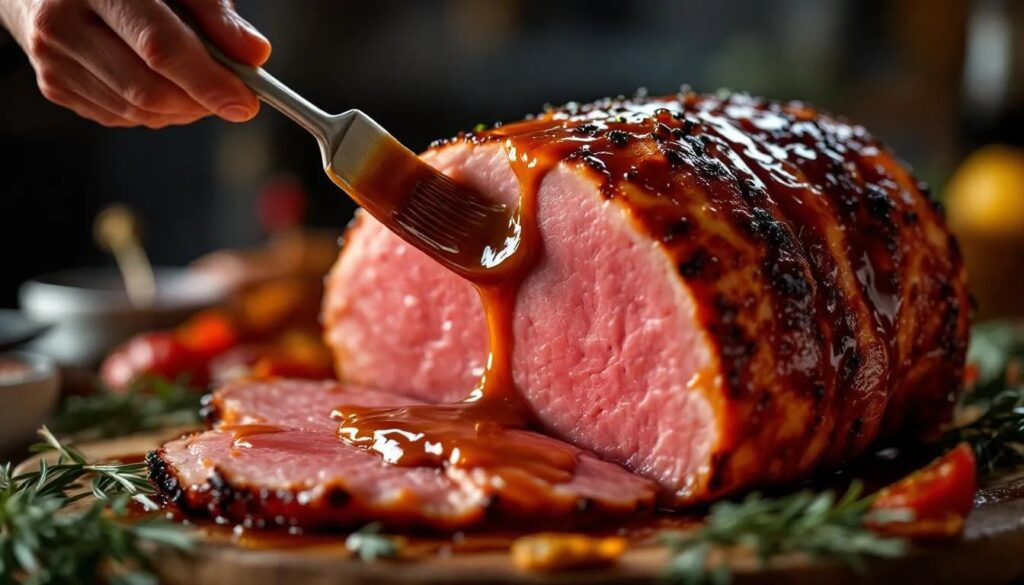
Applied in four thin layers over the final 90 minutes of cooking — every 20 minutes, brushed on with a natural-bristle basting brush — the glaze builds into something architectural. Each coat sets before the next one goes on, creating depth rather than a single sticky shell.
Ingredients
For the ham
- 1 bone-in smoked ham, 8–10 lbs (about 4–4.5 kg), skin-on if possible
- 1 tbsp coarse black pepper
- 1 tbsp smoked paprika
- 1 tsp garlic powder
For the Lowcountry glaze (Pit Master #4)
- ½ cup dark rum (not spiced)
- 3 tbsp tamarind paste (look for it in Indian or Asian grocery sections)
- ¼ cup wildflower honey or any raw, unfiltered honey
- 1 tbsp fish sauce (Red Boat or similar single-ingredient brand)
- 1 tbsp fresh ginger, finely grated
- 2 tbsp unsalted butter, cold, cut into small cubes
- ¼ tsp cayenne pepper
Utensils
- Smoker or large covered charcoal grill
- Wood chunks or chips — cherry or pecan work best with ham
- Instant-read thermometer
- Small heavy-bottomed saucepan
- Natural-bristle basting brush
- Large roasting rack set inside a deep pan
- Aluminum foil
- Sharp carving knife and fork
Preparation
1. Bring the ham to temperature and score the surface
Remove the ham from the refrigerator 60 minutes before cooking. Cold meat hitting heat contracts unevenly and won't absorb smoke or glaze the same way. While it rests on the counter, use a sharp knife to score the skin and fat in a crosshatch pattern — diagonal cuts about 1 inch apart and ½ inch deep. This isn't decorative; the cuts open channels for smoke to penetrate the fat layer and give the glaze something to grip onto. Combine the pepper, paprika, and garlic powder, then rub the mixture firmly into the scored surface, pressing it into every cut.
2. Set up your smoker for low and slow
Aim for a consistent 250°F (121°C) throughout the cook. If using a charcoal grill, arrange the coals on one side — indirect heat means the ham never sits directly above the flame. Add two or three chunks of cherry wood, or a generous handful of pecan chips soaked in water for 30 minutes. Cherry wood is a deliberate choice here: it produces a mild, slightly sweet smoke that complements the fruity and acidic notes of the glaze without overpowering the ham's natural salinity.
3. Smoke the ham unwrapped for the first two hours
Place the ham cut-side down on the rack. Close the lid and leave it alone for the first two hours. Resist opening the smoker — every peek drops the temperature and extends the cook. During this phase, the fat begins to render slowly, the surface takes on a deep mahogany color, and the smoke creates the base layer of flavor that the glaze will later amplify. The ham should reach an internal temperature of around 130°F (54°C) by the end of this phase.
4. Make the Lowcountry glaze
While the ham smokes, combine the dark rum, tamarind paste, honey, fish sauce, grated ginger, and cayenne in a small heavy-bottomed saucepan over medium heat. Stir until the tamarind fully dissolves — it can be stubborn, so use the back of a wooden spoon to break it down. Bring the mixture to a gentle simmer and reduce for 8–10 minutes, until it thickens enough to coat a spoon cleanly. Remove from heat and whisk in the cold butter, one cube at a time. This technique — called monter au beurre — enriches the glaze and gives it a sheen that catches the light beautifully. Set aside.
5. Apply the glaze in four deliberate layers
At the 2-hour mark, begin glazing. Brush a thin, even coat over the entire surface of the ham, working quickly so the heat doesn't drop. Close the lid and wait 20 minutes before the next layer. Repeat three more times. Each coat should set — you'll see it go from glossy and wet to tacky and slightly darkened — before the next application. By the fourth coat, the surface should have a deep amber lacquer with visible texture. The internal temperature should be approaching 145–150°F (63–65°C), the safe and optimal target for smoked ham.
6. Rest before carving
Transfer the ham to a cutting board and tent loosely with foil. Rest for a full 20 minutes. Cutting too early sends the juices running out across the board instead of redistributing through the meat. Use this time to warm any remaining glaze gently on the stove — it makes an outstanding table sauce for drizzling over slices.
My chef's tip
The fish sauce is non-negotiable, but it's also about timing: add it to the pan before the heat goes on, not after. This allows it to cook out its more pungent aromatics before the reduction begins, leaving only the deep umami backbone behind. If you're still skeptical, taste the glaze before and after the reduction — the transformation makes the argument better than any explanation. In early spring, when the stone fruits are still weeks away, this glaze does the work of bridging winter's heaviness into something brighter. One more thing: leftover glaze keeps in the refrigerator for up to two weeks and turns a plain roast chicken into something memorable.
Pairing
The glaze's interplay of rum, honey, and tamarind asks for something with enough body to hold its ground but enough brightness to complement the citrus-adjacent acidity. The ham's natural saltiness and smoke layer the equation further.
A dry Riesling from Alsace or Germany — particularly a Spätlese — handles both the sweetness and the salt with the kind of precision that makes you reconsider the whole meal. Its petrol-and-stone-fruit aromatic profile echoes the rum and ginger in the glaze without competing. For something domestic, a South Carolina Muscadine wine, if you can find one, creates a genuinely regional pairing that feels intentional. For a non-alcoholic option, a sparkling ginger lemonade — cold, not too sweet — mirrors the glaze's brightness while cutting through the fat.
About the Easter ham tradition
Ham at Easter is not an American invention — it draws from a much older European tradition of curing and smoking pork through winter, then serving the aged hams at the first major feast of spring. In the American South, that tradition collided with wood-smoke culture, regional sweeteners like cane syrup and sorghum, and the rhythms of hog farming that shaped rural life for generations. The result is a distinctly Southern form of ceremony: the ham is not just food, it's an event with its own grammar of preparation, timing, and communal expectation.
Glazes evolved alongside access to ingredients — from simple molasses and mustard in the earliest versions to the elaborate layered compositions that competition circuits now reward. The Lowcountry region of South Carolina occupies a particular place in this story, drawing from West African culinary influences, rice agriculture, and a coastline that brought global spice trade ingredients into local kitchens centuries before fusion was a concept. The tamarind and fish sauce in this glaze are not modern tricks — they are echoes of that longer history.
Nutrition facts (per serving, approximate values)
| Nutrient | Amount |
|---|---|
| Calories | ~410 kcal |
| Protein | ~38 g |
| Carbohydrates | ~14 g |
| of which sugars | ~12 g |
| Fat | ~21 g |
| Fiber | ~0 g |
| Sodium | ~980 mg |
Frequently asked questions
Can this glaze be made ahead of time?
Yes — and it's actually better for it. Prepare the glaze up to three days in advance and store it in a sealed jar in the refrigerator. The flavors knit together overnight, and the tamarind's acidity mellows slightly. Reheat gently over low heat before using, whisking in the butter fresh at that point rather than storing it already mounted.
What if I don't have a smoker?
An oven at 325°F (163°C) will cook the ham properly, though the smoke layer won't be there. To partially compensate, add 1 teaspoon of smoked paprika and a few drops of liquid smoke to the glaze itself. Place the ham on a rack over a pan filled with an inch of apple cider to keep the environment moist. The glaze application schedule stays the same: four layers over the final 90 minutes, every 20 minutes.
Can I substitute the fish sauce?
The fish sauce can be replaced with soy sauce (use ¾ tablespoon instead of a full tablespoon) or a small piece of miso paste dissolved into the rum at the start of the reduction. Both deliver umami depth, though the profile shifts slightly — soy sauce adds a roasted note, while miso brings a fermented earthiness. The result is still excellent, just a different conversation.
How do I store and reheat leftover ham?
Wrap leftover slices tightly in plastic wrap or store in an airtight container. They keep in the refrigerator for up to 4 days. To reheat without drying out, place the slices in a baking dish with a splash of water or apple juice, cover with foil, and warm in a 300°F (149°C) oven for 12–15 minutes. A final brush of warmed leftover glaze before serving restores the lacquer and the intention of the original dish.
Which wood works best for smoking Easter ham?
Cherry wood is the first recommendation for its mild sweetness and the beautiful reddish-mahogany color it builds on the surface. Pecan is the second — slightly nuttier, a touch more assertive, but still gentle enough not to overpower a pre-cured ham. Avoid mesquite for this application: its intensity overwhelms the delicate balance of the glaze. Apple wood is a solid alternative if cherry isn't available, producing a clean, subtly sweet smoke that stays out of the way of the tamarind and rum.