

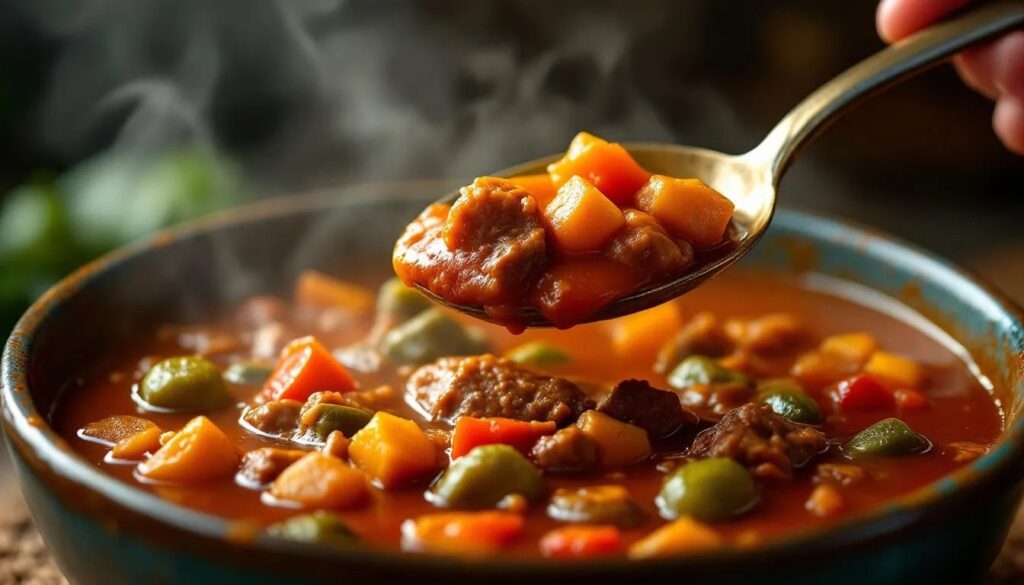
There is a kind of cooking knowledge that never makes it into cookbooks — the kind passed down through decades of standing at a stove, tasting, adjusting, and never once writing anything down. Miss Claudette, 82, has been making gumbo in her Opelousas kitchen since she was a teenager, and for most of that time, her pot held a secret that neighboring cooks had long stopped using. Not a spice. Not a technique. A vegetable — one that once grew in every Louisiana garden and quietly disappeared from most gumbo recipes somewhere along the way.
This article follows her method, her reasoning, and the ingredient she insists makes the difference between a gumbo that is merely good and one that people drive an hour to taste. As spring edges into the Gulf Coast air and local markets fill out again after winter, her recipe lands at exactly the right moment. Tie on an apron and give the pot the attention it deserves.
| Preparation | 30 min |
| Cooking | 2 hrs 30 min |
| Portions | 8 people |
| Difficulty | Medium |
| Cost | $$ |
| Season | Early spring — andouille, gulf shrimp, okra, green onions |
The forgotten vegetable: mirliton
Most gumbo recipes today lean on the familiar holy trinity — onion, celery, green bell pepper — plus okra for body and filé powder to finish. Miss Claudette uses all of those. But before anything else goes into the pot, she adds mirliton (pronounced mel-ee-tawn in Creole Louisiana): a pale green, pear-shaped squash known elsewhere as chayote, vegetable pear, or christophine. It was once a staple of Creole and Cajun home cooking, common enough that backyard vines would crawl across fences throughout the fall harvest, before it faded from mainstream grocery shelves and from collective memory.
Mirliton has almost no pronounced flavor on its own — somewhere between a cucumber and a mild zucchini, slightly crisp, faintly sweet. That quality, which might seem like a liability, is precisely what Miss Claudette prizes. Sautéed low and slow at the beginning of the roux process, mirliton softens and releases liquid that becomes part of the fat base, rounding out bitterness and adding a quiet, almost imperceptible sweetness that balances the dark roux and the heat of cayenne over the long cook. "It doesn't taste like anything," she says. "That's the whole point. It tastes like gumbo."
Ingredients
- 1 cup all-purpose flour
- 1 cup neutral oil (vegetable or canola)
- 2 mirlitons (chayote squash), peeled, seeded, cut into ½-inch dice
- 2 medium yellow onions, finely chopped
- 4 stalks celery, finely chopped
- 1 large green bell pepper, finely chopped
- 6 cloves garlic, minced
- 400 g (about 14 oz) andouille sausage, sliced into rounds
- 700 g (about 1½ lb) bone-in chicken thighs
- 450 g (about 1 lb) medium gulf shrimp, peeled and deveined
- 250 g (about 9 oz) fresh or frozen okra, sliced into rounds
- 2 liters (about 2 quarts) chicken stock, warm
- 2 bay leaves
- 1 tsp dried thyme
- 1 tsp cayenne pepper, or to taste
- 1 tsp smoked paprika
- Salt and black pepper to taste
- 4 stalks green onions (scallions), sliced, for finishing
- ¼ cup flat-leaf parsley, chopped, for finishing
- Filé powder, for serving at the table
- Cooked long-grain white rice, for serving
Equipment
- Large heavy-bottomed pot or Dutch oven (6–8 quart minimum)
- Wooden spoon or heat-resistant silicone spatula
- Sharp chef's knife and cutting board
- Ladle
- Instant-read thermometer (optional but helpful)
Preparation
1. Season and brown the chicken
Pat the chicken thighs completely dry with paper towels — moisture is the enemy of a good sear. Season generously on both sides with salt, black pepper, and smoked paprika. Heat a thin film of oil in your Dutch oven over medium-high heat until it shimmers. Lay the thighs skin-side down without moving them, and cook for 5 to 7 minutes until the skin is deep golden and releases cleanly from the pot. Flip and brown the other side for 3 minutes. Remove the chicken and set aside; it will finish cooking in the gumbo. Do not wipe the pot — those brown bits, called the fond, are flavor.
2. Brown the andouille and build the base
Add the sliced andouille to the same pot over medium heat. Cook, stirring occasionally, until the rounds are browned on both sides and have rendered some of their fat, about 4 minutes. Remove with a slotted spoon and reserve alongside the chicken. The rendered fat now in the pot is the beginning of your roux base.
3. Cook the mirliton first
This is Miss Claudette's step — the one her neighbors skip. Add the diced mirliton directly to the fat remaining in the pot over medium-low heat. Cook, stirring regularly, for 8 to 10 minutes, until the pieces are fully softened and have released their liquid, which will have partially cooked off. They should look almost translucent, slightly collapsed, and lightly golden at the edges. This liquid release is exactly what the method relies on: the moisture hydrates the bottom of the pot and begins to integrate with the fat, creating a more forgiving environment for the roux that comes next. Do not rush this step.
4. Build the dark roux
Once the mirliton is cooked, push it to the edges of the pot. Add the remaining oil to the center over medium heat. When it is hot, add all the flour at once and stir immediately and constantly with your wooden spoon, incorporating the mirliton as you go. The mixture will look lumpy at first, then smooth out into a paste. Continue stirring — without stopping — over medium to medium-low heat for 30 to 45 minutes. The roux will progress through shades of blonde, peanut butter, milk chocolate, and finally dark chocolate: that deep, brick-brown color that gives Louisiana gumbo its signature depth and a faint, toasted-nutty aroma. If you see black flecks appearing, the heat is too high — reduce it immediately. A burnt roux cannot be saved and must be discarded.
5. Add the holy trinity and garlic
When the roux reaches dark chocolate color, add the onion, celery, and green bell pepper all at once. The vegetables will sizzle and steam dramatically — this is the deglazing effect of the moisture in the vegetables meeting the hot roux. Stir constantly for 5 to 7 minutes, until the vegetables have softened and the mixture smells deeply savory rather than raw. Add the minced garlic and cook for another 2 minutes, stirring.
6. Add stock and aromatics
Begin adding the warm chicken stock one ladleful at a time, stirring after each addition to keep the mixture smooth before adding more. Adding cold liquid to a hot roux risks breaking the emulsion — warm stock keeps everything cohesive. Once all the stock is incorporated, add the bay leaves, thyme, and cayenne. Return the chicken thighs and andouille to the pot. Bring to a gentle boil, then reduce heat to a steady simmer. Cook uncovered for 45 minutes, stirring occasionally from the bottom of the pot.
7. Pull the chicken and add okra
After 45 minutes, remove the chicken thighs with tongs. When cool enough to handle, pull the meat from the bones in large, irregular pieces — not shredded too finely, which loses texture in the finished bowl — and return the meat to the pot. Discard the bones and skin. Add the sliced okra and stir gently. The okra will thicken the gumbo further as it cooks, releasing its natural mucilage — the viscous compounds responsible for its body-building quality. Simmer for another 20 minutes.
8. Add shrimp and finish
Add the shrimp in the last 5 to 6 minutes of cooking — no more. Shrimp cook fast; overcooked shrimp turn rubbery and tight, losing the gentle snap that makes them satisfying. They are ready the moment they turn opaque and curl into a loose C-shape. Stir in the green onions and parsley. Taste and adjust salt, black pepper, and cayenne. Remove the bay leaves.
My chef's tip
Miss Claudette makes her gumbo the day before she serves it, every single time. "The day you make it, it's not ready," she says simply. Overnight in the refrigerator, the flavors knit together in a way that same-day serving cannot replicate. Skim the fat that solidifies on the surface after chilling, then reheat gently over medium-low heat, adding a splash of stock if needed to loosen the consistency. If you can find fresh mirliton at a Latin grocery or farmers market in early spring — when new season chayote begins to appear — use it. Out of season, frozen chayote works acceptably. Save filé powder for the table, not the pot: added during cooking, it can turn stringy and lose its aromatic quality.
Pairing
A dark, smoky gumbo built on a deep roux calls for something that can hold its own without competing — enough structure to match the richness, enough acidity to cut through the andouille fat.
A cold Abita Amber from Louisiana is the traditional choice — its caramel malt echoes the roux, and its carbonation refreshes the palate between bites. For wine drinkers, a mid-weight, off-dry Alsatian Pinot Gris works well: its body handles the spice, and its slight residual sweetness mirrors the mirliton's quiet contribution. For a non-alcoholic option, unsweetened iced tea with a wedge of lemon cuts the richness cleanly and is entirely faithful to the spirit of a Louisiana table.
The history behind the bowl
Gumbo is widely considered the defining dish of Louisiana cooking — a living record of the cultures that shaped the region. The name most likely derives from ki ngombo, the Bantu word for okra, brought by enslaved West Africans who understood the plant's thickening properties long before it found a place in French Creole kitchens. The filé powder — ground sassafras leaves — came from the Choctaw, who traded it to early settlers at the French Market in New Orleans. The roux technique is unmistakably French. The andouille is a German-inflected Cajun adaptation. Every ingredient in the pot carries a history.
Mirliton's place in that history is older than most home cooks realize. Brought to Louisiana by way of the Caribbean — where chayote had been cultivated since before European contact — it became a fixture in 19th-century Creole cooking. New Orleans families grew mirliton vines on backyard fences, and the vegetable appeared in stuffed preparations, gratins, and soups throughout the season. Its gradual disappearance from standard recipes tracks with the industrialization of grocery culture: chayote was unfamiliar to national chains and didn't make the cut. Miss Claudette never removed it from her pot. That decision, sustained across more than six decades of gumbo-making, turns out to be the kind of quiet act of preservation that keeps a food culture alive.
Nutritional values (per serving, approximate values)
| Nutrient | Amount |
|---|---|
| Calories | ~520 kcal |
| Protein | ~38 g |
| Carbohydrates | ~28 g |
| of which sugars | ~5 g |
| Fat | ~26 g |
| Fiber | ~4 g |
Frequently asked questions
Where can i find mirliton (chayote) if it's not in my regular grocery store?
Latin American, Caribbean, and Asian grocery stores reliably carry chayote year-round under various names — chayote, vegetable pear, christophine, cho-cho. In early spring, some farmers markets in the South and Southwest also stock it. If you genuinely cannot source it, a peeled, seeded zucchini cut into thick dice is the closest functional substitute, though it softens faster and lacks the mirliton's faint sweetness. Add it in the last 15 minutes of simmering rather than at the roux stage.
Can this gumbo be made ahead of time?
Yes — and according to Miss Claudette, it should be. Prepare the gumbo through the okra step, cool it completely, and refrigerate overnight. Add the shrimp only when reheating the next day, in the final 5 to 6 minutes before serving. This prevents the shrimp from becoming tough during storage. The rested gumbo will be noticeably fuller in flavor than it was the day it was made.
How should leftovers be stored, and for how long?
Transfer cooled gumbo to airtight containers and refrigerate for up to 3 days. For longer storage, freeze in portioned containers for up to 3 months; the texture of the shrimp will suffer slightly after freezing, so if you plan to freeze, consider omitting the shrimp and adding fresh ones when reheating. Always reheat over gentle heat, adding a small amount of stock or water to restore consistency, as the roux thickens considerably when cold.
What is filé powder and is it necessary?
Filé powder is finely ground dried sassafras leaves, used as both a thickener and a seasoning with a faintly woody, root-beer-adjacent aroma. It is a traditional finishing element in Louisiana gumbo — particularly in versions where less okra is used — and it is available online and in specialty spice shops. It is not mandatory: this recipe already achieves significant body through the roux and okra combination. When used, it should be stirred into individual bowls at the table rather than added to the pot, as heat degrades both its flavor and its texture.
Can this recipe be adapted for a seafood-only version?
Yes. Replace the chicken thighs with an additional 450 g of mixed seafood — crab claws, oysters, or bay scallops work particularly well. Use a good seafood or shrimp stock in place of chicken stock, which you can make quickly by simmering the shrimp shells in water with a bay leaf and a halved onion for 20 minutes. Omit the andouille or replace it with a smoked turkey sausage for a lighter profile. The mirliton base and roux method remain exactly the same.