
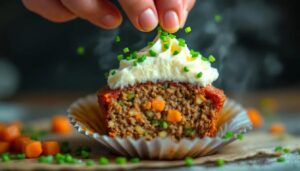


Easter arrives this year with the scent of melted chocolate and warm sugar hanging in the kitchen air — and somewhere in that sweetness lives a memory sharper than any store-bought jellybean. The candies that actually mattered at Easter were never wrapped in cellophane and stacked on a drugstore shelf. They came from a pot on the stove, a marble slab dusted with powdered sugar, and hands that knew exactly when the mixture was ready just by the way it moved. Spring has always been the season for this kind of making — patient, unhurried, deeply satisfying.
These five homemade Easter candies are the ones that appeared on grandmother's kitchen counter every March, wrapped in wax paper and arranged in a dish by the time the family arrived. Each one carries a technique worth learning, a texture worth understanding, and a flavor profile that no mass-produced candy has ever managed to replicate. Pull out your candy thermometer and clear some counter space — this is where Easter actually begins.
Peanut butter eggs
The peanut butter egg is the undisputed centerpiece of the homemade Easter candy tradition in American homes. At its core, it is a mixture of smooth peanut butter, softened butter, powdered sugar, and a pinch of salt, blended until the texture is dense enough to hold a shape but still yields gently when bitten. The mixture is chilled until firm, then hand-formed into the oblong egg shape — no mold required, just palms pressed together and a practiced motion.
Once shaped, each egg rests on a parchment-lined tray in the refrigerator for at least 30 minutes before dipping. The coating is tempered dark or semisweet chocolate, melted slowly over a double boiler until it reaches approximately 88–90°F (31–32°C) — the range at which tempered chocolate sets with a clean snap and a glossy finish rather than the dull, streaky bloom that happens when chocolate cools too quickly or unevenly. A fork or a dipping tool makes the coating process cleaner. Allow excess chocolate to drip off before setting each egg back on parchment. At room temperature, they set in about 15 minutes.
The ratio that holds: 2 cups powdered sugar to 1 cup creamy peanut butter to 4 tablespoons softened butter. From there, adjust with a tablespoon of powdered sugar at a time until the mixture no longer sticks to your hands.
Coconut cream eggs
These are the ones that divided the Easter basket — you either loved the soft, faintly sweet coconut filling encased in dark chocolate, or you did not. But the people who loved them still talk about them. The filling is built from sweetened shredded coconut combined with cream cheese, powdered sugar, and a drop of pure vanilla extract. The cream cheese keeps the mixture cohesive and adds a very subtle tang that balances the sweetness without announcing itself.
Shaping coconut cream eggs requires slightly wetter hands than peanut butter eggs. The mixture is stickier and more fragile before the first chill. A 30-minute rest in the freezer — not just the refrigerator — makes the difference between eggs that hold their form during dipping and eggs that collapse against the fork. The chocolate coating follows the same tempering process as the peanut butter version. Some grandmothers tinted the filling pale yellow with a drop of food coloring, making each egg look precisely like a hard-boiled Easter egg sliced open — a small visual trick that never stopped being charming.
Chocolate fudge with walnuts
This is not the microwave fudge of the 21st century. Grandmother's fudge was cooked on the stovetop in a heavy-bottomed saucepan, and it required patience and a candy thermometer clipped to the side of the pot. The mixture — granulated sugar, unsweetened cocoa powder, whole milk, butter, and a pinch of salt — goes over medium heat and is stirred constantly until it reaches the soft ball stage, meaning the temperature reads 235–240°F (113–116°C). At that point, the pan comes off the heat entirely.
Here is where grandmother's technique diverged from most modern recipes: she did not stir the fudge immediately. She let it cool, undisturbed, until the bottom of the pan was warm to the touch but no longer hot — roughly 110°F (43°C). Only then did she beat it vigorously with a wooden spoon until the mixture lost its gloss and thickened into a matte, dense paste. The walnuts went in during this final beating stage, folded through rather than stirred, so they distributed without breaking down. Poured into a buttered dish and left to set at room temperature, this fudge cuts cleanly into squares and holds its shape without refrigeration for several days.
Divinity
Divinity is the candy that separates the casual Easter cook from the committed one. It is a white, cloud-like confection built on a hot sugar syrup poured into stiff egg whites — the structure is essentially a Italian meringue cooked beyond stability into something that sets solid. The process calls for cooking sugar, light corn syrup, and water to 260°F (127°C), the hard ball stage, while simultaneously beating egg whites to stiff peaks in a stand mixer.
The hot syrup is poured in a thin, steady stream into the beating egg whites — never all at once, which would scramble the whites — and the mixer runs on high until the mixture loses its sheen and holds stiff, sculpted peaks when the beater is lifted. Working quickly from that point, spoonfuls are dropped onto wax paper where they set into soft, pillowy mounds with a slightly crisp outer shell. Pecans pressed into the tops are traditional. Divinity does not succeed on humid days: the sugar absorbs ambient moisture and the candy never fully sets. This is a recipe for dry spring weather, which fortunately describes much of Easter season in the American South and Midwest where divinity has its deepest roots.
Butterscotch haystacks
The simplest of the five, and perhaps the most immediately satisfying. Butterscotch chips are melted gently — low heat, no rushing — until completely smooth, then chestnut-brown dry chow mein noodles are folded through until every strand is coated. The mixture is spooned into small mounds on parchment paper, where the noodles splay outward into shapes that genuinely do resemble small haystacks. They set at room temperature in about 20 minutes, though the refrigerator accelerates the process on warm spring days.
Some versions add a handful of salted peanuts or a tablespoon of peanut butter melted into the butterscotch before folding in the noodles — that small addition introduces a bitter-salt note that cuts through the sweetness and keeps the haystack from reading as one-dimensional. These were the candy grandmother made when she was short on time but still wanted something handmade in the dish. They are unpretentious in a way that makes them easy to underestimate, and then you eat three of them while the others are still setting.
On making candy at Easter
The ritual of making Easter candy at home has a longer history in American kitchens than most people realize. Before the mid-20th century expansion of commercial confectionery, homemade sweets were the standard for holiday gatherings — not a craft project, simply cooking. The recipes that survived into grandmother's era were already refined by decades of repetition, passed along with the understanding that the technique mattered as much as the ingredients. A candy thermometer was a kitchen tool as fundamental as a rolling pin.
What these five candies share is the use of a small number of pantry staples — sugar, butter, chocolate, peanut butter, eggs — transformed through heat, timing, and attention into something that behaves like a different category of food entirely. The patience required is the point. Easter Sunday has always been a moment that asked for some measure of effort in the days before. These candies are the edible record of that effort, and they taste like it.
Chef's tip
When dipping any of these candies in chocolate, temperature control is everything. If your kitchen runs warm in late March — which it often does as spring heating cycles down — work in batches of four or five at a time and return the remaining shaped fillings to the refrigerator between dips. Cold filling hitting properly tempered chocolate sets faster and clings more cleanly. A dedicated dipping fork (or even a regular dinner fork with the middle tines bent down) gives you more control than a spoon and keeps fingerprints off the finished surface. For extra visual polish, drag the tines of a clean fork across the top of each dipped candy before the chocolate fully sets — the pattern is the traditional Easter confectionery mark, and it signals immediately that the candy is handmade.
Pairings
These candies call for something that can stand beside sweetness without being overwhelmed by it. A cup of strong black coffee — French press or pour-over, not too dark a roast — cuts through chocolate and butterscotch with pleasant bitterness. For an afternoon gathering, a pot of Earl Grey tea with its bergamot brightness works particularly well alongside the coconut and divinity.
For adults, a small glass of tawny port alongside the chocolate fudge and peanut butter eggs finds a natural resonance — the dried-fruit and caramel notes in the wine echo the candy without competing. A domestic alternative: a glass of cold whole milk, which remains the most honest accompaniment to homemade chocolate candy and requires no justification.
Nutritional values (per piece, approximate values)
| Candy | Calories | Fat | Sugar |
|---|---|---|---|
| Peanut Butter Egg | ~210 kcal | ~13 g | ~18 g |
| Coconut Cream Egg | ~185 kcal | ~10 g | ~21 g |
| Chocolate Fudge (1 square) | ~130 kcal | ~6 g | ~19 g |
| Divinity (1 piece) | ~75 kcal | ~0 g | ~18 g |
| Butterscotch Haystack | ~160 kcal | ~8 g | ~14 g |
Frequently asked questions
Can these candies be made ahead of time?
All five of these candies are well-suited to advance preparation, which is part of what made them practical for Easter. The peanut butter eggs, coconut cream eggs, and chocolate fudge can be made up to one week ahead and stored in an airtight container in the refrigerator. Divinity and butterscotch haystacks keep best at room temperature in a cool, dry place for three to four days. If you're making multiple batches, work from longest shelf life to shortest — fudge first, divinity last.
How should these homemade candies be stored?
Chocolate-dipped candies (peanut butter eggs, coconut eggs) should be stored in a single layer or between sheets of wax paper in an airtight container in the refrigerator. Remove them from the fridge about 15 minutes before serving — chocolate that has been chilled straight from the refrigerator to mouth loses some of its aromatic complexity. Divinity must be kept dry: even a slightly humid storage environment will make it weep sugar and turn sticky. A tin with a tight lid at room temperature is ideal.
What substitutions work if someone has a nut allergy?
Sunflower seed butter is the most structurally faithful substitute for peanut butter in the egg recipe — it behaves almost identically in terms of texture and fat content, though the flavor is noticeably different. For the fudge, simply omit the walnuts entirely; the recipe does not depend on them structurally. Butterscotch haystacks can be made without peanuts, or with pumpkin seeds for a similar crunch without the allergen concern. Divinity and coconut cream eggs contain no nuts by default.
Why did my divinity not set properly?
Humidity is the most common culprit. If the relative humidity in your kitchen is above roughly 60%, the sugar in the divinity absorbs moisture from the air before it can fully crystallize, leaving the candy tacky and soft. Check the weather before committing to a batch — a dry, cool spring day in late March is ideal. The second most common issue is not cooking the syrup to a high enough temperature: use a calibrated candy thermometer and trust the reading over visual cues alone.
Do I need a candy thermometer, or can I use the cold water test?
A calibrated candy thermometer is strongly recommended for the fudge and divinity. The cold water test — dropping a small amount of syrup into a glass of cold water and feeling the firmness of the resulting ball — is a reliable technique once you've done it many times, but it introduces more variables than a thermometer does. For the peanut butter eggs, coconut eggs, and butterscotch haystacks, no thermometer is needed at all. If you're only making those three, you can skip the equipment entirely.