
Spring arrives with its familiar overlap of sacred tables: the Passover Seder and Easter Sunday dinner share a week on the calendar, and this year more than ever, home cooks are looking for a single showstopping roast that honors both traditions without doubling their kitchen workload. Brisket — that long-braised, deeply savory cut from the beef forequarter — has anchored Ashkenazi Passover tables for generations, prized for its ability to feed a crowd and its near-mythic improvement overnight. What many cooks outside the Jewish tradition are discovering now is that this same cut, slow-cooked until it surrenders completely to its braising liquid, belongs just as comfortably at an Easter table set with spring herbs and early market vegetables.
The five recipes gathered here run the full spectrum: from a classic wine-and-tomato braise passed down through decades of Seder tradition, to a brighter, spring-forward version built around fresh horseradish root (at its peak right now in late March), roasted beets, and a gremolata of lemon zest and parsley. Each one is kosher for Passover — meaning no leavened grains — and each one doubles effortlessly as an Easter centerpiece. Tie on your apron and clear a full afternoon: brisket rewards patience above almost everything else.
| Preparation | 35 min |
| Cooking | 3 h 30 min to 4 h |
| Resting | 30 min minimum (overnight recommended) |
| Servings | 8 to 10 people |
| Difficulty | Medium |
| Cost | $$$ |
| Season | Spring — fresh horseradish, beets, leeks, early carrots, flat-leaf parsley |
Dietary notes: Kosher for Passover · Gluten-free · Dairy-free · High in protein
Why brisket works for both tables
Brisket comes from the breast and lower chest of the animal, a muscle that works hard and carries a significant amount of connective tissue. That collagen, when exposed to low, slow, moist heat for several hours, dissolves into gelatin — which is precisely what gives a properly braised brisket its silky, almost luxurious mouthfeel. The meat doesn't flake apart the way a short rib does; it slices clean, holds its shape on a platter, and looks genuinely impressive at the center of a large table. For Passover, this matters: the Torah prohibits breaking the bones of the Passover sacrifice, and tradition has long favored cuts that present whole and intact. For Easter, the visual weight of a glossy, mahogany-lacquered slab of beef surrounded by spring root vegetables is frankly hard to top.
Both holidays also share an appetite for dishes that can be made ahead. Brisket braised on Saturday or even Friday slices more easily and tastes more deeply flavored after a night in the refrigerator, once the cooking juices have solidified around it and then been gently reheated. This is not a concession — it is the correct way to serve brisket. Plan accordingly.
The 5 recipes
1. Classic red wine and tomato brisket
This is the foundational version, the one that appears in handwritten cards tucked into the back of cookbooks across three generations of American Jewish households. A 4 to 5 lb (1.8–2.3 kg) first-cut brisket — leaner and easier to slice than the second cut — is seared in a wide Dutch oven until the surface develops a deep, almost mahogany crust. The fat renders, the proteins seize, and the bottom of the pot builds the fond (the layer of browned residue that forms the backbone of any pan sauce). Into the pot go sliced onions, which soften and caramelize slowly in the residual fat before the liquid arrives: a full bottle of dry red wine (Cabernet Sauvignon or a Côtes du Rhône both work), one 28 oz (800 g) can of whole peeled tomatoes, crushed by hand, and enough beef stock to nearly submerge the meat. Season with bay leaves, black pepper, and fresh thyme. The lid goes on, and the oven takes over at 325°F (160°C) for three and a half to four hours. The meat is done when a fork inserted meets almost no resistance. Allow it to cool in its braising liquid before refrigerating overnight.
To serve, skim the solidified fat from the surface of the chilled liquid, slice the cold brisket against the grain into ½-inch (1.2 cm) slices, return the slices to the pot overlapping slightly, and reheat covered at 300°F (150°C) for 45 minutes. The sauce, which will have thickened considerably, needs only a brief reduction on the stovetop if it seems too loose. Spring carrots and whole cipollini onions added to the braising liquid in the final hour make this a one-pot meal substantial enough for either celebration.
2. Horseradish and beet brisket with lemon gremolata
Fresh horseradish root appears at the market in late March, pungent and fibrous, traditionally grated raw for the Seder plate as maror — the bitter herb. Here it moves into the braise itself, peeled and roughly chopped alongside roasted beets, adding a sharp, earthy undertone that softens beautifully over four hours of cooking. The braising liquid is lighter than the red wine version: chicken stock, a splash of apple cider vinegar for brightness, and honey to balance the bitterness of the horseradish. The beets bleed into the sauce, turning it a deep garnet color that photographs spectacularly on a white platter. Finish at the table with a gremolata of finely grated lemon zest, minced flat-leaf parsley, and a small clove of garlic pounded to a paste — scattered over the sliced meat just before serving, it cuts through the richness with the clean, high note that spring vegetables always promise.
3. Pomegranate and sumac brisket
Pomegranate molasses — thick, tart, and deeply fruited — is one of the most underused pantry ingredients in Western cooking. Whisked into the braising liquid alongside ground sumac, toasted coriander seed, and a cinnamon stick, it produces a sauce with a complex, almost Middle Eastern aromatic profile that suits both Sephardic Passover traditions and an Easter table looking for something less expected. The acidity of the pomegranate acts as a natural tenderizer over the long braise, and the molasses reduces to a sticky lacquer around the sliced meat when the lid comes off for the final twenty minutes. Garnish with fresh pomegranate seeds — still available in late March — and torn mint leaves. Serve over a bed of celery root purée or mashed potatoes (for non-Passover guests) or cauliflower purée to keep the dish grain-free.
4. White wine, leek, and fennel brisket
Lighter in color and more delicate in flavor than the tomato-based versions, this white braise relies on two quintessentially spring aromatics: leeks and fennel, both at the tail end of their winter season in late March, still sweet and firm at the market. The leeks are sliced into thick rounds and cooked slowly in olive oil until they are fully softened and faintly golden; the fennel bulb is quartered and added raw with the meat. The braising liquid is a dry white wine — a Chenin Blanc or Vermentino — combined with light chicken stock and a generous handful of fresh dill. The result is a paler, more restrained dish than brisket's reputation suggests, closer in spirit to a French pot-au-feu than to a Seder tradition, but deeply satisfying. The braising liquid, once strained and reduced, makes an elegant sauce finished with a cold knob of olive oil whisked in off the heat for body. This version is particularly suited to Easter tables that want beef without the weight of a dark red braise.
5. Coffee and smoked paprika brisket with spring onions
Strongly brewed black coffee introduced into a braise may raise an eyebrow — until the first taste. Coffee deepens the savory register of beef without adding any discernible coffee flavor to the finished sauce; it functions instead as a flavor amplifier, much the way anchovy does in a lamb braise. Combined with smoked paprika, garlic, and chipotles in adobo (check the label to confirm they are gluten-free for Passover), the braising liquid develops an almost smoky, barbecue-adjacent richness that makes this the most American of the five versions. Spring onions — the slender, just-pulled bunches appearing at farmer's markets now — go into the pot whole in the final hour, softening into sweet, almost silky cylinders that pick up the smokiness of the sauce. This brisket is the one to bring if the Easter table is also a backyard table, and someone is missing the grill.
The method behind all five
Selecting and trimming the cut
Ask your butcher for a first-cut brisket, also called the flat cut — a rectangular slab with a uniform fat cap on one side, leaner and more predictable for slicing than the second cut (the point), which is fattier and better suited to shredding. Leave ¼ inch (6 mm) of fat cap on the meat before braising; it bastes the surface throughout cooking and can be trimmed after if preferred. For 8 to 10 people, plan on 4 to 5 lbs (1.8–2.3 kg) of raw brisket, which will lose roughly 30% of its weight during cooking.
Searing: the step you cannot skip
Pat the brisket completely dry with paper towels. Season generously on all sides with kosher salt and black pepper at least 30 minutes before cooking, or overnight uncovered in the refrigerator. Heat a thin film of neutral oil in a wide, heavy Dutch oven or braiser over high heat until the oil shimmers and begins to smoke lightly. Lay the brisket fat-side down first. The sound upon contact should be an aggressive, sustained sizzle — if it is not, the pan is not hot enough. Resist any temptation to move the meat for at least 4 minutes; it will release naturally when the crust has formed. Turn and sear the remaining sides. The Maillard reaction — the series of chemical changes that occur when proteins and sugars are exposed to high, dry heat — creates hundreds of flavor compounds that no amount of braising liquid can replicate. Do not skip this step.
Building the braise
Once the meat is seared and resting on a plate, reduce the heat to medium and add your aromatics — onions, leeks, or fennel depending on the recipe — directly to the fat left in the pot. Stir frequently, scraping up any browned bits from the bottom as the moisture releases. Add garlic only once the onions are fully softened; garlic added too early will scorch and turn bitter. Deglaze with wine or stock, scraping vigorously, before returning the meat and adding the remaining liquids. The liquid should come to between one-half and two-thirds up the side of the brisket — not covering it entirely, which would stew rather than braise the meat and prevent the upper surface from developing further color.
Low and slow: oven temperature matters
Cover the Dutch oven with a tight-fitting lid and transfer to a 325°F (160°C) oven. Check after two hours; the liquid should be at a very gentle simmer, with occasional bubbles breaking the surface. If it is boiling actively, reduce the oven to 300°F (150°C). A vigorous boil toughens the muscle fibers before the collagen has fully dissolved, producing meat that is both dry and stringy — the opposite of what a braise should achieve. After three hours, test for tenderness by inserting a thin knife or cake tester into the thickest part: it should meet resistance similar to softened butter, not to raw meat. Most first-cut briskets reach this point between 3.5 and 4 hours.
My chef's tip
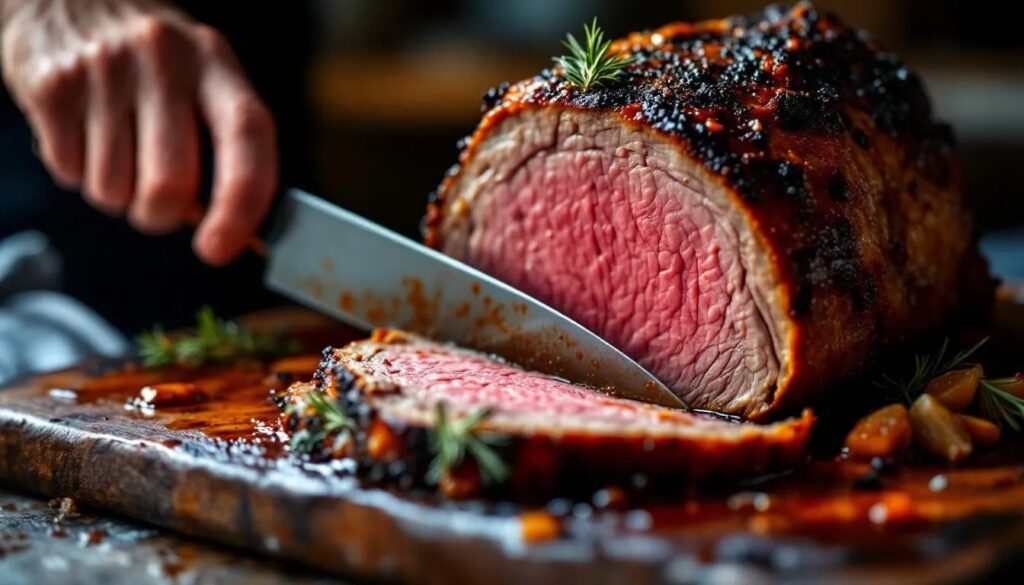
Cold brisket slices cleanly; warm brisket shreds. After the initial braise, allow the meat to cool completely in its liquid, then refrigerate for at least one night before slicing. The next day, skim the solidified fat (which rises and sets on the surface like a pale disc), slice the cold meat against the grain with a sharp carving knife, return the slices overlapping to the pot, and reheat slowly covered. This method also deepens the flavor substantially — the braising liquid continues to penetrate the meat overnight, and reheating slowly gives the gelatin time to re-melt into the sauce. At this time of year, when both Passover and Easter tables are typically prepared days in advance, this is not a workaround; it is the intended technique.
Wine pairings
The robust, collagen-rich braising liquid in most of these five versions calls for a red wine with enough structure to stand against the fat and enough fruit to echo the sweetness of the root vegetables.
For the classic red wine and tomato version, an Israeli Cabernet Sauvignon from the Galilee region closes the cultural circle neatly — look for bottles from the Upper Galilee or Golan Heights appellations, which produce wines with the dark fruit and firm tannins the dish needs. A Côtes du Rhône Villages (Grenache-Syrah-Mourvèdre) offers a more accessible price point with similar weight. For the white wine, leek, and fennel version, a rich white Burgundy or a barrel-aged Chenin Blanc from the Loire Valley matches the dish's delicacy without overwhelming it. For the pomegranate and sumac version, a dry rosé from Provence — fuller-bodied than the pale summer styles — bridges the fruity tartness of the sauce beautifully. Those preferring a non-alcoholic option will find that a sparkling pomegranate and elderflower juice, lightly chilled, reads as festive and complements the fruit-forward braising notes in recipes 2 and 3.
The history behind the cut
Brisket became central to Ashkenazi Jewish cooking through a combination of economics, kashrut (Jewish dietary law), and geography. In Eastern Europe, Jewish communities were often restricted from purchasing prime cuts of beef, which drove skilled home cooks toward the tougher, cheaper forequarter sections — cuts that rewarded low heat and time. The forequarter is also the only section of beef that can be made kosher with certainty under traditional rabbinical standards, since porging the hindquarter (removing the sciatic nerve as required by law) was a specialized skill not universally available. Brisket thus became, through necessity, an art form: a demonstration that patience and technique, rather than premium ingredients, define great cooking.
The dish traveled with waves of Jewish immigration to the United States in the late 19th and early 20th centuries, where it took root in the American Jewish home kitchen and eventually crossed over into mainstream American barbecue culture — particularly in Texas, where smoked brisket, cooked for up to 18 hours over post oak, became a regional institution. The Easter connection is more recent and less codified, reflecting the broader American appetite for slow-braised meats at spring holidays, and the practical overlap that leads many families to serve a single large roast for both celebrations when they fall within the same week. This year, with Passover beginning at sundown on April 1, 2026, and Easter Sunday falling on April 5, the two tables are separated by only four days.
Nutritional information (per serving, approximate values)
| Nutrient | Amount |
|---|---|
| Calories | ~480 kcal |
| Protein | ~45 g |
| Carbohydrates | ~12 g |
| of which sugars | ~6 g |
| Fat | ~28 g |
| of which saturated | ~10 g |
| Fiber | ~2 g |
| Sodium | ~620 mg |
Frequently asked questions
Can brisket be made ahead of time?
Not only can it be made ahead — it should be. Brisket braised one or two days in advance and refrigerated in its cooking liquid is measurably better than brisket served the same day. The collagen continues to distribute through the meat as it cools, the flavors deepen, and cold meat slices cleanly against the grain without tearing. Reheat covered at 300°F (150°C) for 45 to 60 minutes until the sauce is fluid and the meat is heated through. For Passover and Easter preparation, this make-ahead quality is one of brisket's most practical advantages.
How should leftover brisket be stored?
Store sliced brisket submerged in its braising liquid in a sealed container in the refrigerator for up to 4 days. The liquid is important: brisket stored dry will dry out further during reheating. For longer storage, freeze the sliced meat in zip-lock bags with a generous ladle of sauce; it keeps well for up to 3 months. Defrost overnight in the refrigerator and reheat gently covered in the oven or on the stovetop over low heat.
What is the difference between first-cut and second-cut brisket?
A whole brisket consists of two distinct muscles. The first cut (flat cut) is leaner, more uniform in thickness, and slices neatly — the better choice for a plated dinner. The second cut (point cut or deckle) has more intramuscular fat, which keeps it moist but makes it harder to slice cleanly; it is better suited to shredding for sandwiches or tacos. For a holiday table where presentation matters, request the first cut from your butcher, ideally with the fat cap trimmed to ¼ inch (6 mm) and left intact on one side.
Is brisket naturally gluten-free and kosher for Passover?
The meat itself is naturally gluten-free. To keep any of these five recipes kosher for Passover, verify that all pantry ingredients — canned tomatoes, stock, pomegranate molasses, chipotles in adobo — are certified kosher l'Pesach (kosher for Passover), as some products contain trace grains or are processed on shared equipment. Stock, in particular, can contain additives derived from grain; use a certified Passover stock or make your own from roasted beef bones and vegetables. Wine used in Passover cooking should be mevushal (flash-pasteurized) or from a certified kosher producer.
Can these recipes be adapted for a slow cooker or Instant Pot?
The slow cooker adapts well for all five versions: sear the brisket in a skillet first (do not skip this), transfer to the slow cooker with aromatics and liquids, and cook on low for 8 to 10 hours. The Instant Pot is faster but produces a slightly different texture — the pressure environment cooks the collagen rapidly, resulting in meat that is tender but sometimes looser in grain than an oven braise. If using an Instant Pot, cook on high pressure for 90 to 100 minutes followed by a natural pressure release of at least 20 minutes. In both cases, reduce the braising liquid separately on the stovetop before serving, as pressure and slow cookers do not allow evaporation during cooking.
Which of the five versions is most suitable for guests unfamiliar with brisket?
Recipe 4 — the white wine, leek, and fennel version — tends to read as most approachable to guests who associate brisket with heavy, wintry cooking. Its pale sauce, delicate aromatics, and clean spring flavor profile make it feel lighter than the red wine or pomegranate versions, even though the cooking process is identical. Recipe 5 (coffee and smoked paprika) is the crowd-pleasing choice for guests who love American barbecue flavors and might initially be skeptical of a braised rather than grilled centerpiece.