



Spring mornings call for something worth getting out of bed for—and if your Eggs Benedict routine has grown predictable, it's time to rethink the sauce. Hollandaise is a classic, no question: that silky, butter-heavy emulsion has anchored brunch tables for well over a century. But it demands patience, a double boiler, constant whisking, and a nervous eye on the temperature. One degree too far and it splits. One distraction and it's scrambled eggs in a bowl.
Miso butter changes that entirely. Two minutes, a fork, no heat required: you stir white miso paste into softened unsalted butter, add a splash of lemon juice and a pinch of cayenne, and what you get is something richer, more complex, and frankly more interesting than the original. The fermented depth of miso adds a savory backbone that hollandaise, for all its charm, cannot match. The butter melts slowly over a freshly poached egg, coating the Canadian bacon and toasted English muffin in a glossy, umami-forward wave. This recipe is a keeper—and it starts with nothing more than a bowl and a fork.
| Prep time | 5 min |
| Cook time | 10 min |
| Portions | 2 people (4 halves) |
| Difficulty | Easy |
| Cost | $$ |
| Season | Spring—English muffins, free-range eggs, fresh chives |
Ingredients
For the miso butter
- 3½ oz (100 g) unsalted butter, softened at room temperature
- 1½ tablespoons white miso paste (shiro miso)
- 1 teaspoon fresh lemon juice
- ¼ teaspoon cayenne pepper
- 1 teaspoon cold water (to loosen the mixture slightly)
For the Eggs Benedict
- 4 very fresh free-range eggs
- 4 slices Canadian bacon (back bacon), or good-quality ham
- 2 English muffins, split in half
- 1 tablespoon white wine vinegar (for poaching)
- Fresh chives, finely snipped, to finish
- Flaky sea salt and freshly cracked black pepper
Equipment
- Small mixing bowl
- Fork
- Wide, deep saucepan (for poaching)
- Slotted spoon
- Small frying pan (for the bacon)
- Toaster or grill pan
- Kitchen paper (paper towels)
- Timer
Preparation
1. Make the miso butter
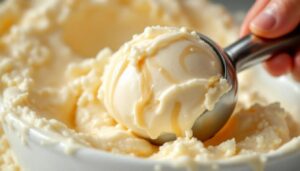
Start here, before anything else goes on the heat. Place the softened butter in a small bowl—it should yield easily when pressed; if it's too cold, the miso won't incorporate smoothly. Add the white miso paste and work the two together with a fork, pressing and folding until fully combined and no streaks of miso remain. White miso, or shiro miso, is the mildest and sweetest of the miso family, fermented for a shorter period than its red counterpart, which makes it ideal here: it brings savoriness without overwhelming the egg. Add the lemon juice, the cayenne, and the cold water, then mix again until the butter is light, uniform, and just slightly loosened. Taste it—it should be salty, faintly tangy, with a warm hum of heat at the back. Adjust with a touch more lemon or cayenne if needed. Set aside at room temperature while you prepare the rest.
2. Toast the muffins and cook the bacon
Split the English muffins and toast them until the cut faces are golden and lightly crisp—this structural step matters more than it might seem. A properly toasted muffin holds its shape under the weight of egg and butter without collapsing into a soggy mess. While the muffins toast, warm a small frying pan over medium heat with no added fat. Lay in the Canadian bacon slices and cook for 2 minutes per side until the edges just begin to caramelize and the fat turns translucent. Remove from the pan and set on kitchen paper. Keep warm.
3. Poach the eggs
Fill a wide, deep saucepan with at least 3 inches of water and bring it to a gentle simmer—you are aiming for frémissement, meaning small bubbles breaking the surface steadily, not a rolling boil. Add the white wine vinegar; the acidity helps the egg white coagulate quickly around the yolk, producing a neater shape. Crack each egg individually into a small cup or ramekin before adding it to the water—this gives you control and prevents shell fragments. Tilt the cup close to the water's surface and slide the egg in gently. Poach two eggs at a time for 3 minutes exactly for a yolk that is set at the edges but still liquid at the center. Lift each egg with a slotted spoon and rest briefly on folded kitchen paper to drain. The white should be fully opaque and tender, with no translucent patches. Repeat for the second pair.
4. Assemble and finish
Place the toasted muffin halves cut-side up on warm plates. Lay a slice of Canadian bacon on each half, then set a poached egg on top. Take the miso butter—still soft and spreadable at room temperature—and place a generous teaspoon on each egg. The residual heat from the egg does the work: the butter melts slowly, running down the sides of the white and pooling on the muffin below, glossy and deeply savory. Finish with a pinch of flaky sea salt, a crack of black pepper, and a scattering of freshly snipped chives. Serve immediately, on warmed plates.
Chef's tip
Make a double or triple batch of miso butter and roll it into a log using cling film, then refrigerate for up to two weeks or freeze for three months. Sliced from cold, it melts beautifully over grilled fish, roasted spring vegetables—asparagus and new potatoes especially—or stirred through a bowl of ramen. The two minutes you spend making it today will pay dividends for weeks. If you want a slightly looser consistency closer to a sauce, whisk a tablespoon of the miso butter with two tablespoons of warm water in a small bowl just before serving; it will emulsify into a light, pourable glaze.
What to drink alongside
The miso butter's fermented, savory depth wants something with enough acidity and character to stand alongside it without being drowned out. Richness cuts richness—but so does effervescence.
A glass of well-chilled Blanc de Blancs Champagne or a good Crémant d'Alsace brings the brightness and fine bubbles that scrub the palate clean between bites. If you prefer still wines, a lean, mineral-driven Chablis—unoaked, bracing, with its characteristic chalk and lemon note—works extremely well. For a non-alcoholic option, a lightly sparkling yuzu water or a cold green tea with a squeeze of lemon echoes the citrus and umami already in the butter, creating a coherent, satisfying experience from first bite to last sip.
A brief history of eggs benedict
The origin of Eggs Benedict is one of those pleasantly contested culinary debates where multiple stories circulate and none can be definitively verified. The most widely cited account places its invention at Delmonico's restaurant in New York City in the late nineteenth century, attributed to a regular patron named Mrs. LeGrand Benedict who, tired of the menu, asked the maître d' to create something new. A competing version credits a Wall Street broker named Lemuel Benedict, who reportedly ordered the combination at the Waldorf Hotel in 1894 as a morning-after remedy—toasted muffin, crispy bacon, poached eggs, hollandaise—and caught the attention of the maître d', Oscar Tschirky, who added it to the menu.
Whatever its precise origin, the dish became a fixture of American brunch culture and spread far beyond its Manhattan roots. Today it exists in countless iterations: smoked salmon replaces the bacon in the Pacific Northwest version sometimes called Eggs Royale; crab cakes anchor it in Maryland; avocado and chorizo have made it a staple of the millennial café menu. The miso butter version belongs to this same spirit of adaptation—respecting the structure of the original while reaching for something that speaks to a more globally connected kitchen.
Nutritional values (per serving, approximate values)
| Nutrient | Amount |
|---|---|
| Calories | ~520 kcal |
| Protein | ~24 g |
| Carbohydrates | ~28 g |
| of which sugars | ~3 g |
| Fat | ~36 g |
| of which saturates | ~20 g |
| Fiber | ~2 g |
| Sodium | ~780 mg |
Frequently asked questions
Can I make the miso butter ahead of time?
Yes—and this is one of the recipe's great advantages. The miso butter can be prepared up to two weeks in advance and kept in an airtight container in the refrigerator. Roll it into a log in cling film for easy slicing. Remove it from the fridge about 20 minutes before serving so it softens to the right consistency to melt properly over the hot egg. Frozen, it keeps for up to three months.
My poached eggs always spread out and look ragged. What am I doing wrong?
Two factors usually cause this: the eggs are not fresh enough, and the water is too turbulent. Older eggs have a looser, more watery white that disperses in the pan. Use the freshest eggs you can find—ideally from a farmers' market this time of year—and check the date carefully. Keep the water at a gentle simmer, not a boil, and slide each egg in from a cup held very close to the surface. The vinegar in the water also helps the white set faster and hold its shape.
Is white miso interchangeable with other types of miso?
Not exactly. White miso (shiro miso) is the mildest, sweetest option and is specifically suited to a preparation like this where it needs to complement rather than dominate. Red miso (aka miso) is significantly more intense, saltier, and more pungent—it will overpower the egg and butter. Yellow miso (shinshu miso) sits somewhere between the two and could work at a reduced quantity (start with one teaspoon rather than one and a half). White miso is now widely available in most well-stocked supermarkets and Asian grocery stores.
Can I make this without Canadian bacon?
Absolutely. The bacon's role is primarily textural—a thin, lightly cured layer that provides salt and a bit of chew beneath the soft egg. Good substitutes include thinly sliced prosciutto, smoked salmon (which pairs beautifully with the miso butter's umami), or wilted spinach for a vegetarian version. In spring, briefly blanched asparagus spears laid across the toasted muffin before the egg make a particularly good seasonal alternative.
Can I poach the eggs in advance for a crowd?
Yes—this is a technique used in professional kitchens. Poach the eggs until just slightly underdone, then transfer them immediately to a bowl of ice-cold water to halt the cooking. They will keep this way in the refrigerator for up to 24 hours. When ready to serve, lower them back into barely simmering water for 60 seconds to reheat through, then drain on kitchen paper as normal. It makes serving four or more people considerably less stressful.