
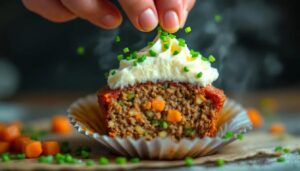
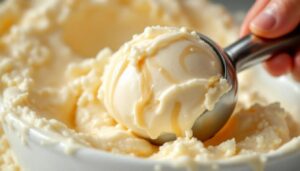

Easter tables in the 1950s and 60s looked nothing like today's spreads. Alongside the glazed ham and deviled eggs sat something wobbly, jewel-bright, and utterly unapologetic: the Jell-O salad. Suspended in translucent gelatin were cream cheese clouds, crushed pineapple, shredded carrots, or even olives — a collision of sweet, savory, and creamy that baffled and delighted in equal measure. Somewhere between the rise of "clean eating" and the slow death of the church potluck, these molded marvels quietly disappeared from American tables.
Spring is exactly the right season to revisit them. The pastel hues of lime, strawberry, and orange gelatin mirror Easter's color palette with an almost theatrical precision. These three recipes — a lime-cottage cheese fluff, a sunset carrot-pineapple mold, and a cream cheese ribbon loaf — are not nostalgic novelties. They are genuinely good: bright, chilled, and textured in ways that warm dishes simply cannot replicate. Pull out a Bundt pan or a standard loaf mold, and give your Easter buffet something it has never seen before.
Recipe 1 — Lime Cottage Cheese Fluff Salad
| Preparation | 15 min |
| Rest / Chill | 4 hours minimum (overnight preferred) |
| Portions | 8 servings |
| Difficulty | Easy |
| Cost | $ |
| Season | Spring — pairs naturally with Easter gatherings |
Suitable for: Vegetarian · Gluten-free
Ingredients
- 1 package (3 oz / ~85 g) lime-flavored Jell-O, powder, undissolved
- 1 cup (240 ml) small-curd cottage cheese, full-fat
- 1 can (8 oz / 227 g) crushed pineapple, drained well
- 1 cup (240 ml) frozen whipped topping (such as Cool Whip), thawed
- ½ cup (60 g) mini marshmallows
- ½ cup (60 g) chopped pecans or walnuts (optional)
Equipment
- Large mixing bowl
- Rubber spatula
- Fine-mesh strainer or colander (for draining pineapple)
- Serving bowl or 8-cup mold
- Plastic wrap
Preparation
1. Drain the pineapple thoroughly
Pour the crushed pineapple into a fine-mesh strainer and press it firmly with the back of a spoon. Excess liquid is the enemy of a set fluff salad: too much moisture prevents the gelatin powder from binding the mixture properly, leaving you with a loose, soupy result instead of the soft, spoonable texture you are aiming for. Let it drain for at least 5 minutes while you prepare the rest of the components. The drained pineapple should feel almost dry to the touch.
2. Combine the base ingredients
In a large mixing bowl, stir together the dry lime Jell-O powder and the cottage cheese until the powder is fully absorbed. The granules will dissolve into the curds over a minute or two of steady stirring, turning the mixture a pale jade green. Do not add water — this is the defining technique of a no-dissolve fluff salad, a shortcut popularized in mid-century church cookbooks that creates a denser, creamier texture than a traditionally set mold. Add the drained pineapple and fold to combine.
3. Fold in the whipped topping and marshmallows
Add the thawed whipped topping in two additions, folding gently with a rubber spatula using wide, slow strokes to preserve as much air as possible. The mixture will lighten in color and take on a mousse-like consistency — nappe, in culinary terms, meaning it coats the spatula and falls in slow, thick ribbons. Scatter in the mini marshmallows and the nuts if using, and fold once more until evenly distributed.
4. Chill until set
Transfer the mixture to a serving bowl or lightly greased mold, smooth the surface, and cover tightly with plastic wrap. Refrigerate for a minimum of 4 hours. Overnight is ideal: the marshmallows soften slightly into the mixture, the flavors meld, and the texture firms into something that holds a clean spoonful without collapsing. Serve directly from the bowl, or unmold onto a chilled plate for a more dramatic presentation.
Chef's Note
The no-dissolve technique works because the gelatin powder in Jell-O acts as a thickener and flavor binder rather than a structural agent. For a spring variation, swap lime Jell-O for strawberry and fold in ½ cup of fresh sliced strawberries — local berries begin appearing at farmers' markets in April and May and add brightness that the canned pineapple simply cannot match. If you prefer a tangier profile, replace half the whipped topping with an equal weight of softened cream cheese beaten until smooth before folding.
Recipe 2 — Sunset Carrot and Pineapple Jell-O Mold
| Preparation | 20 min |
| Rest / Chill | 5 hours minimum |
| Portions | 10 servings |
| Difficulty | Easy |
| Cost | $ |
| Season | Spring — fresh spring carrots, Easter buffets |
Suitable for: Vegetarian · Gluten-free · Dairy-free
Ingredients
- 2 packages (3 oz / 85 g each) orange-flavored Jell-O
- 2 cups (480 ml) boiling water
- 1 cup (240 ml) cold water
- 1 can (8 oz / 227 g) crushed pineapple, with juice
- 1½ cups (180 g) freshly grated carrots (approximately 3 medium spring carrots)
- 1 teaspoon apple cider vinegar
- Pinch of fine sea salt
Equipment
- Large heatproof mixing bowl
- Whisk
- Box grater or food processor with grating attachment
- 6-cup ring mold or Bundt pan
- Cooking spray or neutral oil for greasing
- Serving plate, slightly larger than the mold
Preparation
1. Dissolve the gelatin completely
Pour the boiling water over the dry Jell-O powder in a large heatproof bowl and whisk for a full 2 minutes. Undissolved granules are difficult to detect in a hot liquid but will create grainy pockets in the finished mold. The liquid should be entirely clear and uniformly amber-orange with no visible particles floating at the surface. Add the cold water, the pineapple with its juice, and the apple cider vinegar. The vinegar is the savory counterpoint that keeps this mold from reading as dessert — just enough acidity to sharpen the sweetness of the orange gelatin and the pineapple without asserting itself.
2. Partially set the gelatin before adding solids
Place the bowl in the refrigerator, uncovered, for approximately 45 to 60 minutes, until the mixture reaches the consistency of raw egg whites — the syrupy stage. This step is non-negotiable. Adding grated carrots to fully liquid gelatin causes them to sink to the bottom of the mold; adding them to a partially set gel suspends them evenly throughout, creating the characteristic mosaic cross-section when the mold is sliced. Check every 15 minutes after the 45-minute mark.
3. Fold in the carrots and mold
Stir the grated carrots and the pinch of sea salt into the syrupy gelatin with a rubber spatula. Lightly grease a 6-cup ring mold or Bundt pan with cooking spray, then pour in the mixture. Tap the mold gently against the counter two or three times to release any air pockets trapped near the base, which would leave uneven craters on the surface of the unmolded salad. Cover with plastic wrap and refrigerate for at least 4 hours, or overnight.
4. Unmold with confidence
When fully set, fill a large bowl or the kitchen sink with warm (not hot) water. Dip the outside of the mold into the water for exactly 10 seconds — no longer, or the gelatin will begin to melt at the edges. Run a thin knife or offset spatula around the top inner edge of the mold to break the seal, then place your chilled serving plate firmly on top of the mold, invert in one swift motion, and lift the mold away. If the salad does not release immediately, return it to the warm water for 5 more seconds.
Chef's Note
Spring carrots — younger, slimmer, and sweeter than their winter counterparts — make a measurable difference here. Their moisture content is lower, which means the gelatin sets more cleanly around them, and their flavor is more delicate against the citrus notes of the orange Jell-O. If you find bunched carrots with their tops still attached at the market, those are exactly what you want. For a more textured variation, add ½ cup of chopped celery or thinly sliced water chestnuts along with the carrots: the crunch they provide against the soft gelatin is a surprisingly satisfying contrast.
Recipe 3 — Cream Cheese Ribbon Loaf
| Preparation | 30 min (active) + 30 min between layers |
| Rest / Chill | 6 hours minimum (overnight strongly recommended) |
| Portions | 12 servings |
| Difficulty | Medium |
| Cost | $$ |
| Season | Spring — Easter centerpiece salad |
Suitable for: Vegetarian · Gluten-free
Ingredients
For the fruit layers
- 1 package (3 oz / 85 g) strawberry-flavored Jell-O
- 1 package (3 oz / 85 g) lime-flavored Jell-O
- 2 cups (480 ml) boiling water, divided (1 cup per package)
- 1 cup (240 ml) cold water, divided
For the cream cheese ribbon
- 8 oz (225 g) cream cheese, softened to room temperature
- ⅓ cup (80 ml) whole milk or half-and-half
- ⅓ cup (40 g) powdered sugar
- 1 teaspoon pure vanilla extract
- 1 envelope (¼ oz / 7 g) unflavored gelatin powder
- 2 tablespoons cold water (to bloom the unflavored gelatin)
Equipment
- Standard 9×5-inch (23×13 cm) loaf pan
- Cooking spray
- 2 large heatproof bowls
- Hand mixer or stand mixer
- Small saucepan
- Whisk and rubber spatula
- Plastic wrap
- Serving platter
Preparation
1. Prepare both fruit gelatin mixtures
In two separate bowls, dissolve the strawberry Jell-O in 1 cup boiling water, whisking for 2 minutes, then add ½ cup cold water. Repeat with the lime Jell-O. Set both bowls aside at room temperature while you prepare the cream cheese layer. Lightly grease the loaf pan with cooking spray and line it with a sheet of plastic wrap, leaving overhang on all sides — this will make unmolding dramatically easier later.
2. Make the cream cheese ribbon
Sprinkle the unflavored gelatin over 2 tablespoons of cold water in a small saucepan and let it bloom — sit undisturbed — for 5 minutes. Blooming allows the gelatin granules to absorb liquid and swell before heat is applied, which ensures they dissolve without lumps. Warm the saucepan over low heat, stirring gently, until the gelatin is completely liquid and clear, about 1 minute. Do not let it boil. In a mixing bowl, beat the softened cream cheese with the powdered sugar and vanilla until completely smooth. Slowly stream in the warm milk while beating on low, then add the dissolved gelatin in a thin, steady stream. The mixture should be pourable but slightly thick, with a glossy, uniform surface.
3. Build the layers with patience
Pour the strawberry gelatin into the prepared loaf pan to a depth of approximately ¾ inch (2 cm). Refrigerate for 25 to 30 minutes, until the surface is set but still slightly tacky to a light touch — the bond stage. A fully set layer will not adhere properly to the next one, causing the finished loaf to separate into distinct slabs when sliced. Pour the cream cheese mixture gently over the strawberry layer — use the back of a spoon to break the fall and prevent it from puncturing the set surface. Chill for another 25 to 30 minutes. Complete the loaf with the lime gelatin layer using the same technique. Cover and refrigerate for a minimum of 4 hours after the final layer, overnight if possible.
4. Slice and serve
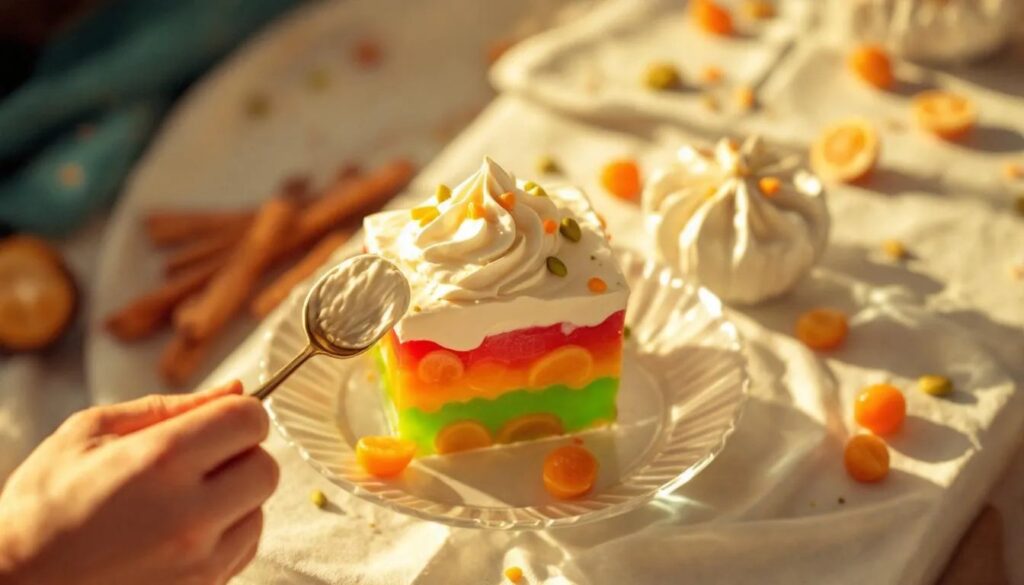
Unmold the loaf by lifting the plastic wrap overhang and inverting onto a chilled platter. Peel away the plastic wrap. The cross-section reveals three distinct horizontal stripes: the deep red of the strawberry layer, the ivory cream cheese ribbon, and the pale green of the lime layer — a color scheme that reads as deliberately Easter without a single pastel egg in sight. Slice with a sharp knife dipped in warm water between cuts for clean edges.
Chef's Note
The key variable in a layered mold is temperature management between pours. If your kitchen runs warm, set a timer and check the layers earlier than suggested — a layer left too long in the refrigerator becomes fully rigid and the bond between layers weakens significantly. For a more sophisticated profile, add the zest of one lime to the cream cheese layer and a tablespoon of fresh lemon juice to the strawberry gelatin before it sets. The added citrus lifts the sweetness and gives the finished loaf a sharper, brighter flavor that works well alongside a salty glazed ham or a roasted leg of lamb at an Easter table.
The history behind the wobble
Gelatin as a culinary medium has existed for centuries — aspic, the savory forerunner of Jell-O, was a staple of French haute cuisine long before Jell-O powder was trademarked in 1897. But the molded salad as Americans know it belongs firmly to the postwar decades, when the intersection of refrigerator ownership, processed food marketing, and suburban entertaining culture produced something entirely new: a dish that was simultaneously a salad, a side dish, and a showpiece. General Foods, which acquired the Jell-O brand in 1925, published recipe booklets throughout the 1950s and 60s that promoted gelatin molds as modern, hygienic, and festive — the kind of thing a capable homemaker served at Easter, Thanksgiving, and neighborhood potlucks alike.
The decline came gradually. By the 1980s, dietary trends had shifted toward fresh vegetables and lighter fare, and the molded salad began to feel dated rather than festive. It retreated to church basements and Southern family reunions, where it has quietly persisted in the hands of people who never stopped making it. Food historians now point to the Jell-O salad as a significant artifact of American domestic food culture — not because it is strange, but because it captures a specific moment when processed ingredients and home cooking were not considered contradictions. Bringing it back to an Easter table in 2026 is not ironic. It is a straightforward act of culinary recovery.
Nutritional values (per serving, approximate values — Recipe 1: Lime Cottage Cheese Fluff)
| Nutrient | Amount |
|---|---|
| Calories | ~165 kcal |
| Protein | ~6 g |
| Carbohydrates | ~22 g |
| of which sugars | ~18 g |
| Fat | ~6 g |
| Fiber | ~0.5 g |
Nutritional values (per serving, approximate values — Recipe 2: Carrot Pineapple Mold)
| Nutrient | Amount |
|---|---|
| Calories | ~85 kcal |
| Protein | ~2 g |
| Carbohydrates | ~20 g |
| of which sugars | ~17 g |
| Fat | ~0 g |
| Fiber | ~1 g |
Nutritional values (per serving, approximate values — Recipe 3: Cream Cheese Ribbon Loaf)
| Nutrient | Amount |
|---|---|
| Calories | ~145 kcal |
| Protein | ~3 g |
| Carbohydrates | ~17 g |
| of which sugars | ~15 g |
| Fat | ~8 g |
| Fiber | ~0 g |
Frequently asked questions
Can these salads be made the day before Easter?
Yes — and they should be. All three recipes benefit from an overnight rest in the refrigerator. The flavors meld, the texture firms properly, and the marshmallows in the fluff salad soften to a pleasant, pillowy consistency that they do not reach after only four hours. Prepare them Saturday afternoon and refrigerate covered with plastic wrap. Remove from the refrigerator 10 minutes before serving so the molds are not ice-cold when they hit the table.
How do I prevent the mold from sticking when I unmold it?
Light greasing with cooking spray before pouring is the first step. For loaf and ring molds, lining with plastic wrap and leaving an overhang gives you a physical handle to pull during unmolding. The warm water bath technique — dipping the outside of the mold in warm (not boiling) water for 8 to 12 seconds — gently loosens the gelatin from the edges without melting it. Invert onto a chilled plate rather than a room-temperature one: a cold surface helps the mold retain its shape once released.
Can I use sugar-free Jell-O in these recipes?
Sugar-free Jell-O works in all three recipes with no structural changes. The flavor profile will be slightly different — the artificial sweeteners in sugar-free formulations can read as flatter or mildly bitter to some palates, particularly in the lime fluff where the cottage cheese already adds tangy complexity. If you are monitoring sugar intake, the carrot-pineapple mold translates best to sugar-free Jell-O because the natural sweetness of the spring carrots and pineapple carries the flavor.
What do these salads pair well with on an Easter table?
All three hold their own alongside the salty, fatty anchors of a classic Easter spread. The lime fluff and the cream cheese ribbon loaf cut through the richness of a glazed ham or a cream-sauced potato gratin. The carrot-pineapple mold, with its clean citrus acidity from the apple cider vinegar, works particularly well next to roasted lamb. For beverages, a dry sparkling wine — a Blanc de Blancs or a Prosecco Brut — complements the bright sweetness of the gelatin without competing with it. A chilled sparkling water with fresh mint is equally good.
How long do leftovers keep?
Covered tightly with plastic wrap in the refrigerator, all three salads keep well for up to 3 days. The fluff salad softens slightly over time as the marshmallows continue to dissolve into the mixture — this is not a flaw, simply a textural evolution. The molded versions hold their shape better because of the higher gelatin concentration; slice only what you plan to serve and keep the remainder in the mold or on the serving plate tented with plastic wrap. None of these preparations freeze well: gelatin becomes grainy and weeps liquid upon thawing.