

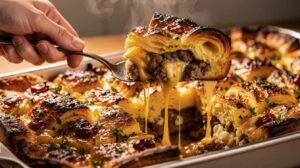

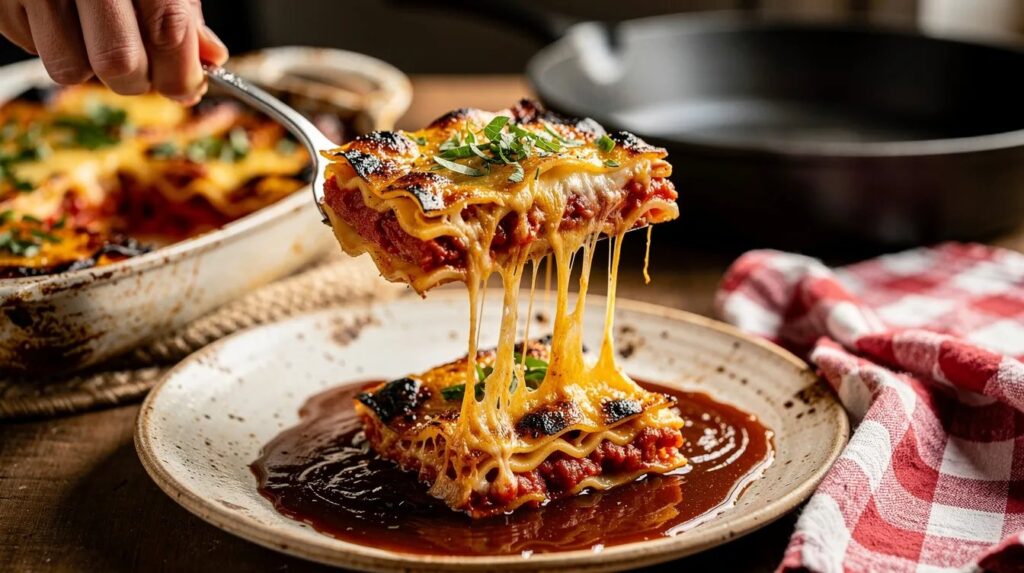
March has barely settled in, and the evenings are still cool enough to call for something warm, layered, and deeply satisfying. That window between winter's heaviness and spring's first asparagus is a strange, transitional moment in the kitchen — one where you crave comfort without the three-hour commitment. This express lasagna answers exactly that. Four steps, one baking dish, and a gratin crust that cracks at the spoon like a promise kept.
The idea here is not to cut corners on flavor but to cut time without apology. No fresh pasta to roll out, no béchamel left to simmer for forty minutes. Instead, a technique borrowed from professional kitchens — building heat, seasoning in layers, and finishing under the broiler for that bronze, bubbling top — makes this dish faster without making it lesser. Grab your baking dish and preheat that oven.
| Preparation | 15 min |
| Cook Time | 30 min |
| Portions | 6 people |
| Difficulty | Easy |
| Cost | $$ |
| Season | Early spring — pantry staples, canned tomatoes, ground beef or pork |
Ingredients
For the meat sauce
- 1 lb ground beef (80/20 blend for best flavor)
- 1 medium yellow onion, finely diced
- 3 garlic cloves, minced
- 1 can (28 oz) crushed tomatoes
- 2 tablespoons tomato paste
- 1 teaspoon dried oregano
- 1 teaspoon dried basil
- ½ teaspoon red pepper flakes
- 1 tablespoon olive oil
- Salt and black pepper to taste
For the quick béchamel
- 2 tablespoons unsalted butter
- 2 tablespoons all-purpose flour
- 1¾ cups whole milk, warmed
- ¼ teaspoon freshly grated nutmeg
- Salt to taste
For the assembly
- 12 no-boil lasagna noodles (also called oven-ready)
- 1½ cups whole-milk ricotta
- 2 cups shredded low-moisture mozzarella
- ½ cup grated Parmesan
- 1 large egg
Utensils
- Large skillet or sauté pan
- Medium saucepan
- Whisk
- 9×13-inch baking dish
- Aluminum foil
- Ladle or large spoon
- Box grater
Preparation
Step 1. Build the meat sauce — fast but with depth
Heat the olive oil in a large skillet over medium-high heat until it shimmers — you want the pan genuinely hot before the meat goes in. Add the ground beef in one even layer and resist the urge to stir immediately. Letting it sit undisturbed for 2 to 3 minutes allows it to develop a proper sear, that browned, slightly caramelized crust that carries far more flavor than gray, steamed meat. Once the underside is browned, break it apart with a wooden spoon and continue cooking until no pink remains.
Push the meat to one side of the pan, lower the heat slightly, and add the diced onion to the cleared space. Sweating — cooking aromatics gently until translucent without browning — takes about 3 minutes here. Add the minced garlic for another 30 seconds, stirring constantly so it softens and becomes fragrant without turning bitter. Stir everything together, then add the tomato paste directly to the center of the pan. Let it toast for 1 full minute, pressing it against the hot surface; this step converts raw tomato paste into something deeper, almost sweet, with a faint caramel edge. Pour in the crushed tomatoes, add the dried herbs and red pepper flakes, season generously with salt and black pepper, and bring the sauce to a vigorous simmer. Cook uncovered for 10 minutes, stirring occasionally, until the sauce thickens enough to coat the back of a spoon.
Step 2. Make a 5-minute béchamel
In a medium saucepan over medium heat, melt the butter until it foams and the foam begins to subside. Add the flour all at once and stir immediately and continuously with a whisk. This mixture is called a roux — a cooked paste of fat and starch that will thicken the sauce without leaving a floury taste. Cook the roux for exactly 1 minute, still whisking, until it turns slightly pale golden and smells faintly nutty.
Add the warmed milk in a slow, steady stream, whisking the entire time to prevent lumps from forming. Once all the milk is incorporated, raise the heat slightly and continue whisking until the sauce nappé — thick enough to coat the back of a spoon and hold a line when you draw your finger through it. This takes 3 to 4 minutes. Season with salt and grate the nutmeg directly over the pot; freshly grated nutmeg is noticeably more aromatic than pre-ground. Remove from heat.
Step 3. Mix the ricotta layer and assemble
Preheat the oven to 375°F. In a small bowl, combine the ricotta with the egg, a pinch of salt, and a few turns of black pepper. Beat lightly with a fork until smooth. The egg binds the ricotta during baking, preventing it from turning grainy or watery — a small step that makes a visible difference in the final slice.
Spread a thin layer of meat sauce across the bottom of the baking dish — this prevents the noodles from sticking and starts hydrating them immediately. Lay 4 no-boil noodles side by side, overlapping them slightly if needed. Spread half the ricotta mixture over the noodles in an even layer, followed by a third of the remaining meat sauce and a handful of shredded mozzarella. Repeat with a second layer of noodles, the remaining ricotta, another third of the meat sauce, and more mozzarella. Finish with the final layer of noodles, the last of the meat sauce, and the entirety of the béchamel poured over the top. Scatter the remaining mozzarella and all the grated Parmesan across the surface in an even, generous layer.
Step 4. Bake covered, then gratiné under the broiler
Cover the baking dish tightly with aluminum foil, making sure it doesn't touch the cheese surface. Bake at 375°F for 22 minutes. The foil traps steam, which hydrates the no-boil noodles and cooks the lasagna through without drying the top. Remove the foil and switch the oven to broil on high. Slide the dish back in, positioning it about 6 inches from the broiler element. Watch carefully — the gratin happens fast. In 3 to 5 minutes, the cheese will bubble, blister, and develop deep amber spots. The edges will pull slightly from the sides of the dish. Remove when the surface is golden-brown with darker patches across at least two-thirds of the top. Let rest for 8 minutes before cutting — the layers need time to set so each serving holds its shape at the table.
My Chef's Tip
The broiler finish is everything here, and the biggest mistake is walking away from it. Position yourself at the oven and use the light — the transformation from bubbling to scorched happens in under a minute. For an even more pronounced gratin crust, mix 2 tablespoons of breadcrumbs into the Parmesan before scattering it over the top. As early spring produce starts appearing at markets, a handful of wilted baby spinach or sautéed spring onions folded into the ricotta layer adds a quiet freshness that plays beautifully against the richness of the meat sauce.
Wine Pairing
A gratinéed lasagna built around a tomato-forward meat sauce and aged cheese calls for a red wine with enough acidity to cut through the fat and enough body to stand up to the depth of the sauce.
A Chianti Classico from Tuscany — with its characteristic notes of sour cherry, dried herbs, and earthy leather — is the most natural match: it mirrors the tomato's acidity and echoes the oregano in the sauce. A California Barbera or an approachable Montepulciano d'Abruzzo offer equally strong partnerships at a lower price point. For a non-alcoholic option, a sparkling water with a squeeze of lemon and a splash of tomato juice — served very cold — provides the same acid-brightness contrast the palate needs between bites.
About This Dish
Lasagna traces its roots to the kitchens of Emilia-Romagna, where the original lasagne al forno — layered with hand-rolled spinach pasta, ragù Bolognese, and béchamel — remains one of the most celebrated dishes in the Italian culinary canon. The name itself likely derives from the Latin lasanum, meaning cooking pot, though some food historians trace it further back to the Greek lasanon. For centuries, this dish was reserved for Sundays and celebrations; its preparation was a half-day ritual, a demonstration of patience and care.
This "express" adaptation is not a modern betrayal of tradition but a natural evolution. No-boil noodles — developed to absorb moisture directly from the sauce during baking — arrived in American supermarkets in the 1990s and quietly changed weeknight cooking. They work because the physics remain the same: enough moisture, enough heat, enough time. The structure of this recipe preserves the essential logic of the original — a rich meat layer, a creamy white element, fresh cheese, aged cheese, and heat — while compressing the timeline from two hours to under fifty minutes.
Nutritional Values (per serving, approximate values)
| Nutrient | Amount |
|---|---|
| Calories | ~610 kcal |
| Protein | ~38 g |
| Carbohydrates | ~44 g |
| of which sugars | ~8 g |
| Fat | ~29 g |
| Fiber | ~3 g |
Frequently Asked Questions
Can this lasagna be assembled ahead of time?
Yes — and it actually improves for it. Assemble the lasagna fully, cover it tightly with plastic wrap, and refrigerate for up to 24 hours before baking. When you're ready, remove it from the refrigerator 30 minutes before putting it in the oven to take the chill off. Add an extra 5 minutes to the covered baking time to account for the cold start. The flavors settle and deepen overnight, and the noodles absorb moisture more evenly.
How do you store and reheat leftovers?
Cover the baking dish with foil or transfer individual portions to airtight containers. Refrigerate for up to 4 days. To reheat, place a portion in an oven-safe dish, add a tablespoon of water, cover with foil, and warm at 350°F for 15 minutes. This prevents the edges from drying out. A microwave works in a pinch — cover loosely and reheat at 70% power in 90-second intervals. Lasagna also freezes well: wrap individual portions tightly in plastic wrap, then foil, and freeze for up to 3 months.
What substitutions work well in this recipe?
Ground beef can be replaced with ground turkey or chicken for a lighter result — add an extra tablespoon of olive oil to compensate for the lower fat content. For a vegetarian version, swap the meat for a combination of sautéed cremini mushrooms, zucchini, and canned lentils; the texture is surprisingly close. Ricotta can be replaced with cottage cheese (drained overnight through a fine mesh sieve) without a dramatic change in flavor. As spring produce arrives at markets, thin layers of blanched asparagus or fresh peas make a compelling addition between the pasta sheets.
Why use no-boil noodles instead of regular pasta?
No-boil noodles are thinner than traditional lasagna pasta and are partially pre-cooked during manufacturing. They absorb liquid directly from the surrounding sauce during baking, which means they finish cooking in the oven without becoming mushy. The key is ensuring there is enough moisture in the sauce — this recipe provides it through the crushed tomatoes, the béchamel, and the steam created by the foil during the first phase of baking. Regular lasagna noodles can be used if you cook and drain them first, but they add about 12 minutes of prep time.
My top cheese is browning too fast under the broiler — what should I do?
Lower the oven rack one position before switching to broil, increasing the distance between the cheese surface and the heat element. If the edges are browning faster than the center — a common issue with gas broilers — lay a small strip of foil loosely over the darkest areas while the rest of the surface catches up. A mix of mozzarella and Parmesan, as called for here, browns more evenly than mozzarella alone because Parmesan's lower moisture content helps drive off steam faster and promotes a drier, more even crust.