

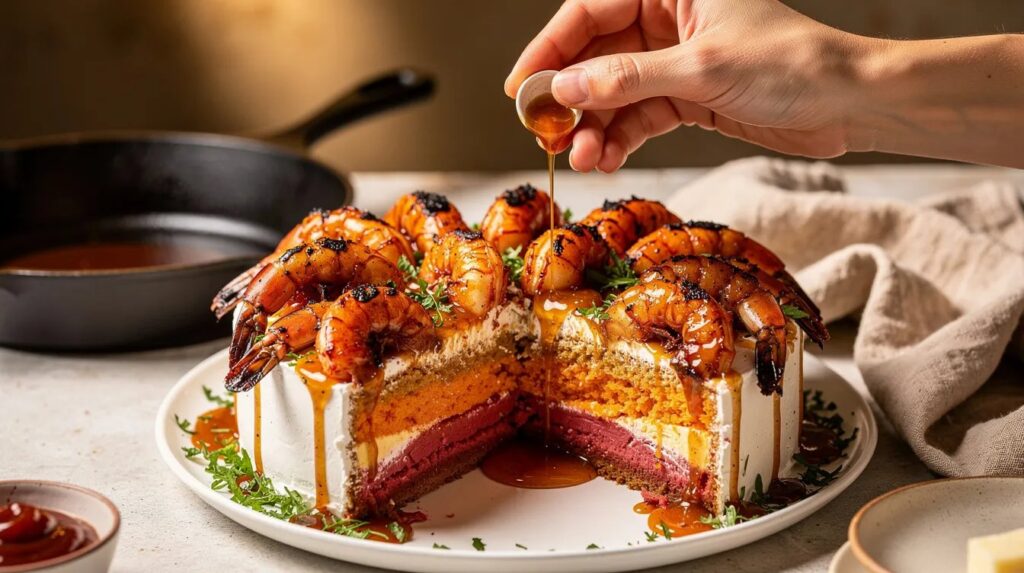
March is wrapping winter in its final cold breath while spring nudges the door open — a season caught between two tempers, when the urge to cook something fast and bright collides with a quiet craving for something sweet and unhurried. Honey garlic shrimp answers the first call with authority: a handful of ingredients, a screaming-hot pan, and barely ten minutes between hunger and the plate. The shrimp curl into tight pink crescents, lacquered in a sauce that hits every register at once — floral sweetness, sharp garlic, a thread of heat.
The Lazy Daisy Cake follows at its own pace — a vintage American sheet cake so old-fashioned it circles back to feeling original. Its name comes not from the baker's temperament but from the broiled coconut frosting that blooms across the top like a field of daisies browning at the edges. Together, these two recipes form a weeknight menu that starts fast and finishes slowly, the way the best spring evenings do. Tie on your apron and let's get into both.
| Prep Time | 20 min (10 per dish) |
| Cook Time | 25 min total |
| Servings | 4 people |
| Difficulty | Easy |
| Cost | $$ |
| Season | Early spring · pantry-friendly · shrimp year-round |
Suitable for: Gluten-free (shrimp portion) · High-protein (shrimp portion) · Dairy-free option available
Ingredients
For the honey garlic shrimp
- 1 lb (450 g) large raw shrimp, peeled and deveined, tails on or off
- 3 tablespoons honey, preferably raw or wildflower
- 4 cloves garlic, minced
- 2 tablespoons low-sodium soy sauce
- 1 tablespoon fresh lemon juice
- 1 tablespoon unsalted butter
- 1 tablespoon neutral oil (avocado or vegetable)
- ½ teaspoon red pepper flakes (optional)
- 2 scallions, thinly sliced, for garnish
- Cooked white or jasmine rice, to serve
For the lazy daisy cake
- 2 large eggs, room temperature
- 1 cup (200 g) granulated sugar
- 1 teaspoon pure vanilla extract
- 1 cup (125 g) all-purpose flour
- 1 teaspoon baking powder
- ¼ teaspoon fine sea salt
- ½ cup (120 ml) whole milk
- 1 tablespoon unsalted butter
For the broiled daisy frosting
- 5 tablespoons unsalted butter, melted
- ⅔ cup (130 g) packed light brown sugar
- 1 cup (85 g) sweetened shredded coconut
- 3 tablespoons heavy cream
- 1 teaspoon pure vanilla extract
Equipment
- Large skillet or cast-iron pan (12-inch / 30 cm)
- 9×13-inch (23×33 cm) baking pan
- Broiler-safe baking pan
- Small saucepan
- Stand mixer or hand mixer
- Whisk
- Rubber spatula
- Meat thermometer (optional)
- Microplane or garlic press
Preparation
1. Start the cake batter first
Preheat your oven to 350°F (175°C) and butter your 9×13-inch baking pan generously. Sequencing matters here because the cake takes time in the oven and the shrimp cooks in minutes — bake first, sear second. Beat the eggs and sugar together with a hand mixer on medium-high speed for about 3 to 4 minutes, until the mixture turns pale yellow and falls from the beaters in thick ribbons. This step is called ruban in classical technique, and it builds the airy structure that gives the cake its light crumb without relying on butter in the batter itself. Add the vanilla and mix briefly to combine.
In a separate bowl, whisk together the flour, baking powder, and salt. In a small saucepan over low heat, warm the milk with the tablespoon of butter just until the butter melts — do not let it boil. With the mixer on low, alternate adding the flour mixture and the warm milk mixture to the eggs in two additions each, beginning and ending with flour. The batter will look thin and glossy, almost like a crêpe batter. Pour it into the prepared pan and slide it into the oven for 20 to 22 minutes, until the top is golden and a toothpick inserted in the center comes out clean.
2. Marinate the shrimp while the cake bakes
While the oven does its work, prepare the shrimp. In a medium bowl, whisk together the honey, soy sauce, lemon juice, and minced garlic. Add the shrimp and toss to coat every surface. Let them sit in this quick marinade for no more than 10 to 15 minutes — shrimp are delicate, and an acidic marinade held too long will begin to denature the proteins, giving the finished dish a mushy, almost pre-cooked texture before it ever hits the pan. Season lightly with salt only if your soy sauce is not already quite salty. Remove the shrimp with a slotted spoon and reserve the marinade separately — it becomes the sauce.
3. Sear the shrimp in a screaming-hot pan
Heat your largest skillet over high heat until a drop of water evaporates on contact — this usually takes about 90 seconds. Add the neutral oil and swirl to coat, then add the butter. The butter will foam immediately. Working quickly in a single layer, lay the shrimp flat in the pan. Do not crowd them; if necessary, cook in two batches. Crowding drops the pan temperature and causes the shrimp to steam rather than sear, which sacrifices the caramelized edges that make this dish worth eating.
Cook without touching for 1 minute 30 seconds, until the undersides turn pink and slightly golden at the edges. Flip each shrimp once — they release easily when properly seared — and cook for another 60 seconds. The moment the shrimp curl into a tight C and turn fully opaque, they are done. Pour in the reserved marinade, add the red pepper flakes if using, and let everything bubble and reduce for 90 seconds, tilting and swirling the pan so the sauce thickens into a glossy coat that clings. The kitchen will smell of toasted garlic and caramelized honey — sweet, slightly smoky, unmistakably savory.
4. Make the broiled daisy frosting
The moment the cake comes out of the oven, switch your oven's broiler to high and position a rack 6 inches (15 cm) from the element. Combine the melted butter, brown sugar, coconut, heavy cream, and vanilla in a bowl and stir until fully mixed — the texture will be dense and jammy. Spoon this mixture evenly over the hot cake directly in the pan, spreading it to the edges with a rubber spatula. Slide the pan under the broiler for 3 to 4 minutes, watching continuously. The frosting will bubble, the coconut will toast to a deep amber, and the sugar will caramelize into a brittle, slightly crunchy top that gives the cake its signature texture. Pull it the moment the coconut tips from golden to dark brown — broilers vary wildly, and one minute is the difference between a beautiful crust and a burnt one.
5. Plate and serve
Spoon the honey garlic shrimp over warm rice, scraping every drop of sauce from the pan. Scatter sliced scallions over the top — their fresh bite cuts through the sweetness of the glaze. Serve immediately, as shrimp lose their snap within minutes of leaving the heat. Allow the Lazy Daisy Cake to cool in the pan for at least 10 to 15 minutes before cutting — the frosting needs time to set from molten to chewy. Cut into squares and serve directly from the pan. The contrast between the tender crumb and the sticky, toasted coconut top is the whole point.
Chef's tip
For the shrimp, the single most important variable is pan temperature. A lukewarm skillet produces pale, rubbery shrimp swimming in liquid — the opposite of what you want. Cast iron holds heat better than stainless and is the ideal choice here. If you're cooking in early spring and have access to fresh Gulf shrimp from the season's first offshore runs, use them. Their brininess plays beautifully against the honey. For the cake, the broiling step is not optional — it is the recipe. Without it, you have a plain yellow sheet cake. Give the coconut the full heat it needs to toast, and you will understand why this recipe survived intact through several generations of American home bakers.
Drink pairings
Honey garlic shrimp features a layered sweetness balanced by salt and a hint of heat. This calls for a drink with enough acidity to cut through the glaze without clashing with the garlic.
A dry, unoaked Sauvignon Blanc from New Zealand's Marlborough region — bright grapefruit, cut grass, a mineral finish — complements the shrimp with precision. Closer to home, a Californian Pinot Gris from the Oregon Willamette Valley works equally well, offering stone fruit and a crisper body. For a non-alcoholic option, sparkling water with a squeeze of yuzu or lemon cleanses the palate between bites without competing with the sauce. With the Lazy Daisy Cake, a cup of strong black coffee or an Earl Grey tea is the natural companion — the tannins balance the sweetness of the broiled coconut frosting without overwhelming it.
About these dishes
Honey garlic shrimp occupies a distinct space in American weeknight cooking — dishes with few ingredients delivering maximum flavor through technique. It borrows from Chinese-American stir-fry methods and the Southern American tradition of sweet-savory shellfish preparations. The honey and soy sauce glaze became common in home cooking as Asian pantry staples entered mainstream American grocery stores in the late 20th century. It's now a standard of meal-prep culture, valued for its speed and forgiving recipe.
The Lazy Daisy Cake boasts a longer and more specifically American history. It appears in community cookbooks and church recipe collections dating back to at least the mid-20th century, especially in the Midwest. Its name likely comes from the broiled frosting's resemblance to daisies, though some food historians think "lazy" subtly references a technique that skips the fuss of a traditional layer cake. Hot milk cake, the base beneath the frosting, is a Depression-era recipe known for producing a tender crumb with little fat. The broiled coconut topping elevates a simple batter into a memorable dish.
Nutritional values (per serving, approximate values)
| Nutrient | Shrimp (with rice) | Cake (1 square) |
|---|---|---|
| Calories | ~380 kcal | ~320 kcal |
| Protein | ~28 g | ~4 g |
| Carbohydrates | ~45 g | ~48 g |
| of which sugars | ~14 g | ~32 g |
| Fat | ~8 g | ~14 g |
| Fiber | ~1 g | ~1 g |
Frequently asked questions
Can the shrimp be prepared in advance?
The marinade can be mixed up to 24 hours ahead and stored in a sealed jar in the refrigerator. However, don't combine the shrimp with the marinade until you're ready to cook, as the acid and enzymes in the honey-lemon mixture will break down the proteins if left too long, resulting in a mushy texture. For best results, cook the shrimp to order and serve it immediately.
How should leftovers be stored?
Leftover shrimp can be stored in an airtight container in the refrigerator for up to 2 days. Reheat gently in a skillet over medium-low heat with a splash of water to loosen the sauce — microwaving shrimp tends to make them rubbery. The Lazy Daisy Cake keeps well at room temperature, loosely covered, for up to 3 days. The broiled topping will soften slightly by day two, but the flavor remains excellent. Do not refrigerate the cake, as cold quickly dries out the crumb.
What substitutions work in the shrimp recipe?
The shrimp can be swapped for sea scallops — sear them the same way, two minutes per side undisturbed — or for cubed firm tofu pressed dry and pan-fried until golden for a plant-based version. Tamari replaces soy sauce for a gluten-free preparation. Maple syrup can stand in for honey, though it will produce a slightly thinner glaze. As spring progresses, adding a handful of sugar snap peas to the pan alongside the shrimp adds color and crunch without altering the flavor profile.
Can the lazy daisy cake be made dairy-free?
Yes, with slight adjustments. Replace the whole milk with full-fat oat milk or coconut milk for a result similar to the original. Substitute the butter in the batter and the frosting with vegan butter — a quality European-style vegan butter works best. Replace the heavy cream in the frosting with full-fat canned coconut cream, which enhances the topping's coconut flavor.
Can the cake be baked in a different size pan?
A 9×9-inch square pan will create a thicker, more cupcake-like crumb and will require an additional 5 to 7 minutes of bake time. Check for doneness with a toothpick. A round 9-inch cake pan also works, although spreading the broiled frosting evenly to curved edges takes more effort. Avoid using a tube or bundt pan, as the broiling step requires a flat, open surface for the topping to caramelize correctly.